

 One app for all your study abroad needs











1. 1930
2. 1933
3. 1926
4. 1922
Correct Answer: 1. 1930
The Civil Disobedience Movement began in 1930, starting with Gandhi’s Salt March to protest the British salt tax. This non-violent campaign united millions, marked a turning point in India’s freedom struggle, and distinguished 1930 from other years like 1922 or 1933.
When Did It All Begin?
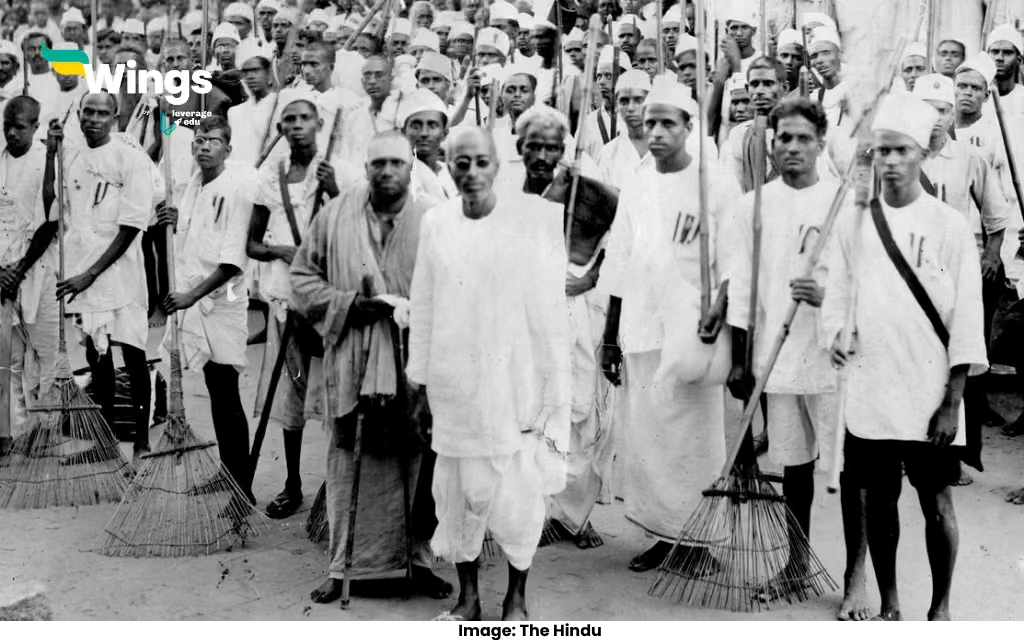
The Civil Disobedience Movement kicked off in 1930, a major moment in India’s fight for freedom from British rule. Led by Mahatma Gandhi, it started with the iconic Salt March on March 12, 1930, when Gandhi and thousands walked 240 miles to Dandi to make salt, defying British laws. This non-violent protest was all about saying “no” to unfair colonial rules, like the salt tax, and it got the whole country fired up.
For students, 1930 is a date to lock in. It’s not just a number—it marks the start of a movement that showed the world India’s strength through peaceful resistance. Whether you’re studying history or prepping for exams, knowing when this movement began helps you understand the timeline of India’s independence struggle.
Why 1930, Not Other Years?
The question gives options like 1922, 1926, and 1933, but 1930 is the right one. Why? In 1922, Gandhi led the Non-Cooperation Movement, which was different and ended after violence. By 1930, the Indian National Congress was ready for a bolder move, targeting the salt tax to unite people. 1926 was a quieter year, and 1933 was more about the movement’s aftermath, like negotiations with the British. The Salt March made 1930 the clear starting point.
For students, getting this timeline straight is key. Mixing up 1930 with 1922 or 1933 is a common mistake, but knowing the Salt March started in 1930 helps you nail history questions. It’s also a great way to understand how Gandhi’s strategies evolved over time.
Quick Facts
- Start Date: March 12, 1930 (Salt March)
- Leader: Mahatma Gandhi
- Key Event: Dandi Salt March (240 miles)
- Goal: Protest British salt tax and colonial laws
- Duration: 1930–1934
What Sparked the Movement in 1930?
The salt tax was the perfect target in 1930. It was a British law that hit every Indian, rich or poor, making salt—a daily necessity—expensive. Gandhi saw this as a way to rally millions. The Salt March wasn’t just a walk; it was a symbol of defiance, showing Indians could take control of their resources. Starting from Sabarmati Ashram, the march grew as thousands joined, making it a nationwide call to action.
For students, this is a big deal for history classes. The 1930 start shows how Gandhi used simple, relatable issues to fuel a massive movement. It’s a great example for essays, showing how strategy and symbolism can drive change, and it’s a must-know for understanding India’s freedom fight.
How Did the Movement Grow?
After the Salt March, the Civil Disobedience Movement exploded. People across India started making their own salt, boycotting British goods, and refusing to pay taxes. Women, like Sarojini Naidu, joined protests, which was huge for the time. The British arrested thousands, including Gandhi, but that only made the movement stronger. It showed the world India was united and ready to fight for freedom without violence.
For students, this growth is a key point. It’s not just about 1930’s start but how it sparked nationwide action. When studying history, knowing how the movement spread helps you connect it to bigger themes like unity and non-violence, perfect for exams or debates.
Why Was 1930 a Turning Point?
The 1930 start of the Civil Disobedience Movement changed the game. It put the British on the defensive, forcing them to negotiate with Gandhi (think the Gandhi-Irwin Pact in 1931). It also got global attention, with newspapers worldwide covering the Salt March. This wasn’t just a protest—it was a statement that India was ready for independence, setting the stage for later victories.
For students, 1930’s significance is huge. It’s a pivotal moment to mention in history answers, showing how one year shifted the freedom struggle. Understanding this helps you see why Gandhi’s non-violent approach inspired leaders worldwide, from Martin Luther King Jr. to Nelson Mandela.
Summary
Question: When did the Civil Disobedience Movement start?
Answer: The Civil Disobedience Movement started in 1930.
The 1930 start of the Civil Disobedience Movement is a cornerstone of India’s history. For students, it’s a critical date to know, but more than that, it’s a story of strategy and unity that shows how peaceful protests can change the world. It’s a must for history buffs and exam prep.
Also Read:
The Numerous Caves on the Udayagiri and Khandagiri Hills of Odisha Testify
to the:
Which one has the World’s Longest Railway Platform in India?
What is the Speed of Light in Air?
The Arvari River, considered the Smallest River in India, is Located in
Which State?
Which one of the following Statements is Correct about a Computer?


 60,000+ students trusted us with their dreams. Take the first step today!