

 One app for all your study abroad needs











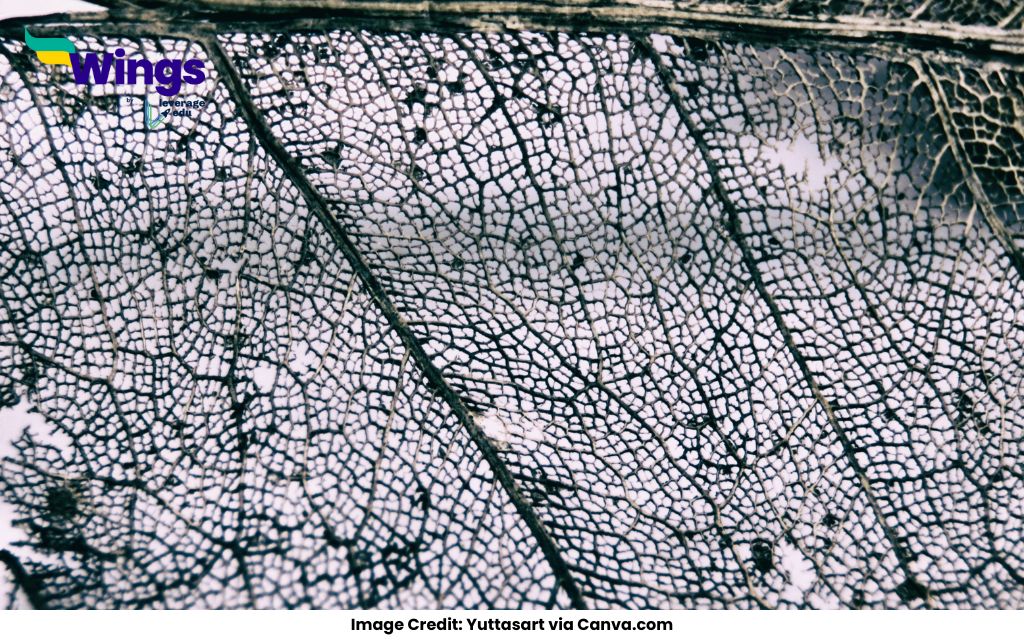
Answer: Venation is the arrangement of veins and veinlets in the lamina (leaf blade) of a leaf. It plays a critical role in transporting water, minerals, and food, and also provides mechanical support to the leaf structure. The pattern of venation is often used to classify and identify plant species.
In plants, the venation pattern differs based on whether the plant is a monocot or a dicot, and this is one of the key diagnostic features in plant taxonomy.
Types of Venation with Examples
Venation is broadly classified into two main types:
1. Reticulate Venation
- In this type, the veins form a network-like pattern across the leaf lamina.
- It is the most common type in dicotyledonous plants.
- The midrib gives rise to lateral veins, which further branch into veinlets, forming a web.
- Examples: Mango, Peepal, Guava
Sub-types of Reticulate Venation
- Unicostate Reticulate Venation: A single prominent midrib with branching veins (e.g., Mango).
- Multicostate Reticulate Venation: Multiple prominent veins arise from the leaf base (e.g., Guava).
2. Parallel Venation
- In this type, the veins run parallel to each other from the base to the tip of the leaf.
- This is typically found in monocotyledonous plants.
- Unlike reticulate venation, the veins do not form a network.
- Examples: Banana, Grass, Rice
Sub-types of Parallel Venation
- Unicostate Parallel Venation: One main vein with smaller veins running parallel (e.g., Banana).
- Multicostate Parallel Venation: Several veins of equal size arise from the base and run parallel (e.g., Grass).
Importance of Venation
- It provides mechanical strength to the leaf by supporting its structure.
- Veins are essential for the translocation of water, minerals, and nutrients.
- The venation pattern can help identify plant species and families in botany.
Understanding venation not only helps students classify plants but also appreciate the evolutionary adaptations in different plant groups. It’s a foundational concept in plant morphology, important for both theory and practical applications in Class 11 Biology.
Common Doubts in Biology


 60,000+ students trusted us with their dreams. Take the first step today!