

 One app for all your study abroad needs











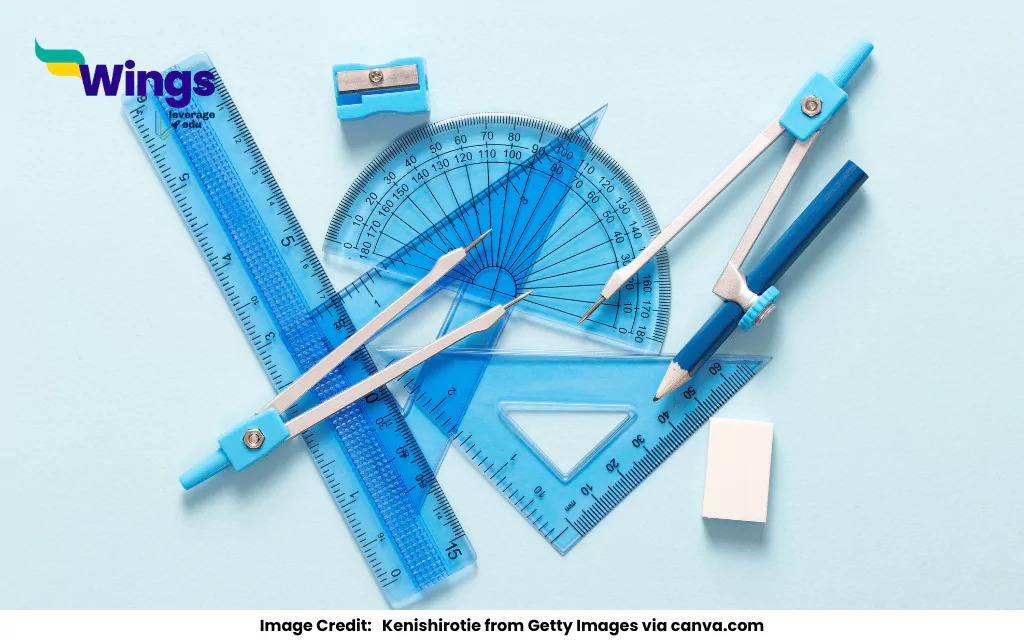
Answer: The shape of my geometry box is rectangular. It has a sturdy, compact design with smooth edges and a secure lid. Inside, it neatly holds instruments like a compass, ruler, protractor, divider, and pencils, making it very convenient.
Complete Answer:
A geometry box is a cuboid. A cuboid is a three-dimensional shape with six rectangular faces, and most geometry boxes fit this description. They have length, breadth, and height, with opposite faces being equal and all angles right angles. Each pair of opposite faces is equal in size and shape, which helps give the cuboid its box-like appearance.
A cuboid looks like this:
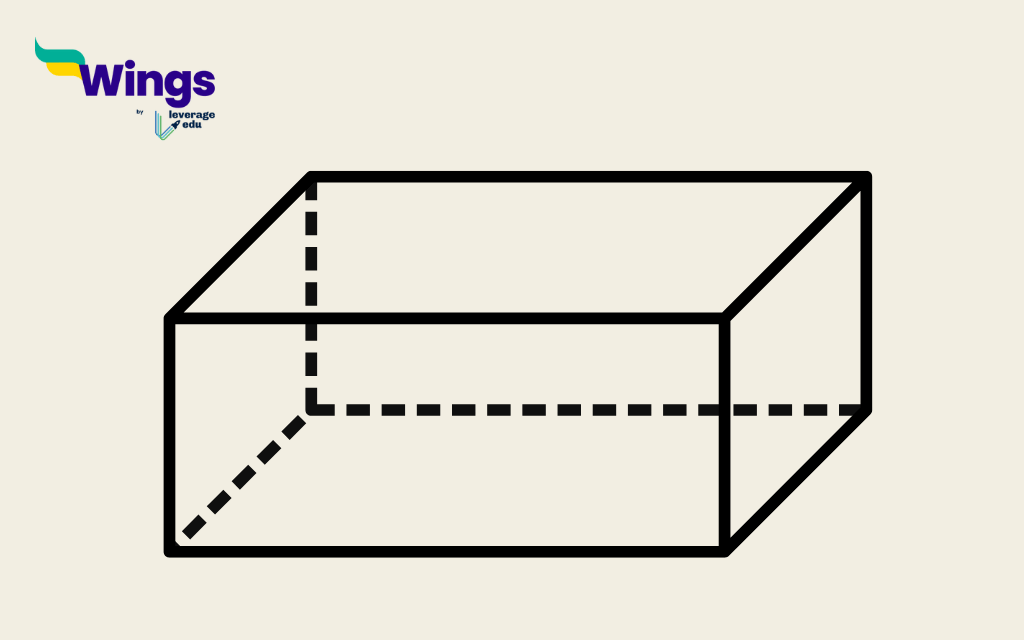
A geometry box has a length, width, and height, and all of its faces are rectangles, making it the shape of a cuboid.
Conclusion: There are two major types of solids:
1. A polyhedron must have flat faces. Examples include parallelepiped (cube/cuboid), tetrahedron, and so on.
2. Non-polyhedron: Some faces may be curved. Examples include cones, cylinders, and spheres.
Euler’s Formula for polyhedra states that F + V – E = 2, where F represents the number of faces, V represents the number of vertices, and E represents the number of edges.
The term ‘Box Product of three vectors’ (used for calculating the volume of a parallelepiped) refers to the parallelepiped’s boxlike shape.
Related Reads
| Who is the Father of Maths? | SAT Math Sample Questions with Answers PDF |
| How to Solve BODMAS Questions: Tips, Sample, Worksheets | PEMDAS Rule, Concept, Examples and Questions |
| 60 Quiz Questions Related to Maths | What are Mathematical Skills? |


 60,000+ students trusted us with their dreams. Take the first step today!