

 One app for all your study abroad needs











A) 90 minutes
B) 80 minutes
C) 70 minutes
D) 60 minutes
Correct Answer: A) 90 minutes
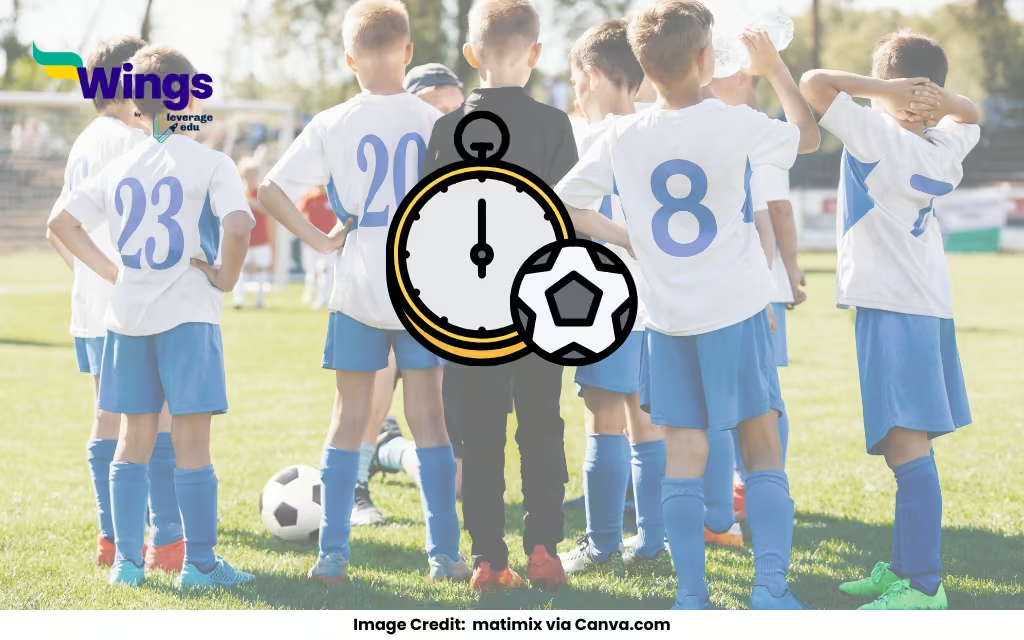
A football match lasts 90 minutes in regular time, split into two 45-minute halves, with stoppage time added for delays. This duration shapes strategy, fan excitement, and the sport’s global appeal. While extra time or youth games may vary, 90 minutes is the standard for professional play, making it a core fact for any football fan.
What’s the 90-Minute Rule in Football?
A football match in regular time is split into two halves of 45 minutes each, making a total of 90 minutes. This applies to most professional and competitive matches, from local leagues to the FIFA World Cup. The clock runs continuously, unlike some sports where it stops for breaks, which keeps the game fast-paced and intense.
There’s also extra time, called stoppage or injury time, added at the ref’s discretion for delays like injuries or substitutions. This can stretch a match a bit, but the core 90 minutes is what defines regular time. For students, knowing this helps you understand the structure of football and why it’s such a global hit.
Why Regular Time is Football is of 90 Minutes?
The 90-minute duration has been standard since the rules of football were formalized in the 19th century by the English Football Association. It strikes a balance between giving teams enough time to showcase skill and strategy without exhausting players or fans. The other options—80, 70, or 60 minutes—don’t match this established rule and are too short for competitive play.
This duration applies to adult matches, but youth or amateur games might be shorter, like 80 or 70 minutes, depending on the league. Understanding why 90 minutes became the norm helps you appreciate how football’s rules were designed to keep the game fair and exciting.
Extra Time and Beyond in Football
If a match is tied and needs a winner, like in knockout tournaments, extra time kicks in—two 15-minute halves, totaling 30 minutes. If it’s still tied, a penalty shootout decides the winner. These don’t count as regular time, which is strictly the 90 minutes of the main game. Stoppage time, usually a few minutes per half, covers interruptions but isn’t part of the fixed 90.
This setup keeps fans on edge, especially in close games. For students, knowing the difference between regular time, extra time, and stoppage time is crucial for understanding match reports or discussing epic games like World Cup finals.
Quick Facts
- Duration: 90 minutes (two 45-minute halves).
- Extra Time: Two 15-minute halves in knockout games.
- Stoppage Time: Added for delays, typically 1–5 minutes per half.
- Variations: Youth games may be shorter (60–80 minutes).
- Purpose: Balances strategy, stamina, and excitement.
- Global Standard: Used in most professional leagues and tournaments.
How Time Affects Strategy
The 90-minute clock shapes how teams play. Coaches plan substitutions and tactics knowing they’ve got two 45-minute halves to work with. The first half often sees teams testing each other, while the second half is where things get wild—players push harder, and dramatic goals often happen late in the game.
Injuries or time-wasting can lead to stoppage time, which refs calculate based on delays. Teams might use this to their advantage, like slowing the game to protect a lead. For students, this shows how time management is as much a part of football as kicking the ball.
Variations Across Levels
While 90 minutes is standard for adult professional matches, variations exist. Youth leagues might play 60–80 minutes depending on age groups, to keep things safe and fun. Women’s football at the professional level sticks to 90 minutes, same as men’s, ensuring equality in competitive play.
Futsal, a faster indoor version of football, uses two 20-minute halves with a running clock that stops for certain breaks. Knowing these differences helps students compare football formats and understand why the 90-minute rule is a cornerstone of the traditional game.
Why It Matters to Fans
The 90-minute duration is part of football’s magic. It’s long enough for epic comebacks and nail-biting finishes but short enough to keep everyone hooked. Fans love the drama of stoppage-time goals, and the fixed time creates a universal rhythm that connects games worldwide, from school fields to packed stadiums.
For students, understanding the 90-minute structure isn’t just about rules—it’s about appreciating why football feels so intense and why moments like a last-second goal can spark global celebrations. It’s a key piece of what makes the sport a cultural phenomenon.
Summary
Question: What is the duration of a football match (in regular time)?
Answer: The duration of a football match (in regular time) is of 90 minutes.
The 90-minute duration of a football match is more than a rule—it’s the heartbeat of the game. For students, knowing this helps you understand football’s structure, strategy, and thrill. Whether you’re watching a local match or the World Cup, those 90 minutes are where the magic happens!


 60,000+ students trusted us with their dreams. Take the first step today!