

 One app for all your study abroad needs











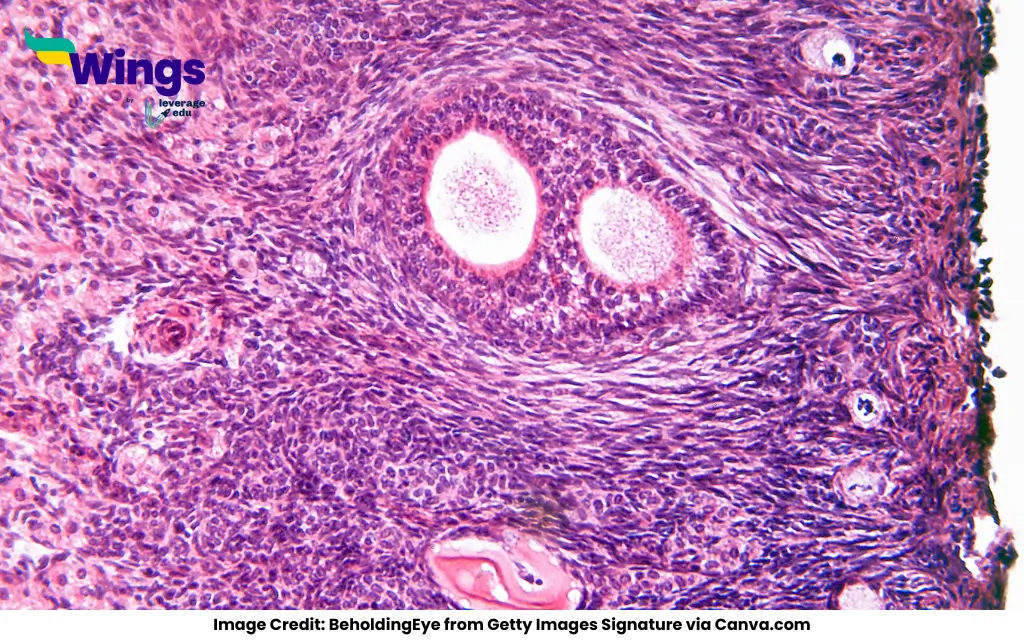
Ovary: The ovary is one of a pair of female reproductive organs located on either side of the uterus. It produces eggs (ova) and secretes hormones such as estrogen and progesterone, which regulate the menstrual cycle and support pregnancy.
Ovule: In human biology, the term ovule is not typically used. Instead, the correct term is ovum (plural: ova), which refers to the mature female reproductive cell (egg) that can be fertilized by a sperm cell. The ovum is released from the ovary during ovulation.
| Aspect | Ovary | Ovule (Ovum) |
| Definition | A pair of female reproductive organs that produce eggs and hormones | The mature female reproductive cell (egg) released by the ovary |
| Structure | Almond-shaped organ containing follicles, blood vessels, and connective tissue | Single-celled structure with a nucleus, cytoplasm, and protective layers |
| Function | Produces ova and secretes hormones like estrogen and progesterone | Carries the female genetic material for fertilization by a sperm cell |
| Location | Located on either side of the uterus in the pelvic cavity | Released from the ovary into the fallopian tube during ovulation |
| Role in Reproduction | Site of egg development and hormone regulation | Participates in fertilization to form a zygote if united with a sperm cell |
In the female reproductive system, the ovary is a vital organ responsible for producing and releasing the ovum (egg), as well as secreting essential hormones. The ovum, on the other hand, is the actual reproductive cell that, once released from the ovary, can be fertilized by a sperm to initiate pregnancy. Together, they play a crucial role in human reproduction.
Related Reads:


 60,000+ students trusted us with their dreams. Take the first step today!