

 One app for all your study abroad needs











- Hydrogen gas
- Oxygen gas
- Sodium hydroxide
- Sodium peroxide
Correct Answer: 1. Hydrogen gas
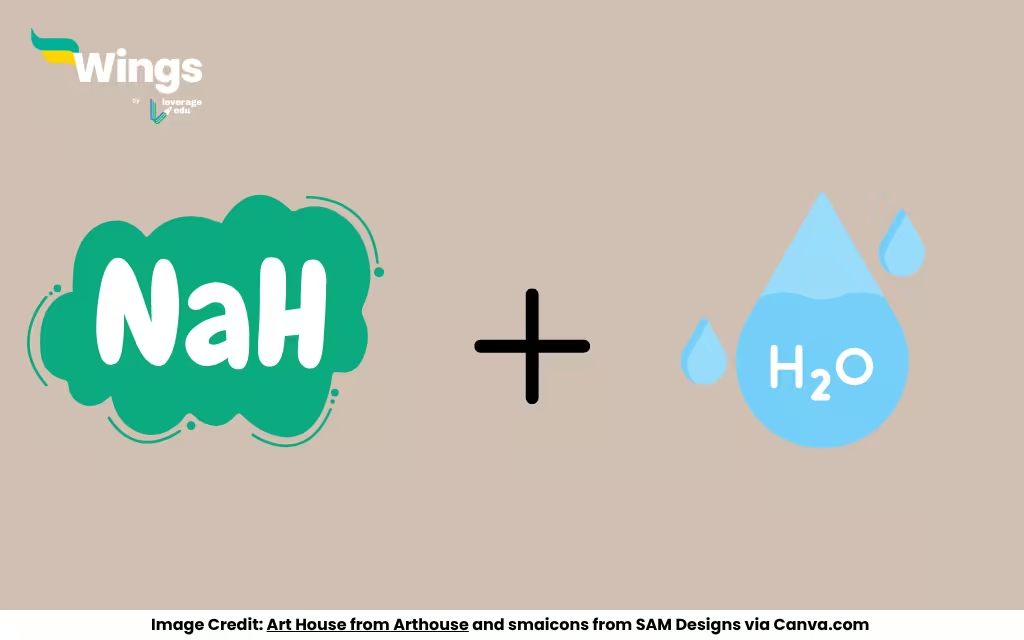
When sodium hydride meets water, it’s like a tiny chemistry party that produces hydrogen gas and sodium hydroxide. This reaction is a classic example of how reactive some compounds can be, and it’s a great way for students to get a grip on chemical reactions. Let’s break down what happens, why it matters, and how this reaction fits into the bigger picture of chemistry, all in a way that’s easy to follow and fun to learn.
Sodium Hydride: What’s the Deal?
Sodium hydride (NaH) is a super reactive compound made of sodium and hydrogen. It’s often used in labs as a strong base to kickstart chemical reactions. When it comes into contact with water (H₂O), things get exciting fast. The reaction forms hydrogen gas (H₂) and sodium hydroxide (NaOH), which is a strong base you might know as lye. The equation looks like this: NaH + H₂O → NaOH + H₂. That hydrogen gas is flammable, so this isn’t something you’d mess around with outside a controlled lab setting!
For students, this reaction is a great way to see how different elements interact. Sodium hydride is ionic—sodium donates an electron to hydrogen, forming a hydride ion (H⁻). When water enters the picture, the hydride ion grabs a proton (H⁺) from water, forming H₂ gas. Meanwhile, the sodium pairs up with the leftover hydroxide (OH⁻) to make NaOH. It’s like a chemical dance, and understanding it helps you get why some substances are so reactive.
Why Hydrogen Gas Is a Big Deal
Hydrogen gas is the star of this reaction because it’s not just any gas—it’s the lightest element in the universe and super versatile. In the NaH + H₂O reaction, hydrogen gas bubbles out, which you’d see as fizzing if you did this in a lab (with safety gear, of course!). Hydrogen is used in tons of real-world applications, from fueling rockets to powering eco-friendly cars in hydrogen fuel cells. But it’s also flammable, so this reaction shows why chemists handle sodium hydride with care.
For students, learning about hydrogen gas opens up cool connections to other topics. Think energy: hydrogen is a clean fuel that only produces water when burned, making it a green energy rockstar. Plus, this reaction shows how gases can be produced in chemical processes, which ties into stuff like gas laws in physics or industrial chemistry. It’s a small reaction with big implications, and it’s a great way to get excited about what’s happening at the molecular level.
Quick Facts
- Reaction: NaH + H₂O → NaOH + H₂.
- Products: Hydrogen gas (H₂) and sodium hydroxide (NaOH).
- Type: Redox and acid-base reaction.
- Safety: Highly reactive; requires lab precautions.
- Applications: Hydrogen for fuel cells, NaOH for soap and paper.
- Key Concept: Reactivity of alkali metal compounds.
The Role of Sodium Hydroxide
The other product, sodium hydroxide (NaOH), is no slouch either. It’s a strong base used in everything from making soap to processing paper. In the reaction, it forms as a byproduct when the hydride ion from NaH reacts with water’s hydrogen, leaving the hydroxide ion to bond with sodium. This stuff is caustic, meaning it can burn skin or tissue, so again, lab safety is key. For students, it’s a chance to see how one reaction can produce two very different products—one a gas, the other a solid base.
Sodium hydroxide’s role in this reaction also ties into acid-base chemistry, which is a big deal in high school and college courses. Understanding how bases like NaOH form helps you predict what happens in other reactions. Plus, it’s cool to think about how something as simple as mixing sodium hydride with water can create a compound used in everyday products like drain cleaners or even food processing (think olives!).
Safety First in the Lab
This reaction isn’t something to try at home—it’s strictly a lab job. Sodium hydride is highly reactive, and hydrogen gas is flammable, so even a small spark could cause trouble. In a lab, you’d use protective gear like goggles and gloves, and work under a fume hood to avoid breathing in anything nasty. For students, this is a reminder that chemistry is awesome but demands respect. Learning the safety protocols now sets you up to handle experiments like a pro later on.
Teachers often use this reaction to show how important it is to follow procedures. You’d measure out small amounts of sodium hydride, add water slowly, and make sure the area is well-ventilated to avoid hydrogen gas buildup. It’s also a chance to learn about controlling reactions—knowing how much of each reactant to use and predicting the products helps build confidence in tackling more complex chemistry down the line.
Real-World Applications
The sodium hydride and water reaction might seem like a lab demo, but it connects to real-world chemistry. Hydrogen gas production is a hot topic in renewable energy, as scientists look for efficient ways to generate it for fuel cells. Sodium hydride itself is used in organic chemistry to synthesize compounds, like in drug manufacturing. For students, this is a glimpse into how classroom chemistry applies to industries like pharmaceuticals or green tech.
Plus, understanding this reaction helps you think about reactivity trends in the periodic table. Sodium is an alkali metal, and its compounds, like NaH, are super reactive with water. Compare that to less reactive metals, and you start seeing patterns. It’s like a puzzle that connects to bigger ideas in science, making it easier to tackle topics like chemical bonding or energy transfer in your studies.
How Students Can Dive Deeper
If you’re a student, this reaction is a great starting point to explore chemistry hands-on (safely, of course!). Ask your teacher about demos or simulations that show how sodium hydride reacts with water. You can also dig into related topics, like how hydrogen is produced industrially or how sodium hydroxide is used in manufacturing. Online resources, like chemistry websites or YouTube channels (check out ones approved by your school), can show you cool visuals of similar reactions.
Another fun way to learn is by connecting this to environmental science. Since hydrogen is a clean fuel, you could research how it’s being used to fight climate change. Or, try a simple at-home experiment (with adult supervision) like mixing baking soda and vinegar to see gas production in action—it’s not the same reaction, but it gives you a feel for how gases form. Chemistry is all about curiosity, so keep asking questions!
Summary
When sodium hydride reacts with water, it produces hydrogen gas and sodium hydroxide, following the equation NaH + H₂O → NaOH + H₂. This reaction showcases the reactivity of alkali metal compounds and has real-world ties to hydrogen production and industrial chemistry. For students, it’s a chance to explore chemical reactions, lab safety, and applications like renewable energy, all while connecting to broader science concepts.
The sodium hydride and water reaction is a small but mighty example of chemistry in action. It’s not just about producing hydrogen gas and sodium hydroxide—it’s about understanding how elements interact and how those interactions power industries and innovations. For students, it’s a reminder that chemistry is everywhere, from the lab to the world of green energy. So, next time you hear about hydrogen fuel or soap-making, you’ll know there’s a reaction like this behind it. Keep exploring, stay safe, and have fun with science!
Also Read:
In India, the Tropic of Cancer Does Not Pass Through which of the following
States?
The Shortest (in length) National Highway in India is:
Boo’ Village of Nagaur was Famous for Which of the Art Work?
What is the Chemical Name of Bleaching Powder?
How many Structural Isomers are Possible for Pentane?


 60,000+ students trusted us with their dreams. Take the first step today!