

 One app for all your study abroad needs











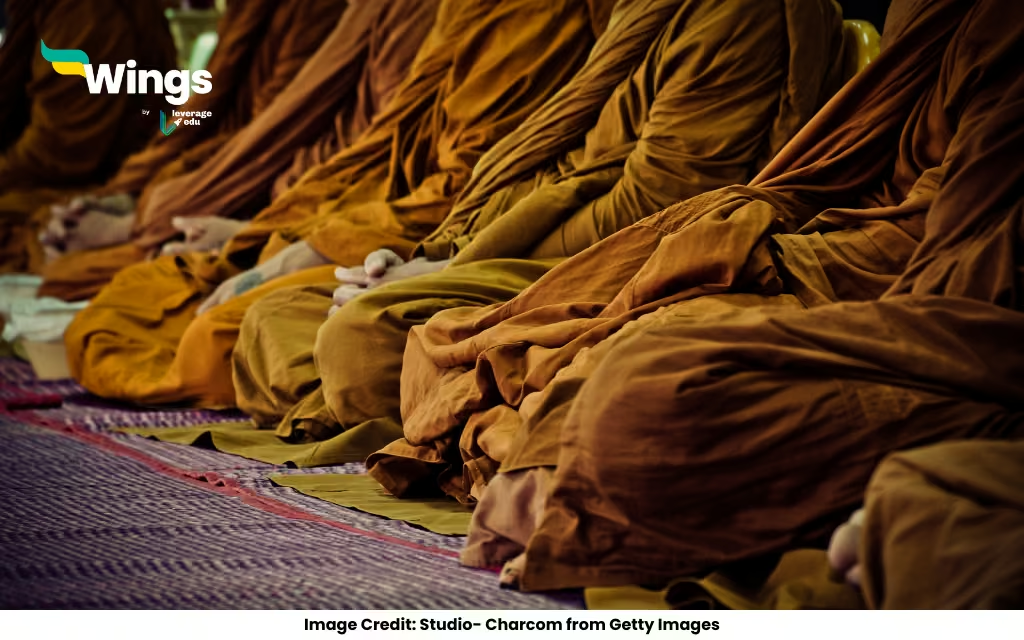
Bhikkhus is a term rooted in ancient Indian spiritual traditions, particularly in Buddhism. It refers to ordained male monks who have renounced worldly life to follow the path of enlightenment as taught by Gautama Buddha. The feminine form of the term is bhikkhuni, meaning a female monk or nun.
Meaning and Origin of “Bhikkhus”
The word bhikkhu (Pāli) or bhikṣu (Sanskrit) literally means “beggar” or “almsman.” It originated from the practice of early Buddhist monks who survived on alms collected from laypeople, symbolizing their renunciation of material possessions and dependence on the community.
Core Aspects of a Bhikkhu’s Life
| Aspect | Description |
| Renunciation | Bhikkhus give up material possessions and family ties to pursue spiritual goals. |
| Alms Round (Pindapata) | Daily practice of collecting food from laypeople as an act of humility. |
| Precepts | Bhikkhus observe at least 227 precepts as outlined in the Vinaya Pitaka. |
| Meditation & Study | A significant part of their time is dedicated to meditation and scriptural study. |
| Community Life | Live in monasteries or forest hermitages with other monks, supporting each other’s practice. |
| Teaching | Senior bhikkhus often teach and guide laypeople and younger monks. |
Bhikkhus in the Modern World
In modern times, bhikkhus continue to play a vital role in Buddhist societies. You’ll find them in countries like Sri Lanka, Thailand, Myanmar, Cambodia, Laos, Tibet, Nepal, and even in the West, where Buddhism has taken root.
They serve as:
Symbols of spiritual discipline and morality
Spiritual guides and teachers
Custodians of Buddhist temples
Mediators in community conflicts
Also Read:
What breed is a pocket dog?
Who is called the Sarpanch?
Which tributary of Indus originates from Himachal Pradesh?


 60,000+ students trusted us with their dreams. Take the first step today!