

 One app for all your study abroad needs











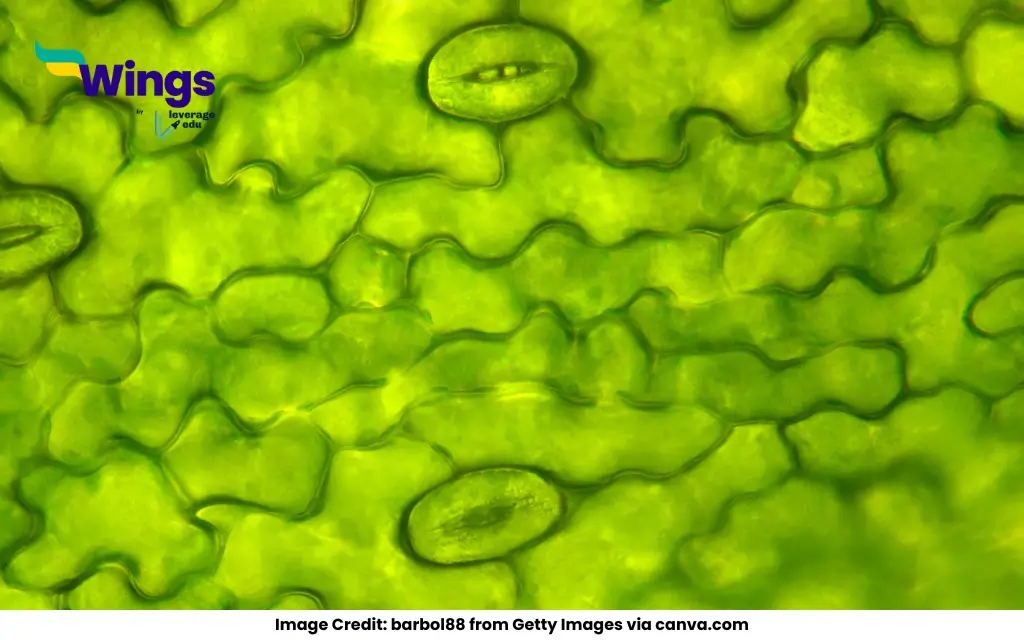
Stomata (singular: stoma) are tiny pores or openings found mainly on the underside of plant leaves, though they can also be present on stems and other green parts of the plant. These microscopic structures play a crucial role in a plant’s ability to exchange gases with the environment. Each stoma is surrounded by a pair of specialized kidney-shaped cells called guard cells. These guard cells control the opening and closing of the stomata based on the plant’s needs and environmental conditions.
When the plant has enough water, the guard cells swell and curve outward, causing the stoma to open. On the other hand, when the plant is short on water, the guard cells become flaccid and the stoma closes to conserve water.
Functions of Stomata
Gas Exchange: One of the most important functions of stomata is to allow the exchange of gases between the plant and its environment. During the process of photosynthesis, plants take in carbon dioxide (CO₂) from the air through the stomata. At the same time, oxygen (O₂), which is produced as a byproduct of photosynthesis, is released into the air through these openings. This gas exchange is essential for the plant’s survival and also plays a key role in maintaining the balance of oxygen and carbon dioxide in the atmosphere.
Transpiration: Stomata also help in the process of transpiration, which is the loss of water vapor from the surface of leaves. This loss of water helps in cooling the plant, similar to how sweating cools the human body. Transpiration also creates a suction force that helps in pulling water and minerals from the roots up to different parts of the plant.
In summary, stomata are tiny pores that play a vital role in a plant’s life by helping with gas exchange and water regulation. These simple structures have a major impact on plant health and on the environment as a whole.
Common Doubts of Biology


 60,000+ students trusted us with their dreams. Take the first step today!