

 One app for all your study abroad needs











Answer
Verified
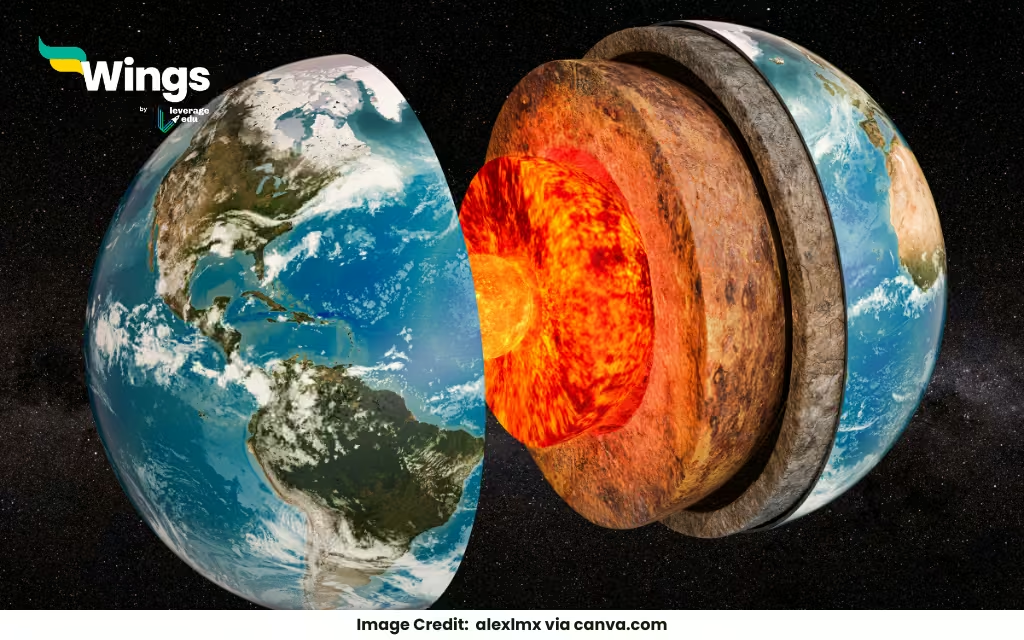
The thinnest layer of the Earth is known as the crust. It is the outermost solid layer of our planet and forms the surface on which we live. Compared to the other internal layers of the Earth—the mantle and the core—the crust is extremely thin and fragile, yet it plays a vital role in Earth’s geology.
Structure of the Earth
The Earth is made up of four main layers:
| Layer | Position | Thickness | State | Key Features |
| Crust | Outermost | 5–70 km | Solid | Thinnest layer; includes land and ocean floors |
| Mantle | Below the crust | ~2,900 km | Semi-solid | Contains molten rock (magma) |
| Outer Core | Below the mantle | ~2,200 km | Liquid | Made mostly of iron and nickel |
| Inner Core | Center of the Earth | ~1,220 km | Solid | Extremely hot and dense |
More About the Earth’s Crust
Types of Crust:
- Continental Crust: Thicker (up to 70 km) and less dense.
- Oceanic Crust: Thinner (around 5–10 km) but denser.
Composition: Primarily made of igneous, metamorphic, and sedimentary rocks, rich in silicon, oxygen, aluminum, and iron.
Importance:
- Supports all life forms.
- Contains soil, minerals, fossil fuels, and other natural resources.
Also Read:
How to Close HDFC Bank Account Online?
Is civet cat found in India?
What is COPRA?


 60,000+ students trusted us with their dreams. Take the first step today!