

 One app for all your study abroad needs











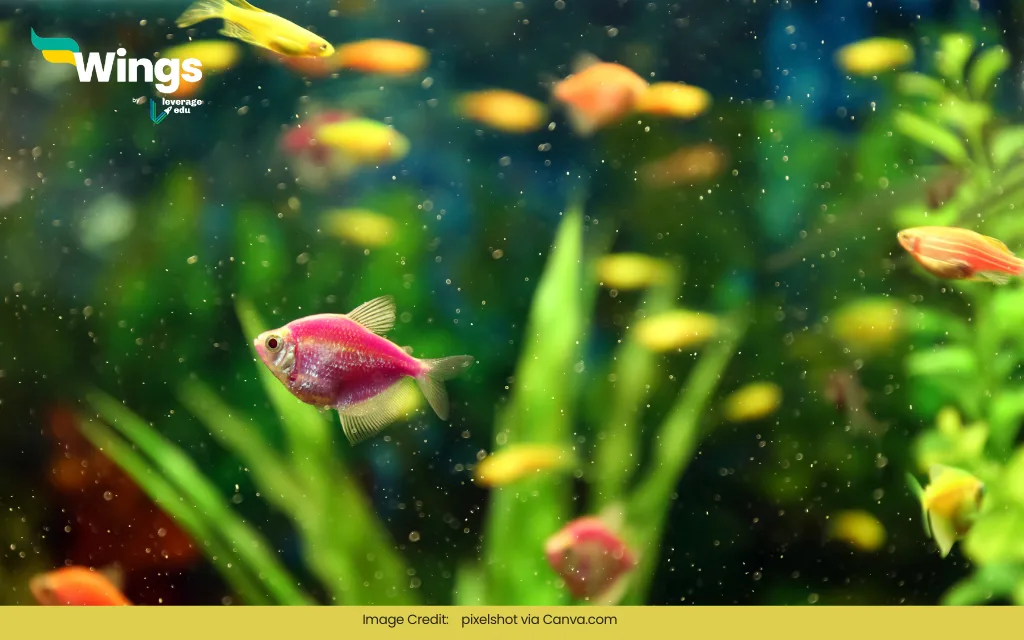
Answer: D) Pisciculture.
The study of fish is called Pisciculture. Pisciculture is a term that is taken from the Latin words: piscis (fish) and culture (rearing). This means artificial breeding, rearing, and management of fish in ponds, tanks or other controlled environments. In this article, we will understand the meaning of pisciculture, its significance, and how it is different from ichthyology. You will also learn about the common types of pisciculture.
What is Pisciculture and How is it Different from Ichthyology?
Pisciculture is a branch of fish farming that emphasises culturing and producing fish for commercial trade, food, or other conservation purposes. It includes work such as feeding, selecting broodstock, pond management, and harvesting.
It is different from ichthyology because ichthyology is a branch of zoology that involves the study of biology, behaviour, classification, and ecology of fish in their natural habitats. Ichthyology is involved with the investigation of evolutionary history, life cycles and ecological roles. On the other hand, Pisciculture is concerned with the optimisation of health, growth rate, and yield in controlled systems.
Why is Pisciculture Important?
The study of fish is called Pisciculture. Pisciculture is considered important for several reasons. Some of these reasons are provided below:
- Food Security: Fishes are rich in omega-3 fatty acids, vitamins, and are a rich source of protein and minerals. Pisciculture assists in meeting the global demand for fish without over-exploitation.
- Economic Benefits: Fish farming is responsible for the creation of several jobs in feed production, hatcheries, processing plants and construction. It offers a sustainable livelihood for rural communities.
- Conservation & Research: The controlled breeding programs help in restoring the endangered species. Moreover, it can help in providing live specimens for scientific studies.
What are the Common Types of Pisciculture?
The study of fish is called Pisciculture. The following are the three main culture systems used in pisciculture:
- Monoculture: This refers to the raising of a single species in a tank or pond. Feeding and management of the species is taken care of.
- Polyculture: This refers to the cultivation of multiple, compatible species together. The focus here is on using various ecological niches to improve overall yield.
- Monosex Culture: This refers to the production of all female or all male populations to increase the growth rate and bring uniformity.
The study of fish is called pisciculture. To understand pisciculture, you can visit a ocal fish farm or school aquarium to observe the feeding routines. You can also choose to set up a small tank with goldfish and document its daily growth changes.
Common Reads:


 60,000+ students trusted us with their dreams. Take the first step today!