

 One app for all your study abroad needs











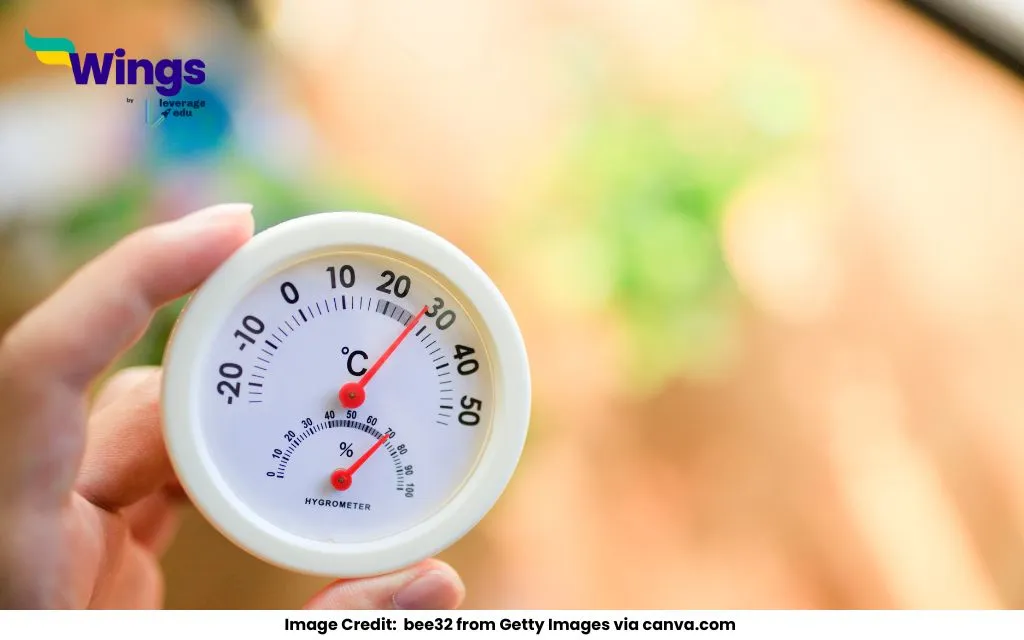
Answer: The amount of water vapour present in the air is termed as ‘Absolute Humidity’. It gives a clear idea of the total moisture present in the air, which is useful in various fields like agriculture, meteorology, and daily weather reports.
Complete Answer:
Absolute humidity is a measure of the actual amount of water vapor present in the air. It tells us how much moisture is in the air at a given time and place, regardless of temperature.
In simple terms, absolute humidity is defined as the mass of water vapor (in grams) present in one cubic meter of air. It is usually expressed in grams per cubic meter (g/m³).
For example, if the absolute humidity is 10 g/m³, it means that there are 10 grams of water vapor in every cubic meter of air.
It is important to note that absolute humidity changes with temperature. Warm air can hold more water vapor than cold air. So, even if the amount of moisture stays the same, the absolute humidity may appear different at different temperatures.
Formula of Absolute Humidity
Absolute Humidity=Mass of water vapor / Volume of air(g/m3)
Why is Absolute Humidity Important?
- It helps in understanding how moist or dry the air is.
- It plays an important role in weather forecasting and climate studies.
- It affects human comfort, health, and even plant growth.
Difference between Absolute Humidity and Relative Humidity:
While absolute humidity gives the actual amount of water vapor, relative humidity tells us how much water vapor is present in the air compared to the maximum it can hold at that temperature (in percentage).
Check out common Social Science questions here:


 60,000+ students trusted us with their dreams. Take the first step today!