

 One app for all your study abroad needs











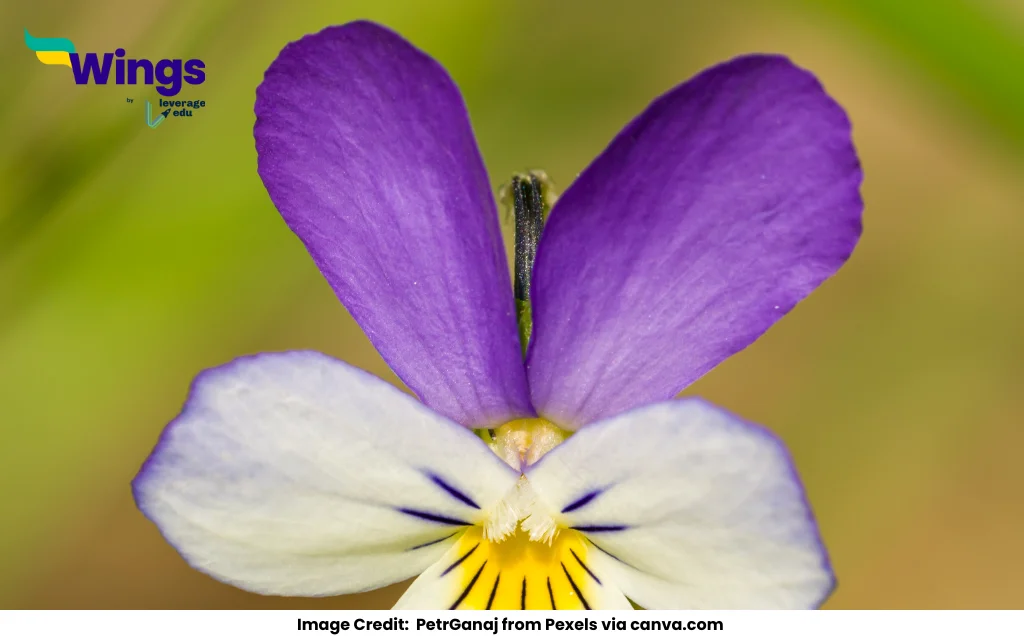
Answer: A zygomorphic flower is a flower that can be divided into two halves by only a vertical plane. It shows bilateral symmetry. The floral parts are unevenly arranged, and the symmetry is limited to a single plane. One of the best examples of Zygomorphic is the Pea.
Complete Answer:
A zygomorphic flower is a type of flower that shows bilateral symmetry. It can be divided into two equal mirror halves by only one vertical plane. The parts of the flower, such as petals, sepals, stamens, and carpels, are arranged in such a way that only one line of symmetry is possible.
Features of Zygomorphic Flowers in Pollination
Zygomorphic flowers are commonly found in plants that rely on animals or insects for pollination.
- These flowers have a unique shape that guides pollinators like bees or butterflies to land in a fixed direction.
- The fixed landing position helps the pollinators come into contact with the pollen and reproductive parts of the flower.
- This structure ensures accurate and effective transfer of pollen between flowers.
- In zygomorphic flowers, the petals are unequal in size and shape, which helps attract specific types of pollinators.
- The flowers are not symmetrical from every angle and can be divided into two halves by only one vertical plane.
- The unique shape and structure of zygomorphic flowers increase the chances of successful pollination and seed formation.
Zygomorphic Flower Example
An example of a zygomorphic flower is the pea (Pisum sativum). Other common examples include bean, clitoria, gulmohar, and orchid. In the pea flower, there is a distinct arrangement of one standard petal, two wing petals, and two keel petals, which clearly shows bilateral symmetry.
Zygomorphic flowers are commonly found in plant families such as Fabaceae, Lamiaceae, and Orchidaceae. These flowers promote cross-pollination and ensure that the pollinator comes into contact with the reproductive parts of the flower.

Fun Fact
Do you know some orchids, which are zygomorphic flowers, mimic the appearance and scent of female insects to attract male pollinators for effective pollination?
Check out other Biology questions from here:


 60,000+ students trusted us with their dreams. Take the first step today!