

 One app for all your study abroad needs











Correct Answer: c. Sikkim
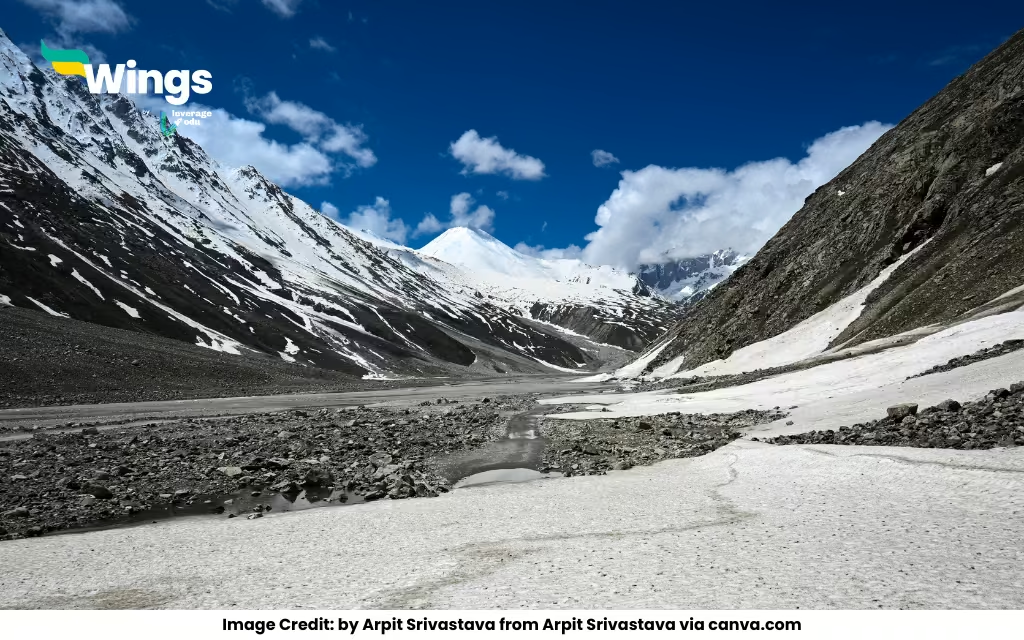
Nathu La Pass is one of India’s most fascinating and strategic mountain passes, connecting our country with China. Located in the beautiful state of Sikkim, this high-altitude pass is not just a tourist spot but also a key part of India’s defence and trade routes. Sitting at a height of around 14,140 feet, Nathu La holds historical, political, and cultural importance.
Nathu La Pass Location in Sikkim
Let’s start with where Nathu La actually is. This mountain pass lies in the Eastern part of Sikkim, close to Gangtok, the state’s capital. It forms part of the ancient Silk Route, which was once used for trade between India and Tibet. Today, the road is well-maintained and monitored by the Indian Army, as it leads directly to the Indo-China border.
Sikkim, being one of the smallest states in India, punches well above its weight in terms of natural beauty and strategic value. The winding roads, snow-covered peaks, and high-altitude air make visiting Nathu La a truly unforgettable experience.
Strategic Importance of Nathu La Pass
Now here’s where things get interesting. Nathu La isn’t just a scenic mountain pass, it’s a major point of military significance. The pass connects India with China’s Tibet Autonomous Region, and is one of the few open trading points between the two countries. During times of conflict or border tension, this area becomes extremely sensitive.
The Indian Army keeps a strong presence here to monitor the border, and both Indian and Chinese soldiers patrol their respective sides. There’s even a spot where tourists can see Chinese soldiers across the fence, imagine that! For geography and current affairs students, Nathu La is a real-world example of why location matters in international relations.
History of Nathu La Pass
Nathu La Pass has a long and eventful past. It was a key stop on the Silk Route, used by traders who carried goods between India and Tibet centuries ago. Everything from silk and wool to salt passed through this icy corridor. But in 1962, after the Indo-China war, the pass was shut down for decades.
It wasn’t until 2006 that the route was reopened for trade, thanks to a new agreement between India and China. Since then, seasonal trade has resumed, helping local economies and rekindling ancient connections. Knowing this history helps you appreciate how a cold, remote spot like Nathu La can play such a warm role in connecting cultures.
Climate and Conditions at Nathu La
Nathu La is freezing almost all year round. Because of its high altitude, temperatures can dip way below zero, especially in winter. Snowfall is common, and roads may close suddenly due to landslides or bad weather. That’s why the pass remains closed on Mondays and Tuesdays and during peak winters.
The oxygen level is also quite low at this height, so visitors need to be careful and ideally spend a day or two acclimatizing in Gangtok before making the trip. But if you’re properly prepared, you’ll find the landscape nothing short of magical—white snow, crystal-blue skies, and a feeling of standing at the top of the world.
Quick Facts on Location of Nathu La Pass
- Location: East Sikkim, near Gangtok
- Height: 14,140 feet (approx. 4,310 meters)
- Historical Role: Part of the ancient Silk Route
- Permit Required: Yes (for Indian citizens only)
- Closed On: Mondays and Tuesdays; winters may block access
- Fun Fact: You can wave at Chinese soldiers across the border!
Summary
Question: Nathu La Pass is situated in which State of India?
Answer: The famous Nathu La Pass is in Sikkim, and it’s much more than just a snowy tourist spot. With a rich history, vital trade role, and national security importance, Nathu La is one of those places that truly deserves attention in your GK prep. It connects people, countries, and cultures, all from the icy heights of the Eastern Himalayas.
Also Read:
The First Nuclear Plant was Built in India at
The Highest Mountain Peak in India is ____
In Which State is the Krishna Sagar Dam Located?
The World’s Highest Rainfall occurs in


 60,000+ students trusted us with their dreams. Take the first step today!