

 One app for all your study abroad needs











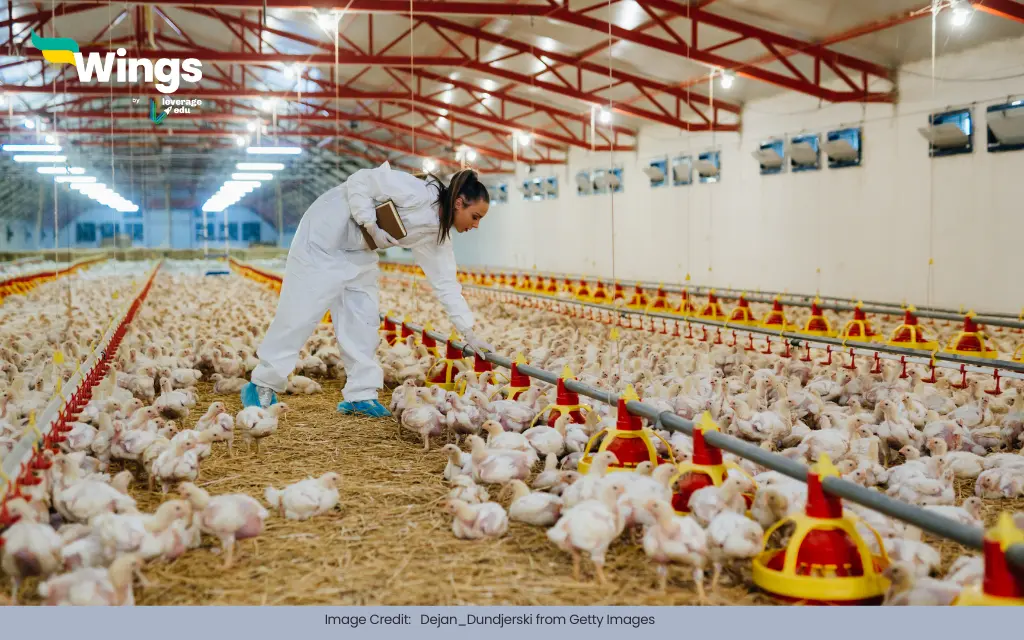
The management practices that are common in dairy and poultry farming are: providing clean, comfortable housing; balanced, hygienic food and clean water; good ventilation and lighting; and regular health care (including vaccination).
Proper Shelter and Housing
Management practices are common in dairy and poultry farming. One of the first steps that these farmers take is to provide a proper shelter to animals. Be it a cow shed or a chicken coop, the space has to be kept neat and clean. Moreover, there must be enough space for the animals to move freely. Proper ventilation prevents the buildup of harmful gases, and natural or artificial lighting helps animals to sleep and eat at proper times.
Balanced Nutrition
Another important management practice is providing balanced nutrition to animals. All animals require a balanced diet. For example, poultry are fed grains along with vitamins and minerals, and dairy cattle may eat hay, grains or silage. Feed additives like calcium for layers (egg-laying chickens) are also provided. It is also important to provide animals with clean drinking water. A cow can drink up to 50 litres per day.
Animal Health Care
What management practices are common in dairy and poultry farming? It’s animal healthcare. It is important to provide regular vaccination to animals against diseases such as fowl pox. Besides this, farmers also conduct simple checks like checking the beaks and eyes, and measuring body temperature to spot early illness.
Record-Keeping and Data
Management practices are common in dairy and poultry farming, and record keeping is one of the keys. Farms often keep records of the number of animals, daily egg count/milk yield, or the amount of feed given in kilograms, and the water litres used. Tracking these figures helps farmers to spot any trends. For example, if the milk production stops from 12 L to 10 L per cow, they notice.
Common Reads:


 60,000+ students trusted us with their dreams. Take the first step today!