

 One app for all your study abroad needs











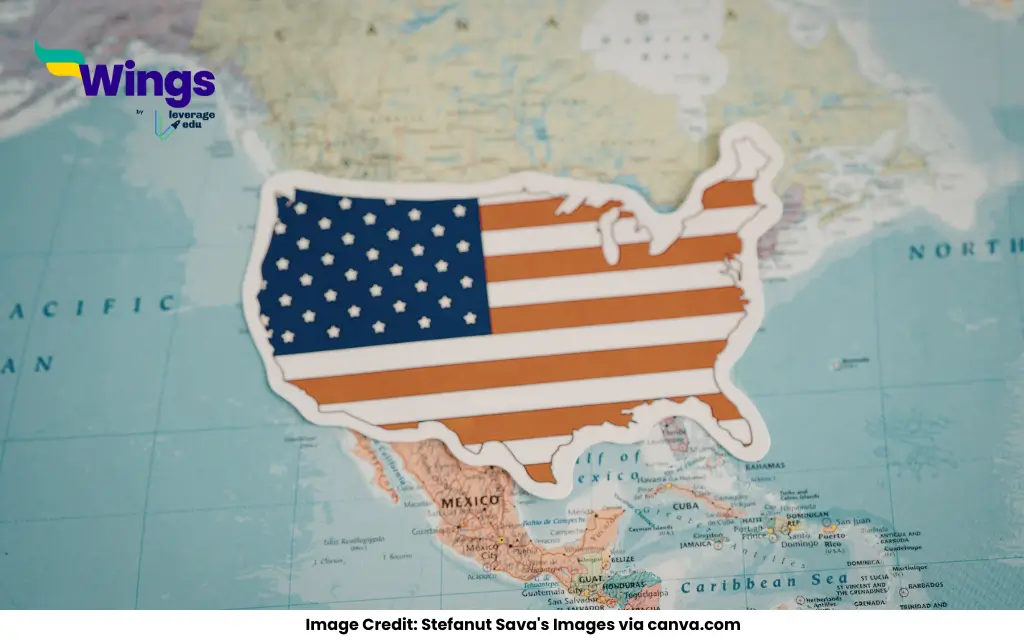
Answer: The correct answer to the question ‘how many time zones are there in the United States?’ is option D. 6. The United States spans several time zones due to its vast size.
Number of Time Zones in the United States
A time zone can be described as an area of longitudes where the same standard time is followed. These zones represent regions across the world that share a uniform time. The local time within a particular time zone is determined by its difference, or offset, from Coordinated Universal Time (UTC), which serves as the global time reference.
The United States has 6 time zones. Here are the details of all the time zones:
1. Eastern Time Zone (ET):
The Eastern Time Zone is the most populous time zone in the United States and includes major cities like New York City, Washington D.C., Atlanta, and Miami. It operates at UTC-5 during standard time and UTC-4 during daylight saving time. This time zone covers all or parts of 23 states in the eastern part of the country. It is considered the “default” time for national broadcasts and federal government schedules. Eastern Time is also crucial for financial markets, as the New York Stock Exchange and NASDAQ both open and close based on this zone.
2. Central Time Zone (CT):
The Central Time Zone is one hour behind Eastern Time, operating at UTC-6 during standard time and UTC-5 during daylight saving time. It covers a large portion of the central U.S., including cities like Chicago, Dallas, and New Orleans. Central Time is important for agriculture and industry, historically helping to coordinate activities across the Midwest and South. Many national television programs are broadcast an hour earlier here than in the East. This time zone spans 20 states either fully or partially.
3. Mountain Time Zone (MT):
The Mountain Time Zone is two hours behind Eastern Time, at UTC-7 during standard time and UTC-6 with daylight saving. It includes states like Colorado, Utah, and parts of Arizona and New Mexico. Unlike most of the country, most of Arizona (except the Navajo Nation) stays on Mountain Standard Time year-round and does not observe daylight saving. Mountain Time is named for the Rocky Mountains and covers many less-populated areas, including large stretches of desert and mountainous terrain.
4. Pacific Time Zone (PT):
The Pacific Time Zone operates at UTC-8 during standard time and UTC-7 during daylight saving time, making it three hours behind Eastern Time. It covers states like California, Washington, Oregon, and Nevada. Major cities such as Los Angeles, San Francisco, Seattle, and Las Vegas fall under this zone. Pacific Time is particularly significant for the entertainment industry (Hollywood) and technology sector (Silicon Valley). Because it is the westernmost of the contiguous time zones, prime-time television shows air much earlier compared to the East Coast.
5. Alaska Time Zone (AKT):
The Alaska Time Zone covers almost all of the state of Alaska and operates at UTC-9 during standard time and UTC-8 with daylight saving. Alaska’s vast, rugged terrain spans multiple climates, from Arctic tundra to coastal rainforests. The time difference between Alaska and the U.S. mainland means business and communication schedules often have to adjust accordingly. Some remote western parts of Alaska actually observe a different time zone, the Hawaii-Aleutian Time Zone, but most of Alaska follows Alaska Time.
6. Hawaii-Aleutian Time Zone (HAT):
The Hawaii-Aleutian Time Zone is ten hours behind Coordinated Universal Time (UTC-10), and notably, Hawaii does not observe daylight saving time. This time zone covers all of Hawaii and part of Alaska’s Aleutian Islands. Hawaii’s tropical setting and isolation from the mainland give it a very different rhythm compared to other parts of the U.S., with business hours, flights, and communication often arranged with the time difference in mind. Because Hawaii does not shift for daylight saving, the time difference between Hawaii and the mainland U.S. changes depending on the season.
Common Geography Questions


 60,000+ students trusted us with their dreams. Take the first step today!
2 comments
What’s the abbreviation for Alaska?
Pretty sure it’s not KS.
Hi Patricia,
The abbreviation for Alaska is AK, not KS which is the abbreviation for Kansas.
I can see that we totally missed the error in our previous image. We have now changed it.
Thank you so so much for flagging this error with us. Hope to hear from you again. 🙂