

 One app for all your study abroad needs











1. 14
2. 13
3. 10
4. 11
Correct Answer: 4. 11
Rajasthan has 11 desert districts—Barmer, Bikaner, Churu, Ganganagar, Hanumangarh, Jaisalmer, Jalore, Jhunjhunu, Jodhpur, Nagaur, and Sikar—defined by their arid Thar Desert conditions. These districts face challenges like water scarcity but support vibrant economies and cultures through agriculture, tourism, and mineral wealth. Their story is one of adaptation and resilience.
What Are Desert Districts?
Rajasthan’s desert districts are areas dominated by the Thar Desert, known for its sandy dunes, scorching heat, and sparse rainfall. The 11 desert districts are Barmer, Bikaner, Churu, Ganganagar, Hanumangarh, Jaisalmer, Jalore, Jhunjhunu, Jodhpur, Nagaur, and Sikar. These regions get less than 500 mm of rain annually, making life tough but also fostering a unique way of living.
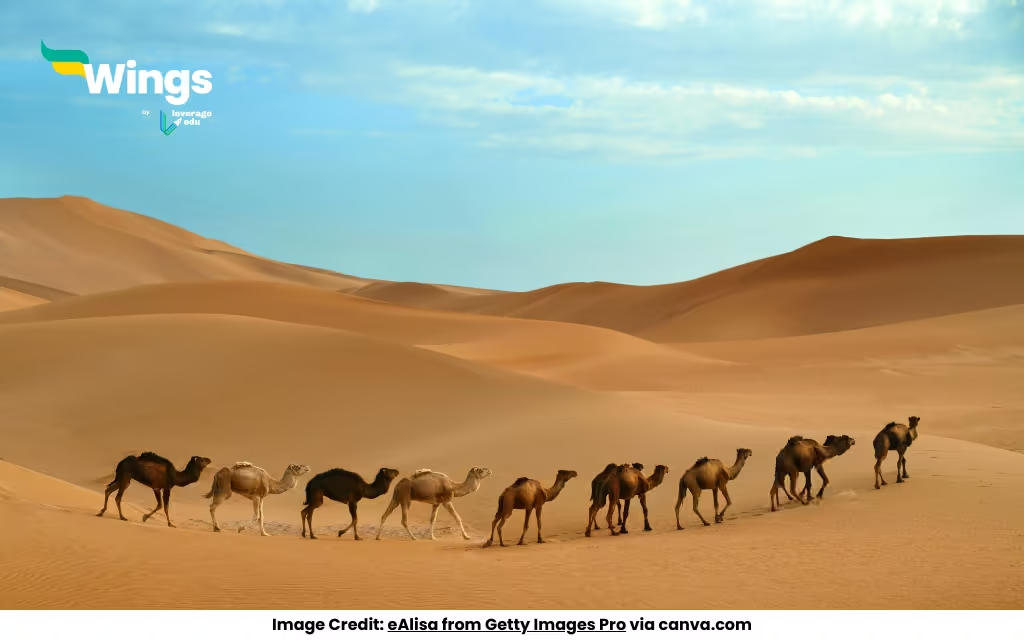
The Thar Desert, also called the Great Indian Desert, covers about 60% of Rajasthan, and these 11 districts fall fully or partly within its boundaries. From camel herding to vibrant festivals, the desert culture is a big part of Rajasthan’s identity, and understanding these districts helps you see how people adapt to extreme environments.
Quick Facts
- Number: 11 desert districts.
- Districts: Barmer, Bikaner, Churu, Ganganagar, Hanumangarh, Jaisalmer, Jalore, Jhunjhunu, Jodhpur, Nagaur, Sikar.
- Region: Part of the Thar Desert.
- Economy: Agriculture, livestock, tourism, oil, and gas.
- Challenges: Water scarcity, soil erosion, climate change.
- Culture: Known for festivals, forts, and folk traditions.
Why 11 Districts?
The number 11 comes from official classifications based on rainfall, soil, and vegetation patterns. Rajasthan has 33 districts total, but only these 11 are considered true desert districts due to their arid climate and desert-specific features like sand dunes and salty groundwater. The other options—14, 13, or 10—don’t match the geographical data used by the state or meteorological departments.
Each district has its own vibe: Jaisalmer is famous for its golden forts, while Ganganagar benefits from canal irrigation. Knowing the exact number helps students understand the scale of Rajasthan’s desert region and its impact on the state’s economy and culture.
Life in Rajasthan’s Desert Districts
Living in these desert districts is no easy feat. Water scarcity is a constant challenge, with many areas relying on wells, tanks, or modern pipelines for survival. People have adapted by building stepwells, practicing rainwater harvesting, and growing drought-resistant crops like millet and guar. Herding camels and goats is also a major livelihood.
Despite the harsh conditions, these districts are home to vibrant communities. Cities like Jodhpur and Bikaner blend desert traditions with modern life, hosting festivals like the Marwar Festival and camel fairs. For students, studying these districts shows how human ingenuity thrives in tough environments, making it a great geography topic.
Economic Activities in the Desert
The desert districts aren’t just barren landscapes; they’re economic hubs in their own way. Agriculture, though limited, relies on irrigation from canals like the Indira Gandhi Canal in Ganganagar and Hanumangarh, which has turned parts of the desert green. Livestock rearing, especially camels and cattle, is a major income source.
These districts also have mineral wealth, with Jaisalmer and Barmer producing oil and natural gas. Tourism is another big player, with Jaisalmer’s forts and Bikaner’s palaces drawing visitors worldwide. Understanding the economy of these 11 districts highlights how people turn challenges into opportunities in a desert setting.
Environmental Challenges
The desert districts face serious environmental issues, like water scarcity and soil erosion. Overgrazing and deforestation have degraded land in some areas, while climate change is making rainfall even more unpredictable. Sand dunes can also shift, threatening farmland and infrastructure, which is a growing concern.
Efforts like afforestation and sustainable irrigation are helping, but progress is slow. The Indira Gandhi Canal has been a game-changer for districts like Ganganagar, but it’s not enough to solve all problems. For students, this topic connects geography with real-world issues like sustainability and climate adaptation.
Cultural Significance of the Desert
Rajasthan’s desert districts are a cultural goldmine. From the colorful turbans of Jodhpur to the folk music of Barmer, the Thar Desert’s influence is everywhere. Festivals like Pushkar’s camel fair (near Nagaur) and Jaisalmer’s Desert Festival showcase the region’s art, music, and traditions, drawing tourists and preserving heritage.
The desert also inspires unique architecture, like Jaisalmer’s sandstone havelis and Bikaner’s Junagarh Fort. For students, exploring this culture shows how environment shapes identity, making these 11 districts a fascinating case study in human geography and resilience.
Summary
Question: How many districts are desert districts in Rajasthan?
Answer: 11 districts are desert districts in Rajasthan.
The 11 desert districts of Rajasthan are more than just sandy landscapes; they’re a testament to human survival and creativity. For students, learning about these districts connects geography, culture, and environmental science, showing how people thrive in tough conditions. It’s a topic that brings Rajasthan’s desert to life!
Also Read:
Chemical Formula of Quick Lime is __
Chemical Formula of Plaster of Paris is:
Which River was known as the ‘Sorrow of Bengal’?
Who is Considered the First Real Founder of Jainism?
Which is the Largest Desert in the World?


 60,000+ students trusted us with their dreams. Take the first step today!