

 One app for all your study abroad needs















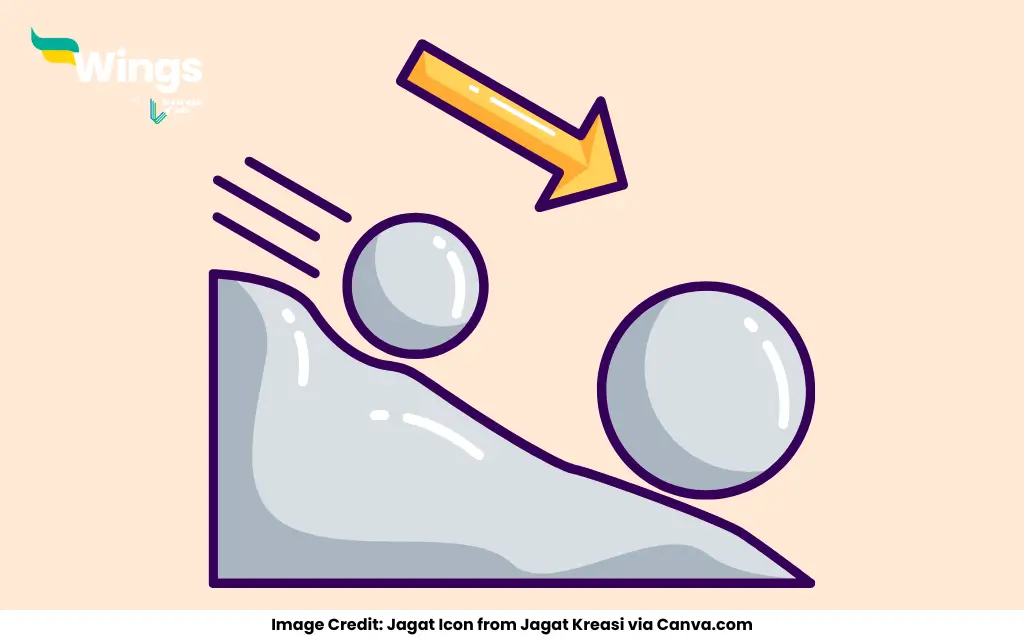
Answer: Inertia and mass are directly related. But before understanding how, we should understand what Inertia and Mass are. In simple words, the greater the mass of an object, the greater its inertia. Let’s understand it in a better way.
What is Inertia?
Inertia is a property of matter that makes an object resist any change in its state of motion.
This means:
- If something is at rest, it wants to stay at rest.
- If something is moving, it wants to keep moving at the same speed in a straight line.
This natural resistance to change is called inertia. You experience it in daily life, too. For example:
- When a bus suddenly stops, your body lurches forward.
- When it starts again, you’re pushed backwards.
That’s because your body resists the change in motion due to inertia.
What is Mass?
Mass is a measure of how much matter an object contains. It’s a scalar quantity (it has no direction), and it is usually measured in kilograms (kg). More mass means the object is “heavier” in terms of content, not necessarily weight (which depends on gravity).
How Are Inertia and Mass Related?
Now here’s the main point:
- Inertia depends only on mass.
- The more mass, the more inertia the object has.
That means it’s harder to change the motion of a heavier object than a lighter one.
For example:
- A small ball (like a tennis ball) is easy to stop or push.
- A heavy football player running fast is much harder to stop.
Because the football player has more mass, and therefore, more inertia.
Scientific Connection: Newton’s First Law
Newton’s First Law of Motion is also called the Law of Inertia. It says:
“An object will remain at rest or in uniform motion in a straight line unless acted upon by an external force.”
This law clearly shows that mass (and therefore inertia) determines how easily or how strongly an object resists change in motion.
So, in short, Inertia is the resistance to change in motion. Mass is the measure of how much inertia an object has. They are directly proportional to each other, which means:
More mass = more inertia.
Common Doubts of Physics:


 60,000+ students trusted us with their dreams. Take the first step today!