

 One app for all your study abroad needs











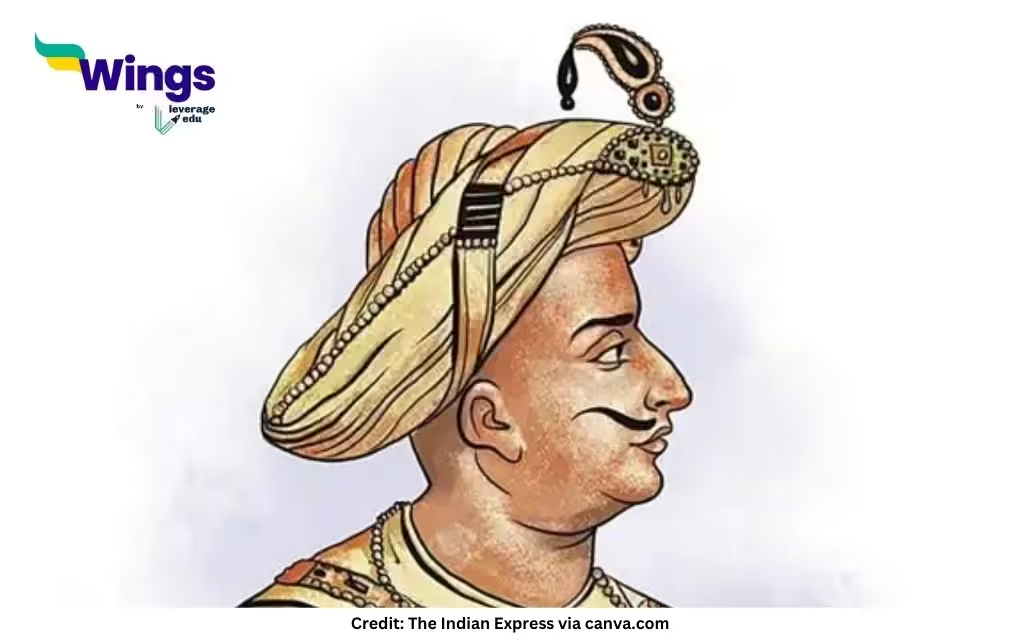
1. Mysore
2. Bengaluru
3. Srirangapatna
4. Bidar
Correct Answer: 3. Srirangapatna
Srirangapatna was the capital of Tipu Sultan’s Mysore Kingdom, chosen for its strategic island location and cultural significance. It served as the hub for Tipu’s military campaigns, reforms, and resistance against the British until its fall in 1799. The city’s forts, palace, and temple reflect its role as a political and cultural center, making it a key part of India’s history.
Why Srirangapatna was the Capital City of Tipu Sultan’s State Mysore?
Srirangapatna, a small island town on the Cauvery River, was Tipu Sultan’s capital during his rule from 1782 to 1799. Its location, surrounded by water, made it a natural fortress, perfect for defense against enemies like the British East India Company. Tipu inherited the throne from his father, Hyder Ali, and chose to keep Srirangapatna as the capital for its strategic and cultural significance.
The town was already a political and religious hub, home to the ancient Ranganathaswamy Temple, which gave it spiritual weight. Tipu’s decision to rule from here wasn’t just practical; it was a statement of power, blending military strength with cultural heritage. For students, understanding Srirangapatna’s role helps unpack Tipu’s reign and his resistance against colonial forces.
Quick Facts
- Capital: Srirangapatna, an island town on the Cauvery River.
- Ruler: Tipu Sultan (1782–1799).
- Strategic Role: Fortified for defense during Anglo-Mysore Wars.
- Cultural Sites: Ranganathaswamy Temple, Dariya Daulat Bagh, Gumbaz.
- Fall: Besieged by the British in 1799, ending Tipu’s rule.
- Legacy: A historical site reflecting Mysore’s resistance to colonialism.
Why Not the Other Cities?
The other options—Mysore, Bengaluru, and Mangalore—were important but didn’t serve as Tipu’s capital. Mysore city was the namesake of the kingdom and a cultural center, but Tipu preferred Srirangapatna for its defensibility. Bengaluru was a growing town but lacked the strategic advantages of Srirangapatna. Mangalore, a coastal port, was crucial for trade but too exposed to British naval attacks.
Srirangapatna’s island setting and fortified walls made it the ideal choice for Tipu’s headquarters, especially during his wars against the British. Knowing why he chose this capital over others helps clarify the military and political strategies that defined his rule.
Tipu Sultan’s Rule from Srirangapatna
Tipu ruled Mysore with a mix of innovation and defiance, and Srirangapatna was the nerve center of his kingdom. His palace, the Dariya Daulat Bagh, was a hub of administration and a showcase of his wealth and artistry. From here, he launched military campaigns, including the Anglo-Mysore Wars, using advanced weaponry like rockets, which impressed and challenged the British.
He also governed with reforms, promoting trade, agriculture, and sericulture (silk production). Srirangapatna’s markets bustled with goods, and its forts were stocked with arms. The city’s role as the capital made it a symbol of Tipu’s ambition to build a strong, independent kingdom, even as he faced growing colonial pressure.
Strategic Importance of Srirangapatna
Srirangapatna’s location was a military masterstroke. The Cauvery River acted as a moat, making it hard for enemies to attack. Tipu fortified the town with massive walls and cannons, turning it into one of India’s strongest citadels. The city’s bridges and gates were designed to control access, giving Tipu’s forces an edge in battles.
This strategic setup was key during the Third and Fourth Anglo-Mysore Wars. Even when the British besieged Srirangapatna in 1799, it held out until Tipu’s death in battle. For students, studying Srirangapatna’s defenses shows how geography and engineering shaped historical conflicts.
Cultural and Historical Legacy
Srirangapatna wasn’t just a military stronghold; it was a cultural gem. The Ranganathaswamy Temple drew pilgrims, and Tipu’s patronage of art and architecture left behind stunning sites like the Gumbaz mausoleum, where he’s buried. The city’s blend of Hindu and Islamic influences reflected the kingdom’s diverse heritage, with Tipu promoting tolerance despite his fierce reputation.
Today, Srirangapatna is a historical site, with its forts, palace, and temple attracting tourists and historians. Its story as Tipu’s capital offers a window into a pivotal era when Indian rulers fought to preserve their sovereignty against colonial powers, making it a key topic for history lessons.
The Fall of Srirangapatna
The end of Srirangapatna as Tipu’s capital came in 1799 during the Fourth Anglo-Mysore War. The British, allied with the Marathas and Nizam, besieged the city, breaching its walls after intense fighting. Tipu died defending Srirangapatna, and the British looted the city, marking the end of Mysore’s independence. The kingdom was then restored to the Wodeyar dynasty under British influence.
The fall of Srirangapatna was a turning point in India’s colonial history, showing the growing power of the British East India Company. For students, this event highlights the clash between local rulers and colonial forces, with Srirangapatna as the dramatic stage for Tipu’s final stand.
Summary
Question: During the Rule of Tipu Sultan, which was the Capital City of his State Mysore?
Answer: During the rule of Tipu Sultan, Srirangapatna was the Capital City of his State Mysore.
Srirangapatna’s story as Tipu Sultan’s capital is a blend of strategy, culture, and defiance. Its role in the Anglo-Mysore Wars and its rich heritage make it a fascinating topic for students. Understanding why Srirangapatna was chosen over other cities like Mysore or Bengaluru sheds light on Tipu’s vision and the challenges of his era.
Also Read:
If Shah Jahan built the Taj Mahal, What Did Hamida Banu Begum Built
Jaya Samhita is the Original Name of:
Which State has the Longest Coastline in India?
Where is the Headquarters of BIMSTEC situated?
Which Country will Host the 2031 ODI Cricket World Cup?


 60,000+ students trusted us with their dreams. Take the first step today!