

 One app for all your study abroad needs











Answer
Verified
Answer: The primary difference between C3 and C4 plants lies in their photosynthetic pathways, leaf anatomy, and efficiency under environmental conditions.
4 Differences Between C3 and C4 Plants
Here’s a table summarizing four key differences, covering their first product, site of photosynthesis, photorespiration levels, and climate preference.
| Feature | C3 Plants | C4 Plants |
| 1. First stable product | 3-carbon compound (3-phosphoglyceric acid – PGA) | 4-carbon compound (Oxaloacetic acid – OAA) |
| 2. Site of photosynthesis | Entire process occurs in mesophyll cells | Occurs in both mesophyll and bundle sheath cells |
| 3. Photorespiration | High photorespiration, leading to energy loss | Negligible photorespiration, more efficient |
| 4. Optimal climate | Grows well in cool, moist environments | Adapted to hot, dry environments |
What Are C3 and C4 Plants?
Plants are classified as C3 or C4 based on the type of carbon compound first formed during the process of photosynthesis. The distinction is crucial for understanding how different plants adapt to their environments.
- C3 plants follow the Calvin cycle, where the first product is a 3-carbon molecule (PGA).
- C4 plants use a two-stage carbon fixation process, producing a 4-carbon molecule (OAA) as the first product.
Examples of C3 and C4 Plants
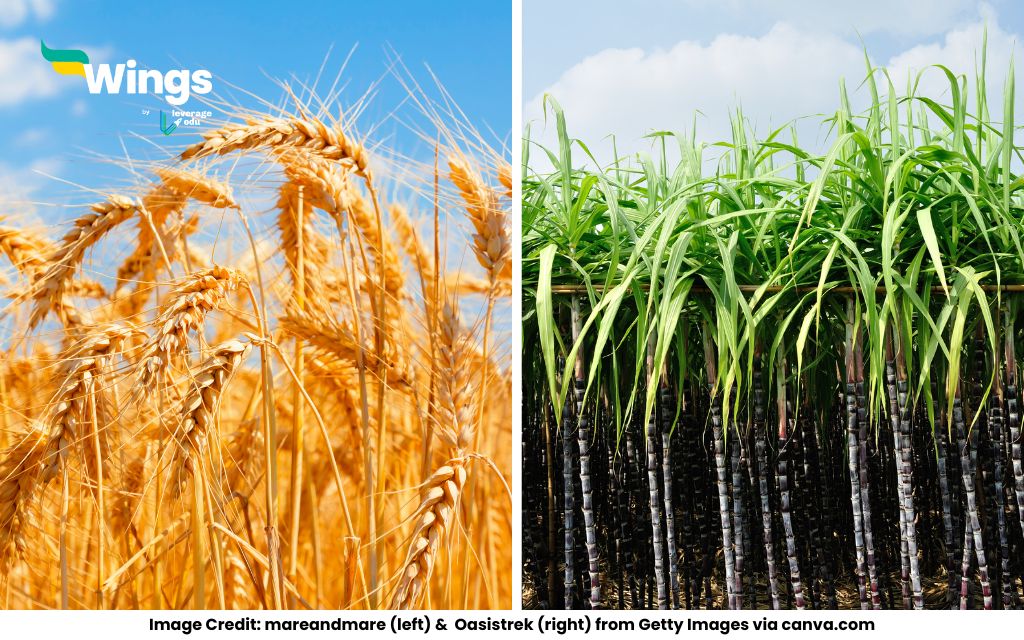
- C3 Plants: Rice, wheat, barley, potato, and spinach.
- C4 Plants: Maize (corn), sugarcane, sorghum, and pearl millet.
Think C3 = Cool and Common, and C4 = Hot and Hardy.
This will help you remember that C3 plants dominate in cooler climates, while C4 plants excel in warmer, drier regions.
Common Doubts in Biology


 60,000+ students trusted us with their dreams. Take the first step today!