

 One app for all your study abroad needs











1. CaO
2. Ca(OH)₂
3. CaCO₃
4. CaSO₄
Correct Answer: 1. CaO
Quick lime, or calcium oxide (CaO), is a versatile compound made by heating limestone to release CO₂. Its reactivity with water and strong basic nature make it essential in construction, agriculture, and environmental applications. While it’s a powerhouse in industries, its production has environmental challenges, and handling it requires caution due to its exothermic reactions.
What Is Quick Lime?
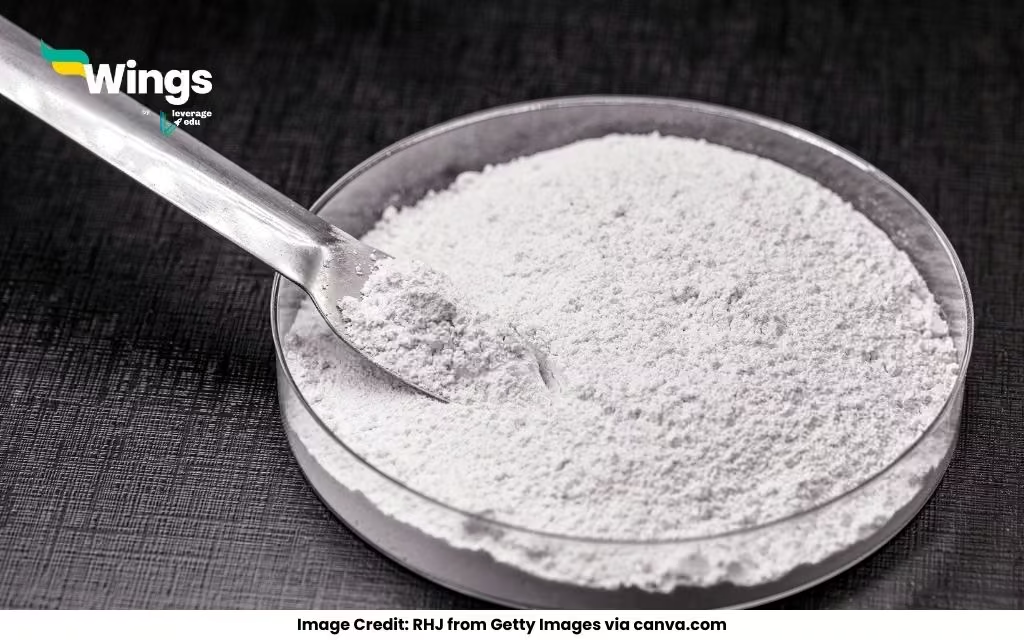
Quick lime, also known as calcium oxide or burnt lime, is a white, powdery substance that’s super reactive. It’s made by heating limestone (CaCO₃) in a process called calcination, where it loses carbon dioxide and turns into CaO. This stuff is ancient, used by civilizations like the Romans for making mortar. Its high reactivity with water makes it a go-to for creating other compounds like slaked lime.
The reason it’s called “quick” is because of how fast it reacts with water, producing heat and forming calcium hydroxide (Ca(OH)₂). This exothermic reaction is why it’s handled with care in labs and industries. From construction to soil treatment, quick lime’s versatility makes it a staple in many fields, and knowing its formula, CaO, is crucial for understanding its chemical behavior.
Quick Facts
- Formula: CaO (calcium oxide).
- Common Name: Quick lime or burnt lime.
- Production: Made by heating limestone (CaCO₃) at 900–1000°C.
- Uses: Construction, agriculture, steelmaking, water treatment.
- Safety: Highly reactive with water, requires protective gear.
- Environmental Note: CO₂ emitter but used in pollution control.
How Is Quick Lime Made?
The production of quick lime is all about transforming limestone through heat. Limestone, which is mostly calcium carbonate (CaCO₃), is heated in a kiln at around 900–1000°C. This high temperature causes the limestone to break down, releasing carbon dioxide (CO₂) and leaving behind calcium oxide (CaO). The process sounds simple, but it’s energy-intensive and requires precise control to get pure quick lime.
Historically, people used wood-fired kilns to make quick lime, but modern industries use advanced furnaces for efficiency. The resulting CaO is a fine, white powder or lumps that are highly reactive. Fun fact: the quality of quick lime depends on the purity of the limestone and the firing process, which is why industrial-grade quick lime is carefully monitored for consistency.
Why CaO and Not the Others?
The chemical formula CaO is specific to quick lime because it reflects the loss of CO₂ from calcium carbonate. Let’s look at the other options: Ca(OH)₂ is slaked lime, formed when quick lime reacts with water. CaCO₃ is limestone, the starting material, and CaSO₄ is gypsum, a totally different compound used in things like drywall. Each has distinct properties, so mixing them up could mess with your chemistry experiments.
Knowing the formula is key because it tells you about the compound’s structure and reactivity. CaO is a simple ionic compound with one calcium atom and one oxygen atom, making it highly basic and reactive. This is why it’s used in processes that need a strong base, like neutralizing acidic soils or treating wastewater. Getting the formula right helps you predict how it’ll behave in reactions.
Uses of Quick Lime in Everyday Life
Quick lime is a bit of a superstar in industries. In construction, it’s used to make mortar and plaster, binding materials together for strong buildings. It’s also a key ingredient in cement production, which is the backbone of modern infrastructure. In agriculture, farmers use quick lime to adjust soil pH, making it less acidic so crops can thrive.
Beyond that, quick lime is used in steelmaking to remove impurities, in water treatment to clean up contaminants, and even in food processing for things like sugar refining. Its ability to react with water and form slaked lime makes it super versatile. Next time you see a solid building or a healthy farm, quick lime might just be the unsung hero behind it!
Safety Tips for Handling Quick Lime
Quick lime is powerful, but it’s not something you want to mess around with carelessly. Because it reacts vigorously with water, it can generate a lot of heat, which can cause burns or start fires if not handled properly. Always wear protective gear like gloves, goggles, and masks when working with it in a lab or industrial setting to avoid skin or respiratory irritation.
Proper storage is also key. Quick lime needs to be kept in airtight containers to prevent it from reacting with moisture in the air. If it absorbs water, it can turn into slaked lime, which might not be what you need for your project. Following safety protocols ensures you can use quick lime effectively without any mishaps.
Environmental Impact of Quick Lime
Quick lime production has a significant environmental footprint because it’s energy-intensive and releases CO₂ during calcination. This makes it a contributor to greenhouse gas emissions, which is a concern in today’s eco-conscious world. Industries are working on greener methods, like using renewable energy for kilns or capturing CO₂ emissions, to make the process more sustainable.
On the flip side, quick lime helps the environment in some ways. It’s used in pollution control, like scrubbing sulfur dioxide from industrial emissions to reduce acid rain. It also plays a role in treating contaminated water, making it safer for ecosystems. Balancing its production with environmental benefits is a hot topic in industrial chemistry.
Summary
Question: Chemical formula of quick lime is __
Answer: Chemical formula of quick lime is CaO.
Understanding quick lime’s chemical formula, CaO, opens the door to appreciating its wide-ranging uses and importance in chemistry. From building skyscrapers to cleaning water, this compound is a quiet hero in many processes. For students, mastering its properties and applications is a step toward acing chemistry and understanding real-world science.
Also Read:
What is the Chemical Name of Bleaching Powder?
What is Blue Vitriol?
Which Country will Host the 2031 ODI Cricket World Cup?
Which is the Largest Desert in the World?
What is the Dimension of Impulse?


 60,000+ students trusted us with their dreams. Take the first step today!