

 One app for all your study abroad needs











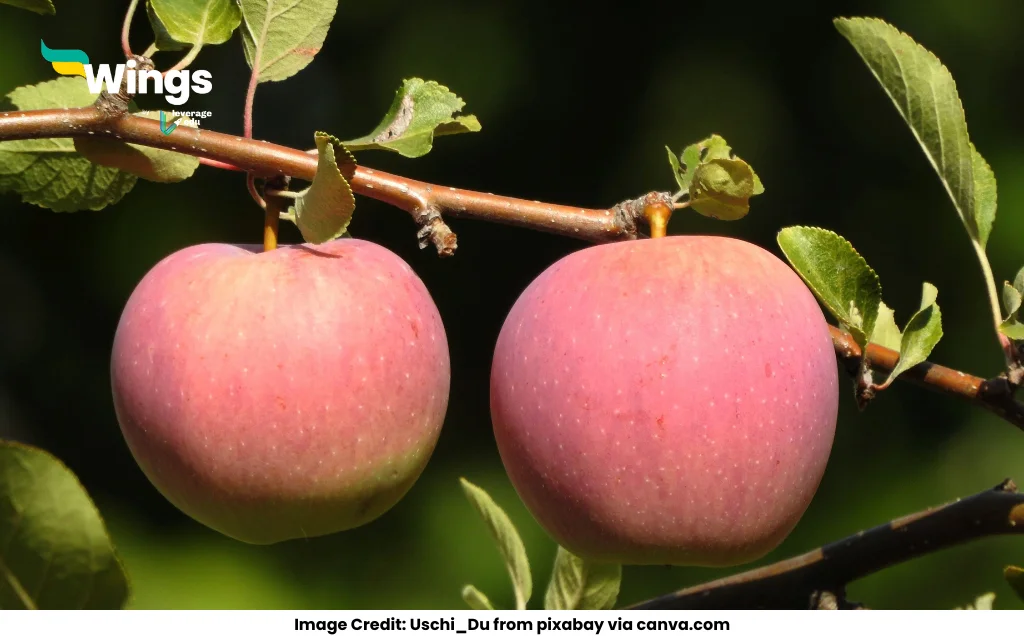
Answer: An apple is referred to as a false fruit because it develops from the thalamus, not just from the ovary. In true fruits, only the ovary forms the fruit after fertilization. But in apples, the edible part comes from the thalamus (the base of the flower), while the ovary forms only the core. That’s why it is known as a false fruit or pseudo-carp.
Complete Answer:
In plants, a true fruit is formed from the fertilized ovary after a process called double fertilization, which happens in flowering plants (Angiosperms). True fruits have important parts like the pericarp (fruit wall), seeds, and sometimes the style and stigma as leftover marks. Examples of true fruits include mango, watermelon, pear, plum, and blueberry.
However, a false fruit is not formed only from the ovary. It develops from other parts of the flower, such as the thalamus (flower base), receptacle, perianth, peduncle, or even calyx, along with or instead of the ovary. These fruits are also called pseudo-carps, accessory fruits, or parthenocarpic fruits.
Apple is one of the best examples of a false fruit. In an apple, the fleshy part that we eat is not made from the ovary but from the thalamus. The real fruit, which is formed from the ovary, is the core of the apple, where the seeds are found. Since the main edible portion comes from the flower’s base and not the ovary, the apple is referred to as a false fruit.
Important Facts about False Fruits:
- Some false fruits like pineapple and jackfruit are formed from an entire flower cluster (inflorescence).
- False fruits may or may not develop after fertilization.
- Some are seedless (parthenocarpic), like certain types of bananas and grapes.
This is why the apple is not a true fruit but a false fruit formed mainly from the thalamus.
Common Biology Doubts:


 60,000+ students trusted us with their dreams. Take the first step today!