

 One app for all your study abroad needs













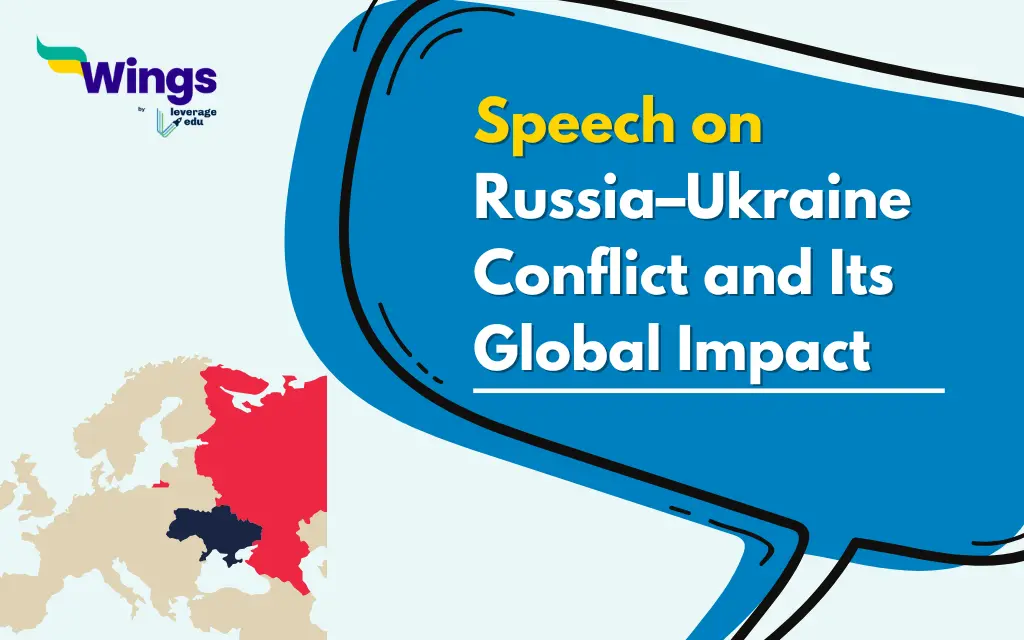
The Russia–Ukraine conflict, which began in February 2022, has become one of the most serious global crises of recent times. It is not just a war between two nations but an event that has affected the entire world. Millions of people have been displaced, thousands of lives have been lost, and economies across continents have felt its impact. According to the UN, over 6 million Ukrainians have fled their country, creating one of the largest refugee crises in Europe since World War II. The war has also disrupted global food supplies, as Ukraine and Russia together account for nearly 30% of the world’s wheat exports. Rising fuel prices, inflation, and security concerns are other challenges that countries everywhere are facing.
For students, understanding this conflict is important because it shows how interconnected today’s world is and how peace in one region can influence lives across the globe. In this blog, we provide short and long samples of speech on the Russia–Ukraine Conflict and Its Global Impact, written in different word limits with key facts and figures to help students prepare better.
Short Speech on The Russia–Ukraine Conflict and Its Global Impact
Good morning everyone!
Today, I want to talk about the Russia–Ukraine conflict and why it matters to the entire world.
The conflict began in February 2022, when Russia launched a full invasion of Ukraine. Since then, more than 13,000 civilians have tragically lost their lives. Cities such as Sumy and Kryvyi Rih faced heartbreaking attacks—in April 2025, Sumy saw a missile strike that killed 35 people, including children, and injured 129 others. In another attack in early April, a strike in Kryvyi Rih killed 20 people, again including children, and wounded 75.
Because of the war, about 10.7 million Ukrainians have had to leave their homes—3.8 million are still in Ukraine, while 6.9 million are refugees in other countries. Many are in Europe, in places like Germany, Poland, and the Czech Republic.
This conflict doesn’t only affect people—it also disturbs the world’s food supply. Ukraine and Russia together once provided about 25% of the world’s wheat and barley exports. But now, Ukraine’s exports have dropped, and Russia has taken over grain harvesting in parts of Ukraine it controls. This makes grain harder for many countries to get.
Each side has lost many soldiers and equipment. For example, Russia has over 790,000 soldiers either killed or injured, and Ukraine has about 400,000.
The conflict affects us globally through higher food prices, more refugees, and war-related uncertainty that can push economies into trouble. That is why learning about this conflict helps us understand how events in one place can touch people everywhere.
Thank you for listening.
Must Read 250+ English Speech Topics for Students
Long Speech on The Russia–Ukraine Conflict and Its Global Impact
Hello everyone!
Thank you for being here. I’m going to share an important topic with you—the Russia–Ukraine conflict, and how it affects the entire world.
This war started in February 2022 when Russian troops invaded Ukraine. Since then, the conflict has caused enormous suffering. Over 13,000 civilians have died in Ukraine, including many children. In April 2025, two particularly tragic attacks stand out. One in Sumy killed 35 people and injured 129—including many children. Another in Kryvyi Rih killed 20 people, 9 of whom were children, and injured 75 others. These numbers remind us how real and sad war can be.
This conflict isn’t just about war. It’s also about people being forced to leave their homes. As of early 2025, almost 10.7 million Ukrainians were displaced—3.8 million still inside the country and 6.9 million as refugees abroad. Most refugees are in Europe—countries like Germany, Poland, Czechia, and others. Many families with children are affected.
Beyond that, the war is changing the world’s food supply. Ukraine and Russia used to provide around 25% of global wheat and barley exports. But the war has blocked Ukrainian ports, reducing its ability to send food out. Meanwhile, Russia harvests grain from areas it controls in Ukraine, shifting export patterns. This makes wheat and other staples more expensive for many countries—especially those that rely on imports.
The toll on soldiers and equipment is also staggering. Estimates say that Russia has suffered over 790,000 casualties (killed or injured), while Ukraine has around 400,000—plus thousands missing. Equipment losses are also high, including planes, tanks, and ships.
This war is not just about fighting; it affects everyone globally:
- Food prices have gone up, making life harder for families everywhere.
- Refugees need support from other countries—schools, homes, and food.
- Many nations around the world are spending more on defence or helping Ukraine rebuild, which also affects global economies.
- In Poland, for example, Ukrainian refugees have helped the workforce, but the government faces financial challenges.
- Diplomatic efforts continue. Leaders like President Trump, Zelenskyy, and European heads have met, discussing peace plans, air support, and security guarantees—but peace is still far from achieved.
Still, there is hope. Ukraine has continued to stand up for itself and even exchanged captured people—84 prisoners of war, including civilians—showing the human side of hope and forgiveness.
Understanding this conflict matters because it teaches us that problems in one country can ripple worldwide. That’s why we should care—because, as students and children, you are tomorrow’s world. Learning, caring, and helping are important.
Thank you for your time.
Also Read: Speech on Human Rights and Armed Conflicts in English
FAQs
To write a speech on the Russia–Ukraine conflict and its global impact, start with a brief introduction explaining when and why the conflict began, then highlight the human cost, such as lives lost and millions displaced. Include facts and figures on refugees, civilian deaths, and destruction. Next, explain the global effects, like rising fuel and food prices, disruption of wheat exports, economic challenges, and security concerns for other nations. Use easy language so everyone can understand, and end with a strong conclusion that stresses the importance of peace and global cooperation.
War affects the world in many ways—it causes loss of lives, destruction of homes, and creates millions of refugees. It disrupts global trade and food supplies, leading to shortages and higher prices. Wars also increase fuel costs, raise inflation, and weaken economies across countries. Beyond money, they spread fear, reduce trust among nations, and slow down development. In short, war not only harms the nations fighting but also shakes peace, stability, and progress for the whole world.
War affects the global economy by disrupting trade, raising fuel and food prices, reducing foreign investments, and creating uncertainty in financial markets. Conflicts like the Russia–Ukraine war have blocked major export routes, especially for oil, gas, and wheat, leading to inflation worldwide. Countries also spend more on defence and humanitarian aid, which increases government debt, while businesses face supply chain shortages and job losses. Overall, war slows economic growth and makes everyday life more expensive for people across the globe.
War affects the global economy by disrupting trade, raising fuel and food prices, reducing foreign investments, and creating uncertainty in financial markets. Conflicts like the Russia–Ukraine war have blocked major export routes, especially for oil, gas, and wheat, leading to inflation worldwide. Countries also spend more on defence and humanitarian aid, which increases government debt, while businesses face supply chain shortages and job losses. Overall, war slows economic growth and makes everyday life more expensive for people across the globe.
The effects of conflict in a country can be very serious and long-lasting. It leads to loss of lives, destruction of homes, schools, and hospitals, and forces people to flee, creating refugee crises. Conflicts damage the economy, causing job losses, food shortages, and rising prices. They also disrupt education and healthcare, leaving children and families without basic needs. In addition, wars harm international trade, reduce investments, and weaken trust in the government. Overall, conflict affects not just one nation but can also spread problems like inflation, migration, and insecurity to other parts of the world.
Check other speech topics here:
This was all about the Speech on The Russia–Ukraine Conflict and Its Global Impact. We hope we were able to provide you with every detail that you were looking for. For more information on such interesting speech topics for your school, visit our speech writing page and follow Leverage Edu.

 60,000+ students trusted us with their dreams. Take the first step today!