

 One app for all your study abroad needs











A) General K.M. Cariappa
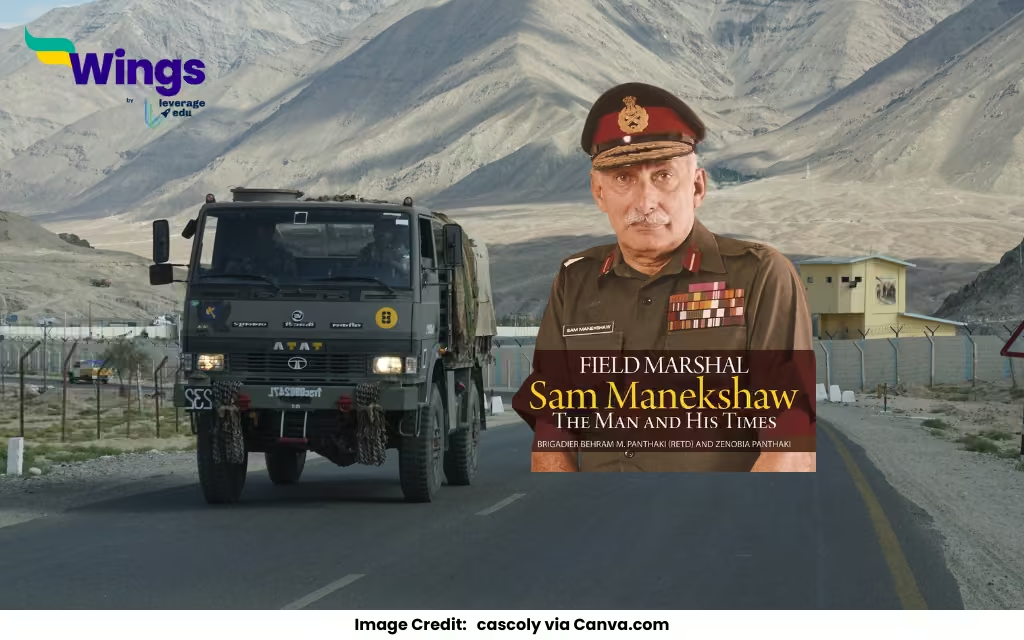
B) General S.H.F.J. Sam Manekshaw
C) General Bikram Singh
D) General Bipin Singh Rawat
Correct Answer: B) General S.H.F.J. Sam Manekshaw
Sam Manekshaw, India’s first Field Marshal, earned the rank in 1973 for his leadership in the 1971 Indo-Pak War, which led to Bangladesh’s creation. Known as “Sam Bahadur,” his strategic brilliance and charisma made him a national hero. His story is a cornerstone of Indian military history.
Who Was Sam Manekshaw?
Sam Manekshaw, affectionately called “Sam Bahadur,” was born in 1914 in Amritsar and became India’s first Field Marshal in 1973. This rank, the highest in the Indian Army, was bestowed on him for his stellar leadership, especially during the 1971 war that led to Bangladesh’s creation. His charisma and strategic brilliance made him a national hero.
Manekshaw served in World War II and several Indian conflicts, rising to Chief of the Army Staff by 1969. His wit and courage, like his famous quip about staying out of politics, endeared him to soldiers and civilians alike. For students, his story is a masterclass in leadership and patriotism.
Why Sam Manekshaw?
The other options—General K.M. Cariappa, General Bikram Singh, and General Bipin Singh Rawat—were distinguished but not India’s first Field Marshal. Cariappa was the first Indian Army Chief, Bikram Singh and Bipin Rawat were later Chiefs, but only Manekshaw got the Field Marshal rank in 1973, a lifetime honor.
His role in the 1971 victory, where India defeated Pakistan in just 13 days, sealed his legacy. The rank was a special recognition, as India has only had two Field Marshals (the other being K.M. Cariappa in 1986). For students, knowing this distinction clarifies military history.
Quick Facts
- Name: General S.H.F.J. Sam Manekshaw, “Sam Bahadur.”
- Rank: First Field Marshal of India (1973).
- Key Role: Led 1971 Indo-Pak War to victory.
- Lifespan: 1914–2008.
- Legacy: Inspired military leadership, celebrated on Vijay Diwas.
- Rank Note: Honorary, lifetime title, only two in India’s history.
Manekshaw’s Role in 1971
Manekshaw’s leadership in the 1971 Indo-Pak War was a game-changer. As Army Chief, he planned a swift, coordinated campaign that overwhelmed Pakistan, leading to the surrender of 93,000 soldiers in Dhaka. His insistence on delaying the war until the army was ready showed his strategic foresight, ensuring victory.
His ability to work with Prime Minister Indira Gandhi and coordinate with the Navy and Air Force made the campaign a success. For students, Manekshaw’s role in this war is a perfect example of how leadership and planning can shape historic outcomes, like Bangladesh’s independence.
What’s a Field Marshal?
The Field Marshal rank is a rare, honorary title in the Indian Army, above General. It’s not just a promotion but a lifetime recognition of exceptional service, and Field Marshals remain on active duty for life. Manekshaw earned it for his unmatched contributions, especially in 1971.
The rank comes with a ceremonial baton and immense respect, symbolizing military excellence. For students, understanding the Field Marshal title shows how India honors its heroes, and Manekshaw’s story brings this prestigious rank to life with his colorful personality and achievements.
Manekshaw’s Legacy
Manekshaw’s legacy goes beyond the battlefield. His leadership style—bold, humane, and witty—inspired generations of soldiers. He was known for treating his troops like family, boosting morale during tough campaigns. After retiring, he lived quietly but remained a national icon until his death in 2008.
His story is celebrated in books, films, and military lore, making him a role model for leadership and integrity. For students, Manekshaw’s life offers lessons in courage, strategy, and standing up for what’s right, even in high-stakes situations.
Why He Matters Today
Manekshaw’s legacy lives on in India’s military ethos and national pride. The 1971 victory, under his command, is celebrated every Vijay Diwas, and his name is synonymous with strategic brilliance. Military academies teach his tactics, and his quotes, like “If a man says he is not afraid of dying, he is either lying or is a Gurkha,” are legendary.
For students, studying Manekshaw connects history to modern India’s military identity. His story shows how one leader can shape a nation’s destiny, making him a key figure in understanding India’s post-independence journey.
Summary
Question: Who was the First Field Marshal of the Indian Army?
Answer: Sam Manekshaw was the First Field Marshal of the Indian Army.
Sam Manekshaw’s rise to India’s first Field Marshal is a tale of courage and strategy that students should know. His leadership in 1971 and larger-than-life personality make him a standout figure. Learning about him brings India’s military history to life with lessons in grit and glory.


 60,000+ students trusted us with their dreams. Take the first step today!