

 One app for all your study abroad needs











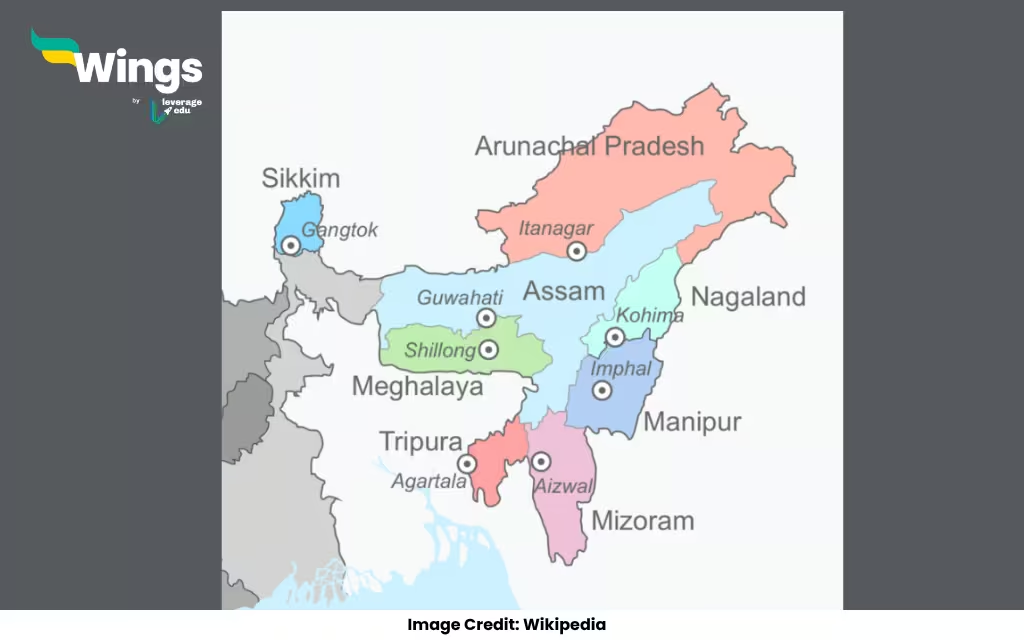
- Assam
- Manipur
- Tripura
- Sikkim
Correct Answer: 1. Sikkim
The Seven Sisters of India are a group of northeastern states known for their stunning landscapes and vibrant cultures, butx Sikkim isn’t one of them. The Seven Sisters are Arunachal Pradesh, Assam, Manipur, Meghalaya, Mizoram, Nagaland, and Tripura. For students, learning about this region is a chance to explore India’s diversity, geography, and unique history. Let’s unpack why Sikkim stands apart and what makes the Seven Sisters so special.
Seven Sisters: Who Are They?
The Seven Sisters are the seven northeastern states of India, connected to the mainland by a narrow strip called the Siliguri Corridor. They’re Assam, Arunachal Pradesh, Manipur, Meghalaya, Mizoram, Nagaland, and Tripura, each with its own culture, languages, and traditions. Known for lush forests, tribal heritage, and unique festivals like Hornbill or Bihu, these states are a treasure trove of diversity. The term “Seven Sisters” was coined in 1972 to highlight their unity and distinct identity within India.
For students, the Seven Sisters are a geography goldmine. They show how diverse one region can be—think Assam’s tea gardens versus Nagaland’s warrior tribes. Learning about them helps you understand India’s federal structure and cultural richness. It’s also a chance to explore topics like biodiversity (think Kaziranga National Park) or regional history, making it perfect for geography or social studies projects.
Why Sikkim Isn’t Included
Sikkim, while geographically close and part of Northeast India, isn’t one of the Seven Sisters. Why? The term was coined when Sikkim was still a separate kingdom, only joining India as a state in 1975. The Seven Sisters were grouped based on their shared history under British rule as part of Assam Province and their cultural ties. Sikkim, with its Himalayan Buddhist heritage and distinct past as a monarchy, was seen as separate, even though it’s often lumped with the Northeast today.
Students can use this to dig into India’s history. Sikkim’s journey from kingdom to state is a fascinating story of integration, and comparing it to the Seven Sisters shows how political boundaries evolve. You can explore why labels like “Seven Sisters” matter for identity or how Sikkim’s unique culture, like its Lepcha traditions, sets it apart. It’s a great way to connect geography with history and politics.
Quick Facts
- Seven Sisters: Assam, Arunachal Pradesh, Manipur, Meghalaya, Mizoram, Nagaland, Tripura.
- Sikkim’s Status: Joined India in 1975, not part of Seven Sisters.
- Term Coined: 1972, by journalist Jyoti Prasad Saikia.
- Region: Northeast India, linked by Siliguri Corridor.
- Key Feature: Diverse cultures, tribal heritage, biodiversity.
- Student Tip: Map the Seven Sisters for a geography project.
The Culture of the Seven Sisters
The Seven Sisters are a cultural kaleidoscope. Assam’s Bihu dance, Manipur’s Manipuri dance, and Nagaland’s Hornbill Festival are just a taste of their traditions. Each state has its own languages—over 200 in the region!—and unique crafts like Meghalaya’s bamboo work or Mizoram’s weaving. This diversity comes from centuries of tribal histories, with influences from Southeast Asia and the Himalayas, making the region unlike anywhere else in India.
For students, this is a chance to dive into India’s cultural mosaic. You can research a specific festival, like Tripura’s Kharchi Puja, or explore how these states balance tradition with modernity. It’s also a way to connect with anthropology or sociology—how do small communities preserve their identity in a big country? Plus, it’s fun to learn about foods like Naga smoked pork or Assamese pithas for a cultural project.
Challenges in the Northeast
The Seven Sisters face unique challenges, from tough terrain to connectivity issues. The region’s hills and forests make infrastructure tricky, and some states deal with insurgency or border disputes with neighbors like China or Myanmar. Yet, they’re also home to rich resources, like Assam’s tea and Arunachal’s hydropower potential. Understanding these challenges helps explain why the Seven Sisters are a focus for development policies.
Students can explore this in economics or civics. How does geography shape a region’s growth? What role does the government play in supporting remote areas? You can also look at how tourism, like Meghalaya’s living root bridges, is boosting the economy. It’s a real-world look at how geography and policy intersect, perfect for sparking critical thinking.
How Students Can Explore the Region
Want to learn more? Start with a map of Northeast India to see where the Seven Sisters sit (and where Sikkim fits in). Check out online resources or documentaries about festivals like Hornbill or places like Kaziranga. For a project, compare the cultures of two Seven Sisters states or research Sikkim’s unique history. If you’re creative, try drawing a tribal art style or writing about a day at a Northeast festival.
You can also connect with the region through food, music, or virtual tours. Look up Assamese folk songs or try a recipe for Manipuri eromba. The Seven Sisters are a vibrant part of India, and exploring them helps you appreciate the country’s diversity while learning why Sikkim stands apart.
Summary
Question: Which state is not a part of the Seven Sisters of India?
Answer: Sikkim is not a part of the Seven Sisters of India. The Seven Sisters of India—Assam, Arunachal Pradesh, Manipur, Meghalaya, Mizoram, Nagaland, and Tripura—are a culturally rich region, but Sikkim isn’t included due to its distinct history as a former kingdom. For students, the Seven Sisters offer a chance to explore Northeast India’s diversity, geography, and challenges, connecting history, culture, and modern issues.
Also Read:
Boo’ Village of Nagaur was Famous for Which of the Art Work?
How many Districts are Desert Districts in Rajasthan?
Which of the Following Waterfalls Is Known as ‘Niagara of India’?
What is the Duration of the Lunch Interval in a Cricket Test Match?
What is the Dimension of Impulse?


 60,000+ students trusted us with their dreams. Take the first step today!