

 One app for all your study abroad needs











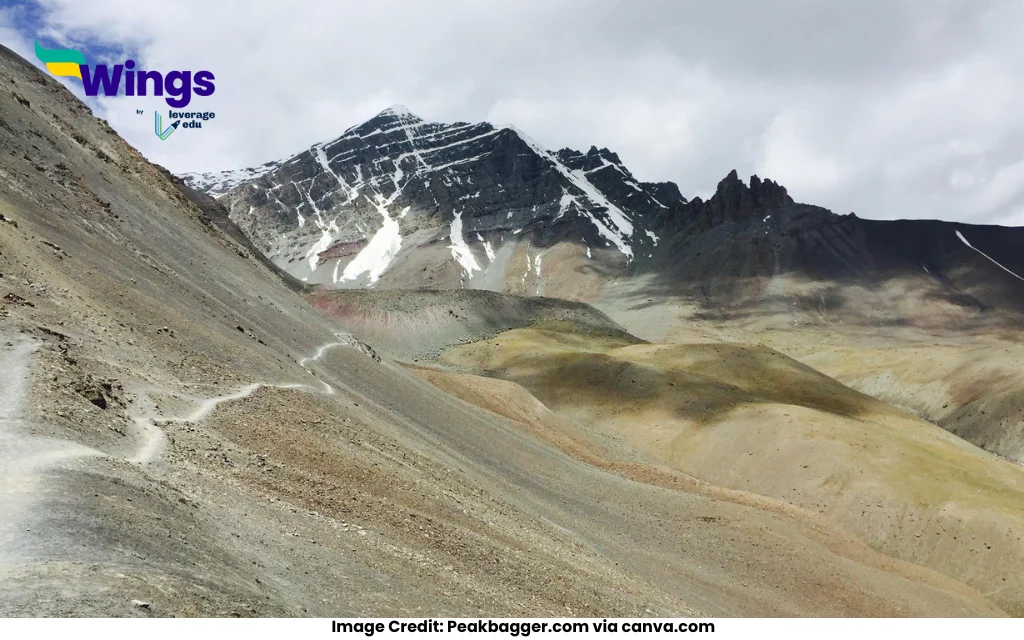
Ans. The part of the Himalayas traditionally known as the Punjab Himalaya lies between the Indus and the Satluj rivers. The area mainly covers Jammu & Kashmir and Himachal Pradesh, including ranges like Pir Panjal, Zanskar, and Dhauladhar.
Complete Answer:
The part of the Himalayas traditionally known as the Punjab Himalaya lies between the Indus and Satluj (or Sutlej) rivers. This section forms the westernmost part of the Indian Himalayas and mainly passes through the state of Himachal Pradesh and parts of Jammu and Kashmir. Since it is geographically linked with the region of Punjab and its river systems, this stretch earned the historical name Punjab Himalaya.
The Punjab Himalaya includes some of the most beautiful and rugged terrains in the Himalayan range. Further, it also consists of several smaller ranges like the Pir Panjal, Dhauladhar, and Zanskar ranges. These ranges are home to many high peaks, deep valleys, and scenic hill stations like Shimla, Manali, and Dharamshala. These areas attract not only tourists but also researchers and students who study the rich biodiversity and geological features of the Himalayas.
Punjabi Himalaya is also sometimes referred to as the Kashmir and Himachal Himalaya in modern geography textbooks, especially in Indian curricula. The Indus River flows to the west of this region, while the Satluj River, one of the major tributaries of the Indus, defines its eastern boundary.
Why is Punjab Himalaya important for the Geography of India?
The Punjab Himalaya, which is located between the Indus and Satluj rivers, helps in shaping the geography, environment, and economy of Northern India. To understand its importance in better way, let us explore some key points.
| List of Importance | Explanation |
| Origin of Major Rivers | The Punjab Himalaya is the source of rivers like the Indus, Jhelum, Chenab, Ravi, Beas, and Satluj, vital for irrigation and daily use. |
| Natural Climatic Barrier | Punjab Himalayas act as a protective wall against cold Central Asian winds and plays a role in guiding monsoon winds into the Indian subcontinent. |
| Climate Regulation | High snow-covered peaks help in maintaining temperature and glacier-fed rivers, ensuring a perennial water supply between the Indus and Satluj rivers. |
| Support in Agriculture | Rivers in this region support the Indus Basin Irrigation System, helping Punjab and Haryana remain India’s main food-producing states. |
| Rich in Biodiversity | Punjab Himalaya supports a wide variety of plant and animal life between the Indus and Satluj rivers. This variety, including forests, valleys, and alpine zones, is important for ecological studies. |
| Popular Tourist Destination | Hill stations like Shimla, Manali, and Dharamshala attract tourists, boosting the local economy and employment of the Pujabh Himalaya region. |
| Cultural and Historical Importance | The Himalaya has been home to ancient routes, spiritual centres, and unique traditions.. |
Check out other Science questions from here:


 60,000+ students trusted us with their dreams. Take the first step today!