

 One app for all your study abroad needs















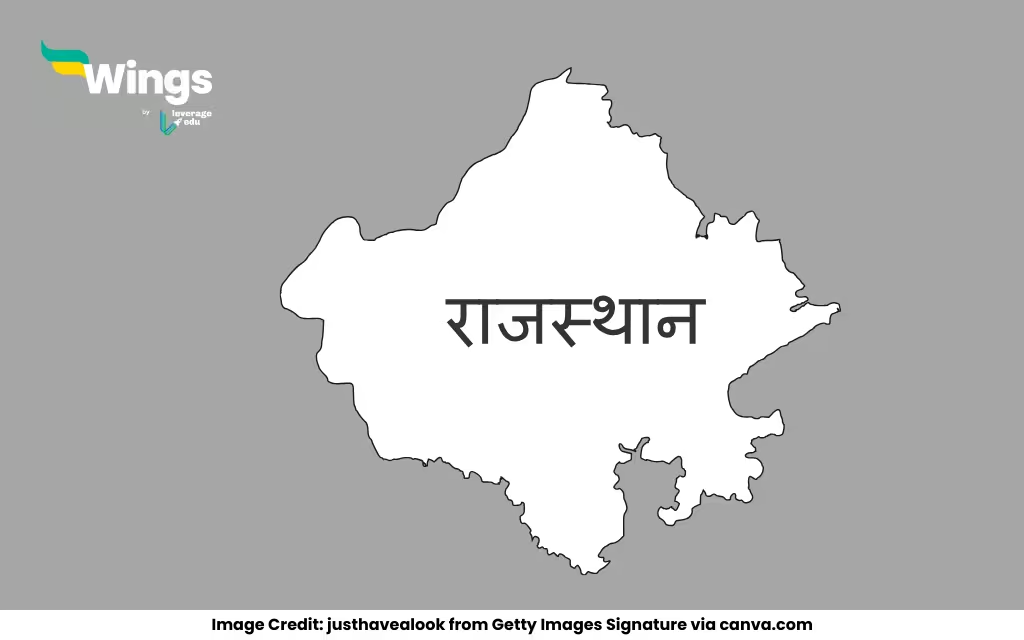
1. Jaisalmer
2. Bikaner
3. Barmer
4. Ganganagar
Correct Answer: 4. Ganganagar
Ganganagar has the shortest international boundary among Rajasthan’s border districts at 168 km, compared to Jaisalmer, Barmer, and Bikaner. Its fertile plains, irrigated by the Indira Gandhi Canal, make it a key agricultural hub, while its border with Pakistan requires tight security. The district’s unique geography and culture make it a fascinating study.
What’s Ganganagar’s Border Like?
Ganganagar, also called Sri Ganganagar, is a district in northern Rajasthan that shares a 168-km border with Pakistan along the Radcliffe Line. Compared to other border districts like Jaisalmer, Barmer, and Bikaner, this is the shortest stretch, making it the correct answer. The border runs through flat, fertile plains, unlike the desert terrain of other districts.
The district’s boundary is heavily patrolled by the Border Security Force (BSF) due to its proximity to Pakistan’s Punjab province. Its smaller border length doesn’t make it less significant, though, as Ganganagar’s strategic and agricultural importance keeps it in the spotlight. For students, this is a great way to learn about Rajasthan’s geography.
Quick Facts
- District: Ganganagar (Sri Ganganagar).
- Border Length: 168 km, shortest among Rajasthan’s border districts.
- Border With: Pakistan (Radcliffe Line).
- Key Feature: Fertile due to Indira Gandhi Canal.
- Economy: Agriculture (wheat, cotton), trade.
- Culture: Mix of Rajasthani and Punjabi traditions.
Why Ganganagar Has the Shortest Boundary?
The length of Ganganagar’s border is shorter because of its position in Rajasthan’s northeastern corner, where the state’s boundary with Pakistan narrows. Jaisalmer has the longest border at about 471 km, followed by Barmer (around 228 km) and Bikaner (around 192 km). Ganganagar’s 168 km is the smallest due to the region’s geography and the way the Radcliffe Line was drawn during the 1947 partition.
This shorter border makes Ganganagar less exposed to cross-border issues compared to sprawling desert districts like Jaisalmer. Understanding these differences helps students see how borders are shaped by history and geography, not just arbitrary lines on a map.
Ganganagar’s Unique Geography
Unlike Rajasthan’s desert-heavy border districts, Ganganagar is surprisingly green, thanks to the Indira Gandhi Canal, which brings water from the Sutlej River. This irrigation has turned parts of the district into a breadbasket, growing crops like wheat, cotton, and mustard. Its border area, though, remains sensitive due to its proximity to Pakistan.
The district’s flat terrain and fertile soil set it apart from the sandy dunes of Jaisalmer or Barmer. For students, Ganganagar’s mix of desert and farmland offers a cool case study in how irrigation can transform a region, even one with a short but strategic international border.
Security Along the Border
Ganganagar’s border with Pakistan is heavily guarded, with BSF outposts and fencing to prevent smuggling and infiltration. The shorter length makes it easier to monitor compared to Jaisalmer’s vast desert border, but tensions with Pakistan keep security tight. The area has seen occasional cross-border incidents, though it’s generally stable.
The border’s proximity to fertile land also means farmers sometimes work close to the fence, requiring coordination with security forces. For students, this highlights how geopolitics affects everyday life in border regions, making Ganganagar a unique example of security and agriculture coexisting.
Economic and Cultural Role
Ganganagar’s economy thrives on agriculture, thanks to the canal system, which supports crops and makes it one of Rajasthan’s most productive districts. The city of Sri Ganganagar is a bustling hub for trade and education, with markets and colleges drawing people from nearby areas. Its border status also boosts local trade, though under strict regulation.
Culturally, Ganganagar blends Rajasthani traditions with Punjabi influences, as it’s close to Punjab. Festivals like Teej and Baisakhi are celebrated with gusto, and the district’s food, like makki di roti, reflects this mix. For students, Ganganagar shows how borders shape cultural and economic identities.
Comparing Rajasthan’s Border Districts
Rajasthan’s four border districts—Ganganagar, Bikaner, Barmer, and Jaisalmer—each have unique roles. Jaisalmer’s long border runs through remote deserts, making it hard to patrol. Barmer’s border supports oil fields, while Bikaner’s is known for its forts and camel breeding. Ganganagar’s shorter border and fertile land make it stand out as an agricultural powerhouse.
This comparison helps students understand how geography and history shape each district’s role. Ganganagar’s shorter boundary doesn’t diminish its importance; it just highlights its unique blend of security, farming, and culture in Rajasthan’s border region.
Summary
Question: Which of the following districts of Rajasthan has the shortest international boundary?
Answer: Ganganagar districts of Rajasthan has the shortest international boundary.
Ganganagar’s short 168-km border with Pakistan sets it apart in Rajasthan, blending strategic importance with agricultural wealth. For students, it’s a great example of how geography, security, and culture intersect. Learning about Ganganagar’s role helps you understand Rajasthan’s diverse border dynamics.
Also Read:
Which State is Known as Heart of India?
The First woman Governor of a State in free India was
The Tropic of Cancer Passes through Which of the Following States
The Nagarjuna Sagar Dam is located in Which State?
Panchavti, a Key Part of the Valmiki Ramayana is located in which State of
India?
Pongal is a Harvest Festival of which State of India?


 60,000+ students trusted us with their dreams. Take the first step today!