

 One app for all your study abroad needs















Answer
Verified
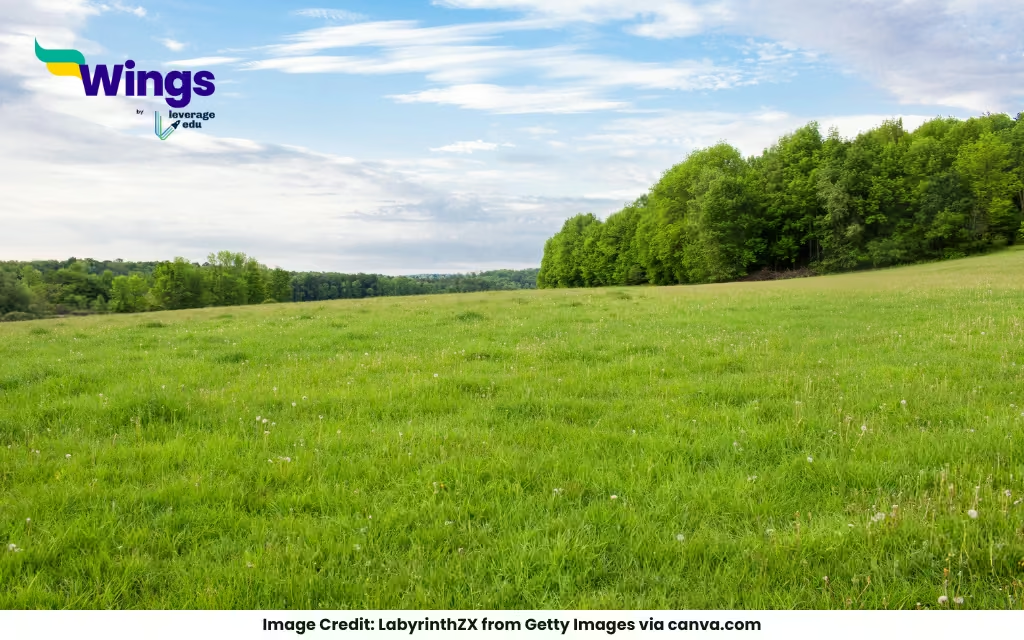
When evaluating the best area for human habitation, factors such as climate, accessibility, natural resources, infrastructure development, and agricultural potential must be considered. plains are generally the most suitable for human settlement.
Why Plains Are the Most Useful for Human Habitation?
Plains offer a combination of favorable conditions:
- Flat terrain for easy construction and transportation
- Fertile soil suitable for agriculture
- Moderate climate in most regions
- Access to water via rivers that often pass through plains
- Dense population centers often arise in plains due to these factors
Comparative Table: Human Habitation Suitability
| Feature/Area | Plains | Mountains | Riversides | Glaciers |
| Climate | Moderate, livable | Cold, harsh at high altitudes | Varies, often humid | Extremely cold and uninhabitable |
| Agriculture | Highly suitable | Limited (terrace farming) | Fertile nearby, but flood-prone | Not possible |
| Accessibility | Easy to access and navigate | Difficult due to terrain | Varies depending on riverbank | Very difficult |
| Natural Disasters | Low (except floods or droughts) | Landslides, earthquakes | Floods, erosion | Avalanches, crevasses |
| Infrastructure | Well-developed in most regions | Sparse infrastructure | Medium development | No infrastructure |
| Population Density | High | Low | Medium to high | None |
| Examples | Indo-Gangetic Plain (India), Midwest USA | Himalayas, Rockies | Nile Delta, Amazon Basin | Antarctica, Greenland |
Also Read:
Is Civet Cat Dangerous?
What is Roti Called in English?
What is the Role of MNCs in Promoting the Globalisation Process?


 60,000+ students trusted us with their dreams. Take the first step today!