

 One app for all your study abroad needs











Answer
Verified
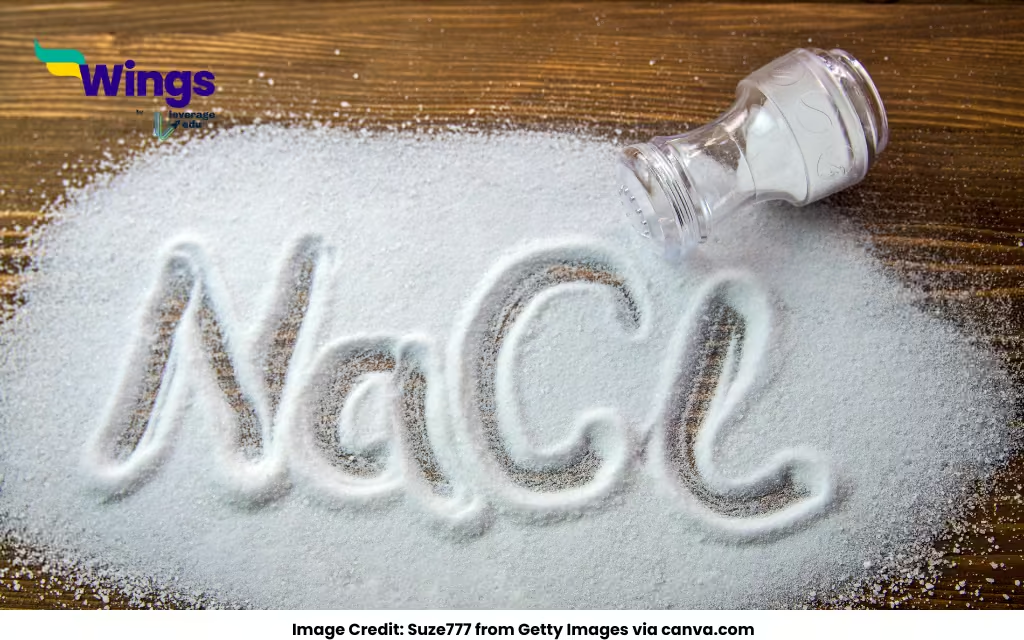
Common salt, chemically known as sodium chloride (NaCl), is one of the most widely used substances in daily life. It is a white crystalline compound composed of sodium (Na⁺) and chloride (Cl⁻) ions. Found abundantly in seawater and mined from rock salt deposits, common salt is essential for both culinary and biological purposes.
Chemical Nature of Common Salt
| Property | Description |
| Chemical Name | Sodium Chloride |
| Chemical Formula | NaCl |
| Molecular Weight | 58.44 g/mol |
| Physical State | Solid (crystalline) |
| Color | White |
| Taste | Salty |
| Solubility in Water | Highly soluble |
| Melting Point | 801°C |
| Boiling Point | 1,413°C |
| Nature | Ionic compound; neutral in pH (around 7 when dissolved) |
| Occurrence | Naturally in seawater and mineral deposits (halite) |
Ionic Nature of Common Salt
Sodium chloride is an ionic compound, meaning it is formed by the transfer of electrons between atoms:
- Sodium (Na) loses one electron to become Na⁺ (cation).
- Chlorine (Cl) gains one electron to become Cl⁻ (anion).
These oppositely charged ions attract each other and form a strong ionic bond, creating a stable compound.
Also Read:
What were the Three Demands of Sri Lankan Tamils?
What is the Full Form of BHC?
What is Another Name for a Donkey?


 60,000+ students trusted us with their dreams. Take the first step today!