

 One app for all your study abroad needs











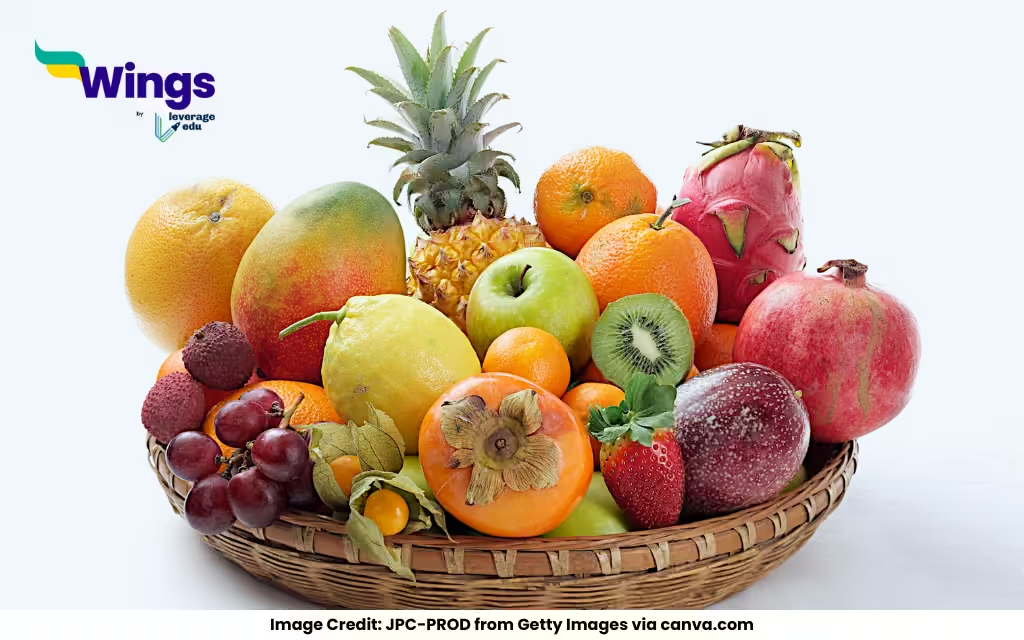
There is a common misconception around the term “14 national fruits of India.” However, as of now, India officially recognizes only one National Fruit — the Mango (Mangifera indica). The confusion may arise from India’s rich biodiversity and the cultural significance of various fruits across different regions. While many fruits hold importance in local customs, cuisines, and traditions, they are not officially designated as national fruits.
Below, we’ll clear up the confusion, provide a list of 14 popular fruits of India, and explain the official status of the national fruit.
India’s Official National Fruit
| Title | Fruit |
| National Fruit | Mango |
Scientific Name: Mangifera indica
Declared As: National Fruit of India
Significance: The mango is called the “King of Fruits” in India. It is deeply embedded in Indian culture, art, literature, and religion. Summer is mango season, and its varieties like Alphonso, Dasheri, and Kesar are famous worldwide.
Popular Fruits in India (Often Confused as ‘National Fruits’)
Here’s a list of 14 widely consumed and culturally significant fruits in India. These are not national fruits, but they are vital in Indian agriculture and diets:
| No | Fruit | Importance in India |
| 1 | Mango | Official national fruit; symbol of prosperity |
| 2 | Banana | Used in rituals; staple in South India |
| 3 | Apple | Major crop in Himachal Pradesh, Jammu & Kashmir |
| 4 | Guava | Popular for its medicinal properties |
| 5 | Orange | Nagpur oranges are famous across the country |
| 6 | Papaya | Known for digestive benefits |
| 7 | Pineapple | Grown extensively in the Northeast and South |
| 8 | Jackfruit | State fruit of Kerala and Tamil Nadu |
| 9 | Pomegranate | Used in Ayurveda and widely grown in Maharashtra |
| 10 | Litchi | Grown in Bihar; loved for its juicy texture |
| 11 | Grapes | Maharashtra is a leading producer |
| 12 | Watermelon | Common summer fruit in North India |
| 13 | Coconut | Integral to South Indian culture and cuisine |
| 14 | Custard Apple | Nutrient-rich and commonly found in Central India |
These fruits showcase India’s diverse climate, cultural practices, and agricultural wealth.
Also Read:
Who Was the Powerful Governor of Bengal?
What did ‘Swaraj’ mean to Assam’s plantation workers?
Which are the iron ore belts in India?


 60,000+ students trusted us with their dreams. Take the first step today!