

 One app for all your study abroad needs











- Providing high voltage AC power
- Regulating the voltage efficiently
- Increasing current flow
- Decreasing power consumption
Correct Answer: 1. Regulating the voltage efficiently
Switch Mode Power Supply, or SMPS, is like the unsung hero of your electronics, quietly making sure your devices get the right voltage without wasting energy. It’s the tech behind why your laptop charger doesn’t overheat and your TV runs smoothly. SMPS is all about regulating voltage efficiently, and it’s a big deal in everything from computers to industrial machines. Let’s unpack what SMPS does, how it works, and why students should care about this clever piece of engineering.
What is an SMPS?
A Switch Mode Power Supply is a device that converts electrical power from one form to another, usually from AC (alternating current) to DC (direct current), while keeping the voltage steady and efficient. Unlike old-school linear power supplies that were bulky and wasteful, SMPS uses a switching technique to regulate voltage with minimal energy loss. It’s found in almost every modern gadget—your phone charger, gaming console, even LED lights. The magic happens because SMPS can adjust to different input voltages and deliver exactly what your device needs.
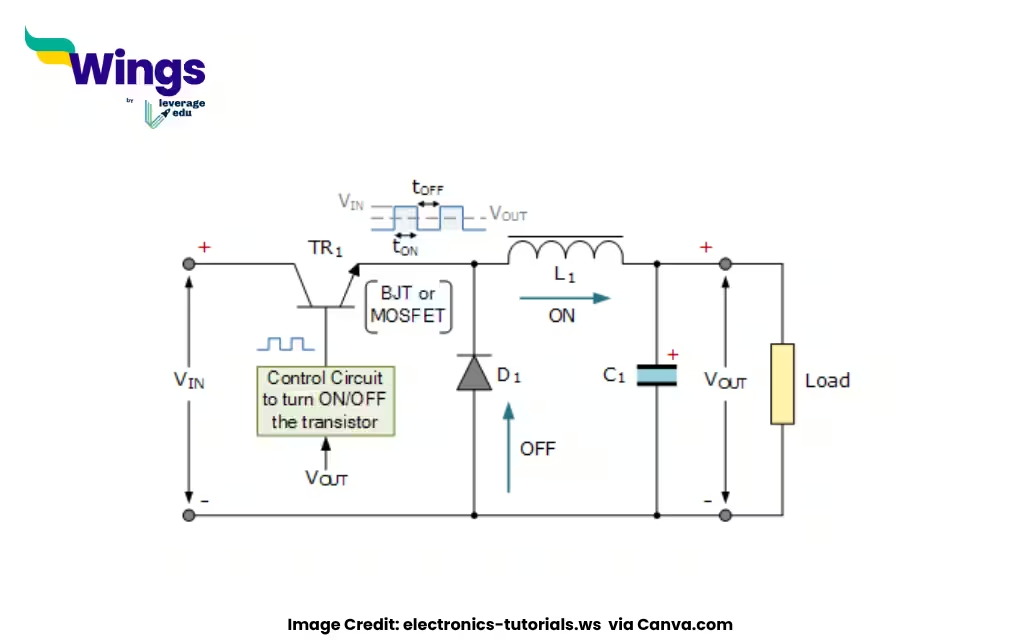
For students, SMPS is a great way to see electrical engineering in action. It takes messy, fluctuating power from your wall outlet and turns it into the stable, low-voltage DC that your devices love. The key is its switching circuit, which rapidly turns the power on and off (think thousands of times per second) to control the output. This makes SMPS smaller, lighter, and way more efficient than older tech, which is why it’s everywhere.
How Efficient are SMPS?
The big win with SMPS is efficiency—some designs hit over 90% efficiency, meaning very little energy is lost as heat. Compare that to linear power supplies, which could waste half the energy they handled! SMPS does this by using components like transistors and capacitors to chop up the input power and smooth it out into a steady output. This not only saves electricity but also keeps your devices from frying due to voltage spikes. It’s why your laptop charger stays cool even after hours of use.
For students, this efficiency angle ties into real-world issues like energy conservation. With SMPS, devices use less power, which means lower electricity bills and a smaller carbon footprint. It’s also a practical example of physics and engineering working together—concepts like electromagnetism and circuit design come to life. If you’re studying electronics, understanding SMPS helps you see how theory turns into the tech you use every day.
Quick Facts
- Purpose: Regulates voltage efficiently, converts AC to DC.
- Efficiency: Often over 90%, reducing energy waste.
- Applications: Laptops, phones, TVs, electric vehicles.
- Key Feature: High-frequency switching for compact design.
- Challenge: Can cause electromagnetic interference (EMI).
- Student Tip: Explore SMPS in electronics projects or green tech research.
Where You’ll Find SMPS
SMPS is practically everywhere. Your computer? It’s got an SMPS in its power supply unit to keep the motherboard and graphics card happy. Your phone charger? That’s an SMPS making sure your battery gets the right voltage. Even bigger systems, like industrial machines or renewable energy setups, rely on SMPS to handle power efficiently. They’re also key in electric vehicles, where managing battery power is critical.
For students, this ubiquity is a reminder that engineering impacts daily life. If you’re into gadgets or gaming, SMPS is what keeps your gear running smoothly. It’s also a great entry point to learn about careers in electronics—designing or improving SMPS units is a real job in tech companies. Plus, understanding SMPS can spark ideas for projects, like building your own power supply for a DIY robot or speaker system.
Why Efficiency Matters
Efficiency isn’t just about saving energy—it’s about making tech practical and sustainable. SMPS units are smaller and lighter than older power supplies, which is why your phone charger fits in your pocket instead of being a brick. This compactness comes from using high-frequency switching, which reduces the size of components like transformers. It’s a win for both convenience and the environment, as less energy waste means less strain on power grids.
For students, this is a chance to connect classroom concepts to global challenges. Energy efficiency is a hot topic in fighting climate change, and SMPS plays a role in that. You can also explore related ideas, like how renewable energy systems use SMPS to manage solar or wind power. It’s a practical way to see how engineering solutions can tackle big problems, and it might inspire you to dive deeper into STEM.
Challenges and Limitations
SMPS isn’t perfect, though. The switching process can create electromagnetic interference (EMI), which might mess with nearby devices like radios or Wi-Fi routers. Engineers use filters to minimize this, but it’s a challenge to balance efficiency with clean operation. SMPS units can also be more complex to design than linear supplies, which means they’re pricier to make. For students, this shows the trade-offs in engineering—every solution has its pros and cons.
Another issue is durability. While SMPS is generally reliable, cheap units can fail if they’re poorly designed or overloaded. That’s why you’ll see warnings on chargers to use the right one for your device. Learning about these challenges helps students think like engineers, weighing efficiency against cost and reliability. It’s a great way to practice problem-solving and critical thinking.
How Students Can Explore SMPS
If you’re a student, SMPS is a cool topic to dig into. Start by checking out how your own devices work—look at the specs on your laptop charger to see what voltage and current it delivers. You can also try online simulations or breadboard kits to build simple circuits and see how voltage regulation works. If you’re in a physics or electronics class, ask your teacher about SMPS demos or projects. Sites like Khan Academy or YouTube channels on electronics can break it down visually.
For hands-on fun, consider a project like designing a basic power supply with a microcontroller (with adult supervision, of course). Or, research how SMPS is used in green tech, like solar panels or electric cars, to connect it to environmental science. The more you explore, the more you’ll see how SMPS is a small but mighty part of the tech world, and it might just spark your next big idea!
Summary
Switch Mode Power Supply (SMPS) is all about regulating voltage efficiently, converting AC to DC with minimal energy loss. Found in everything from phone chargers to electric vehicles, SMPS uses high-frequency switching to deliver stable power while saving energy. For students, it’s a practical way to explore electronics, energy efficiency, and engineering challenges, connecting classroom concepts to real-world tech.
Also Read:
The Name of Cyclone “Tauk tae” has been Given by the Country
Which city is known as “City of Festivals”?
Which of the Following Hill Station is Called “Mini Switzerland of India”?
Name the ‘Father of Indian Economics Reforms’
Pongal is a Harvest Festival of which State of India?
Where is the Headquarters of BIMSTEC situated?


 60,000+ students trusted us with their dreams. Take the first step today!