

 One app for all your study abroad needs











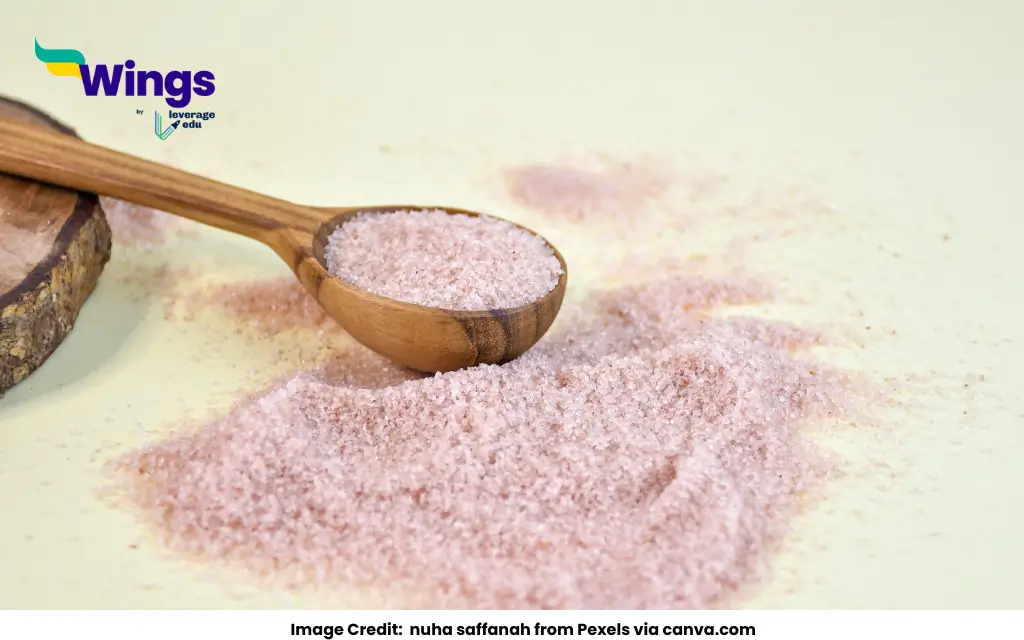
Let’s look at each option and analyse the correct one along with the others. But before moving forward with the option, let’s understand what sodium carbonate is and why it is called a basic salt.
What is Sodium Carbonate?
Sodium carbonate is a salt, and its chemical formula is Na₂CO₃. It is commonly known as washing soda. It is called a basic salt because it shows basic (alkaline) behaviour when dissolved in water.
Why is it called a Basic Salt?
Salts are usually made when an acid reacts with a base. Depending on whether the acid and base are strong or weak, the nature of the salt (acidic, basic, or neutral) changes.
Now, let’s analyse each option:
Option (A): Strong Acid + Strong Base
Example: HCl (strong acid) + NaOH (strong base) → NaCl (neutral salt)
- In this case, the acid and base cancel each other out fully.
- The resulting salt is neutral (neither acidic nor basic).
- So, sodium carbonate is NOT formed from a strong acid and a strong base. It is an incorrect answer.
Option (B): Strong Acid + Weak Base
Example: HCl (strong acid) + NH₄OH (weak base) → NH₄Cl (acidic salt)
- The strong acid overpowers the weak base.
- The resulting salt is acidic.
- Sodium carbonate is not acidic, so this is incorrect.
Option (C): Weak Acid + Strong Base
Example: H₂CO₃ (carbonic acid – weak) + NaOH (strong base) → Na₂CO₃ (basic salt)
- The weak acid doesn’t fully neutralise the strong base.
- So, the salt still shows basic properties.
- This is how sodium carbonate is made, and that’s why it is a basic salt.
Option (D): Weak Acid + Weak Base
Example: CH₃COOH (weak acid) + NH₄OH (weak base) → CH₃COONH₄
- Salts from weak acid and weak base can be slightly acidic, basic, or neutral depending on their strengths.
- But such salts are usually not strongly basic like sodium carbonate.
- So, this option is incorrect.
Correct Answer: (C) Weak acid and strong base.
Sodium carbonate is formed when carbonic acid (a weak acid) reacts with sodium hydroxide (a strong base). Because of this combination, the resulting salt is basic in nature.
Common Doubts of Chemistry:


 60,000+ students trusted us with their dreams. Take the first step today!