

 One app for all your study abroad needs











Answer
Verified
Plants that live on rotting food or decaying organic matter are known as saprophytic plants. These plants obtain nutrients by breaking down dead and decaying organic material, such as rotting food, leaves, wood, and animals. Unlike green plants, saprophytes do not perform photosynthesis. Instead, they rely on external sources of organic compounds for their nutrition.
What Are Saprophytic Plants?
Saprophytic plants are a type of heterotrophic plant that derive their nutrition from decomposing organic matter. They release digestive enzymes into their surroundings to break down complex organic substances into simpler compounds, which they then absorb.
Characteristics of Saprophytic Plants
| Feature | Description |
| Nutrition Type | Saprophytic (Heterotrophic) |
| Food Source | Dead and decaying organic matter (like rotting food, leaves, etc.) |
| Photosynthesis | Absent or very limited |
| Chlorophyll | Usually absent |
| Habitat | Humid, dark environments with plenty of organic matter |
| Mode of Digestion | External enzymatic digestion |
| Examples | Mushrooms, Yeast, Monotropa uniflora (Indian Pipe), Coralroot Orchid |
Examples of Saprophytic Plants
| Common Name | Scientific Name | Notes |
| Indian Pipe | Monotropa uniflora | A white, non-photosynthetic plant found in shady forests |
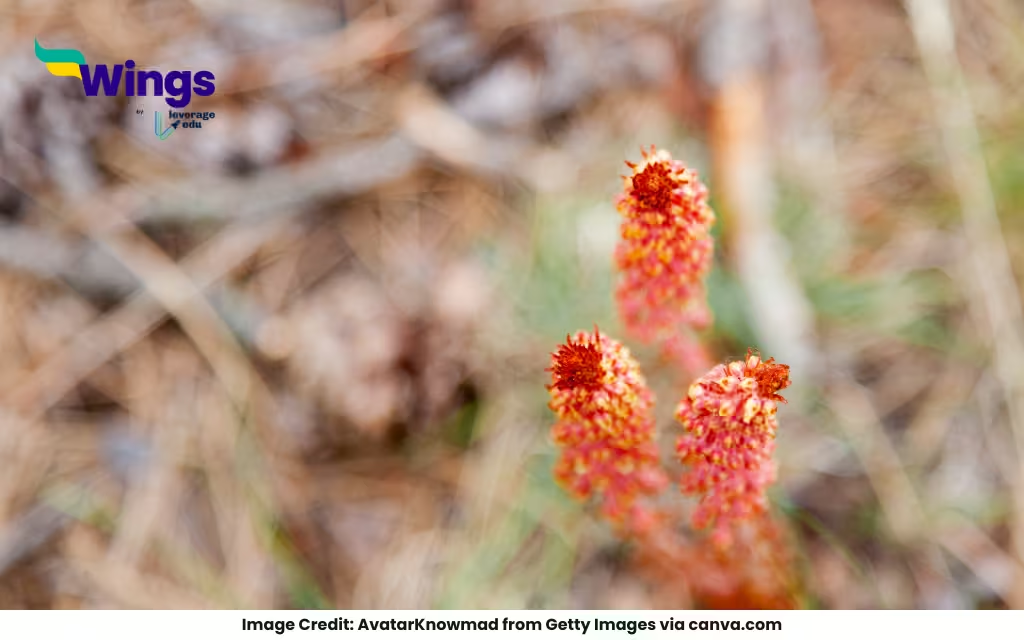
| Coralroot Orchid | Corallorhiza spp. | Lacks chlorophyll and feeds off decaying plant material via fungi |
| Mushroom | Agaricus spp. | Fungi that feed on decomposing organic matter, often mistaken as plants |
| Yeast | Saccharomyces cerevisiae | Single-celled fungi used in food fermentation, feeds on sugars |
Also Read:
What are Trans-Himalayan Rivers?
What is the Full Form of PS?
Who was Bindusara’s son?


 60,000+ students trusted us with their dreams. Take the first step today!