

 One app for all your study abroad needs











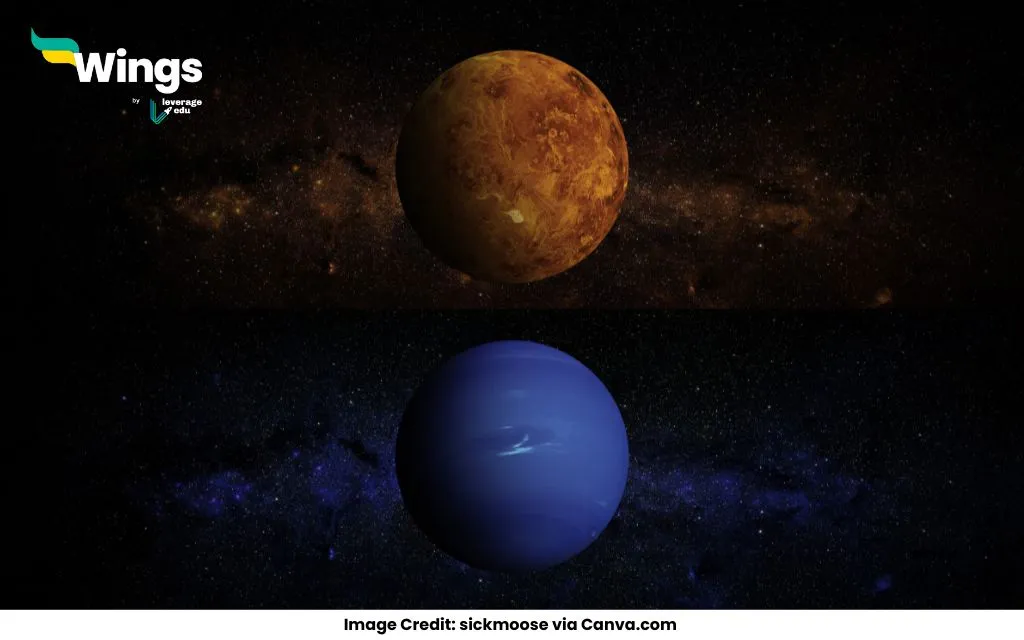
Answer: The hottest and coldest planets in the Solar System are Venus and Neptune, respectively. Venus is the hottest due to its thick atmosphere that traps heat, while Neptune is the coldest because of its great distance from the Sun. These extremes define the hottest and coldest planets in the Solar System.
Explanation:
The hottest planet in the Solar System is Venus, not Mercury, even though Mercury is closest to the Sun. This is because Venus has a thick atmosphere composed mainly of carbon dioxide, a greenhouse gas. This dense atmosphere traps heat through the greenhouse effect, raising surface temperatures to an average of about 465°C (869°F) — hotter than Mercury’s average of 167°C (332°F).
The coldest planet in the Solar System is Neptune. Despite Uranus being farther from the Sun, Neptune has a slightly lower average temperature of around -214°C (-353°F). This is due to Neptune’s active internal heat source and strong winds, which redistribute its limited solar energy more effectively, causing extremely low outer atmospheric temperatures.
In summary, Venus is the hottest due to its greenhouse effect, while Neptune is the coldest due to its great distance from the Sun and complex atmospheric dynamics.
Temperature of Different Planets:
Here is a table showing the average surface temperatures of the planets in the Solar System in descending order:
| Rank | Planet | Average Temperature (°C) | Average Temperature (°F) |
| 1 | Venus | 465°C | 869°F |
| 2 | Mercury | 167°C | 332°F |
| 3 | Earth | 15°C | 59°F |
| 4 | Mars | -65°C | -85°F |
| 5 | Jupiter | -110°C | -166°F |
| 6 | Saturn | -140°C | -220°F |
| 7 | Uranus | -195°C | -319°F |
| 8 | Neptune | -200°C | -328°F |
Common GK Questions:


 60,000+ students trusted us with their dreams. Take the first step today!