

 One app for all your study abroad needs















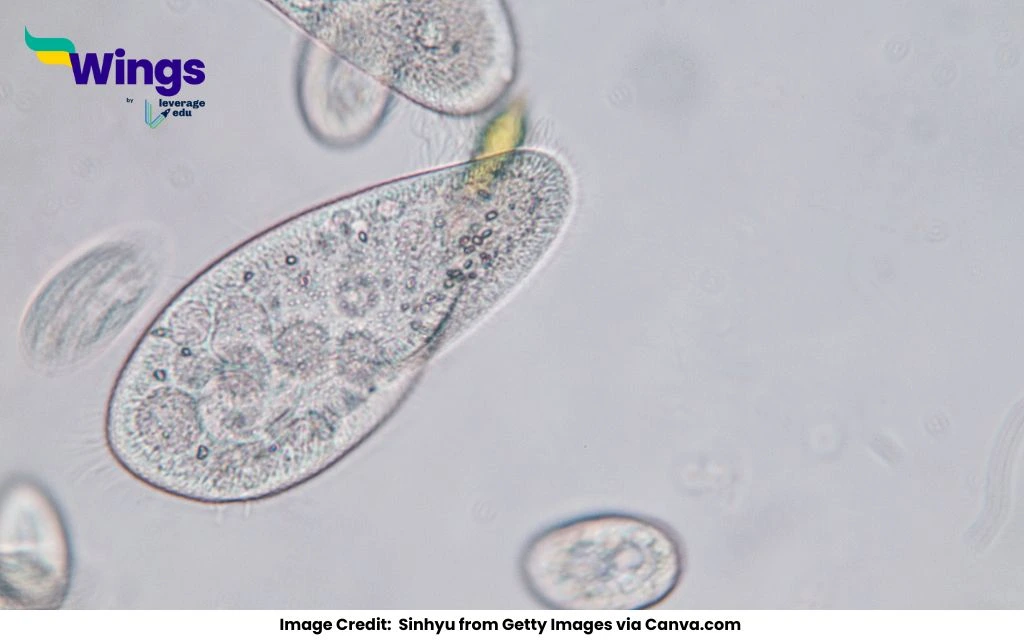
Answer: The correct answer to the question ‘Amoeba and Paramecium belong to which category of organisms?’ is option B. Protozoa. It is the correct answer because Amoeba and Paramecium are single-celled, eukaryotic, animal-like organisms that fit all the defining features of protozoa.
Explanation:
Option A: Porifera refers to a phylum of simple, multicellular aquatic animals commonly known as sponges. These organisms have porous bodies and lack true tissues and organs. They are sessile, meaning they remain fixed in one place and do not move. Porifera reproduce both sexually and asexually and primarily filter-feed by drawing water through their pores.
Since Porifera are multicellular and immobile, they are very different from Amoeba and Paramecium, which are single-celled, motile organisms, making this option incorrect.
Option B: Protozoa includes microscopic, single-celled, eukaryotic organisms that often live in aquatic or moist environments. They are animal-like protists and exhibit characteristics such as movement, heterotrophic nutrition (feeding on other organisms), and complex internal structures like a nucleus. Amoeba moves by forming pseudopodia (false feet), while Paramecium uses cilia for movement and feeding. Both are capable of responding to their environment, reproducing asexually, and are entirely unicellular, which classifies them as protozoa.
Thus, this is the correct answer to the question- Amoeba and Paramecium belong to which category of organisms is option B.
Option C: Bacteria are microscopic, single-celled organisms, but unlike protozoa, they are prokaryotic, meaning they do not have a true nucleus or membrane-bound organelles. Bacteria can be found in a variety of environments, and while some are beneficial, others can cause disease. Although bacteria and protozoa are both unicellular, Amoeba and Paramecium are eukaryotic, not prokaryotic, which rules out bacteria as a correct classification.
Hence, this option is incorrect.
Option D: Algae are plant-like protists that can be unicellular or multicellular. They are typically found in aquatic environments and perform photosynthesis due to the presence of chlorophyll, much like plants. Some common examples include Chlamydomonas and Spirogyra. Algae are autotrophic, while Amoeba and Paramecium are heterotrophic, meaning they ingest food rather than produce it.
Therefore, Amoeba and Paramecium do not belong to the algae group, making this option incorrect.
Other Biology Questions:


 60,000+ students trusted us with their dreams. Take the first step today!