

 One app for all your study abroad needs












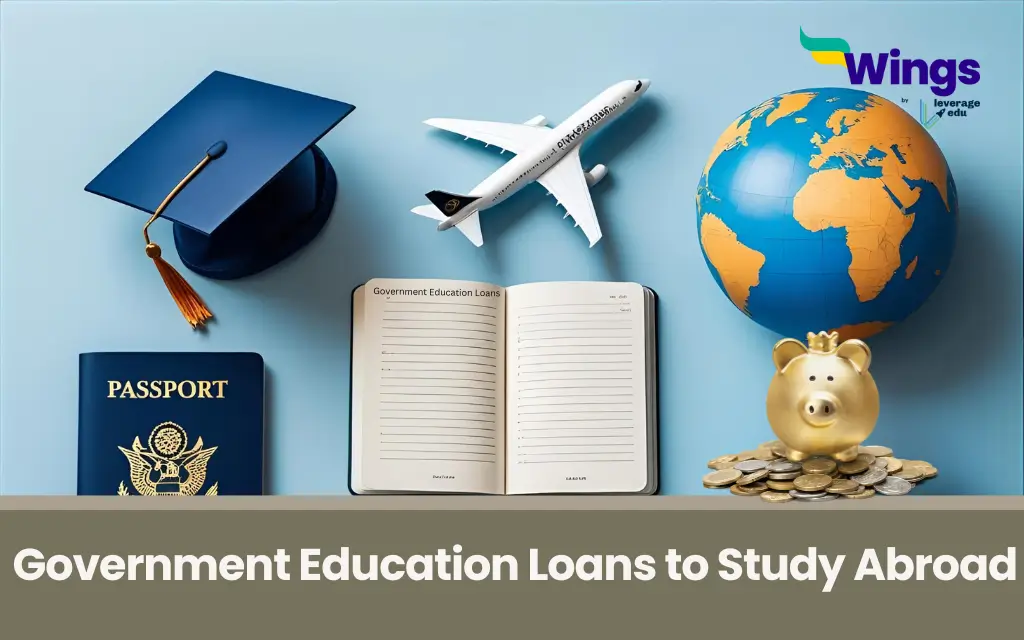
Studying abroad opens doors to global opportunities, but the financial challenges can be daunting. A government education loan to study abroad offers a reliable solution, providing financial support with favorable terms to help achieve academic dreams.
This blog explores how government education loans to study abroad work, their benefits, eligibility criteria, and the application process to empower you to make informed decisions.
This Blog Includes:
Why Choose a Government Education Loan to Study Abroad?
Government education loans to study abroad provide accessible funding options with lower interest rates and flexible repayment terms compared to private lenders. Backed by the Indian government, these loans aim to make international education affordable for those aspiring to study at globally recognized institutions.
With schemes designed to support various academic pursuits, they offer a practical pathway to overcome financial barriers. Here are some key features of government education loans abroad:
- Lower Interest Rates: Government-backed loans typically have lower interest rates than private loans, reducing the overall cost of borrowing.
- Interest Subsidies: Schemes like the PM-Vidyalaxmi scheme and Dr. Ambedkar Interest Subsidy provide concessions for eligible candidates.
- No Collateral for Smaller Loans: Loans up to INR 7.5 lakhs often require no collateral or third-party guarantee.
- Tax Benefits: Interest paid on education loans is deductible under Section 80E of the Income Tax Act, up to INR 40,000 annually for a maximum of eight years.
- Flexible Repayment: Moratorium Periods (course duration plus one year) allow borrowers to focus on studies before repayment begins.
Also Read:
- Instant Loan for Students to Study Abroad
- What is an Education Loan in India: Meaning, Benefits & & Process
Key Government Loan Schemes for Overseas Studies
Several government-backed schemes facilitate access to education loans for international studies. These schemes, offered through public sector banks and portals like PM-Vidyalaxmi, cater to diverse academic and financial needs.
Understanding these options helps in selecting the most suitable loan for your educational journey. Let’s understand them one by one:
PM-Vidyalaxmi Scheme
The PM-Vidyalaxmi scheme, launched by the Government of India, simplifies access to collateral-free and guarantor-free education loans for meritorious candidates. It supports studies at top institutions worldwide through a streamlined digital application process.
- Loan Amount: Up to INR 10 lakhs with 3% interest subvention for families with annual income up to INR 8 lakhs.
- Eligible Institutions: Covers 860 quality higher education institutions listed on the AISHE dashboard.
- Application Portal: Apply via the unified PM-Vidyalaxmi portal (https://pmvidyalaxmi.co.in).
- Benefits: Fully digital process, quick approvals, and no collateral for eligible candidates.
Dr. Ambedkar Interest Subsidy Scheme
The Dr. Ambedkar Central Sector Scheme or Dr Ambedkar Scholarship supports students from Other Backward Classes (OBCs) and Economically Backward Classes (EBCs) pursuing advanced degrees abroad.
It offers interest subsidies during the moratorium period, easing the financial burden. Here are its features:
- Eligibility: OBC candidates (family income up to INR 8 lakhs per annum) or EBC candidates (family income up to INR 5 lakhs per annum).
- Courses Covered: Master’s, M.Phil, or Ph.D. programs at recognized universities abroad.
- Process: Apply through the bank to sanction the loan, with the required documents submitted for verification.
Central Sector Interest Subsidy (CSIS) Scheme
The CSIS scheme, implemented by the Department of Higher Education since 2009, provides interest subsidies during the moratorium period for students from economically weaker sections pursuing technical or professional courses.
- Eligibility: Annual family income up to INR 4.5 lakhs; applicable to NAAC-accredited institutions or Centrally Funded Technical Institutions (CFTIs).
- Loan Limit: Up to INR 7.5 lakhs without collateral or third-party guarantee.
- Nodal Bank: Canara Bank oversees the scheme’s implementation.
State-Specific Schemes
Certain state governments, like Gujarat, offer tailored education loan schemes for overseas studies. These schemes provide additional support, such as interest subsidies, to residents pursuing international education. Here are the Schemes:
| Scheme | Loan Amount | Interest Rate/Subsidies | Eligibility |
| Gujarat (GUEEDC) | Up to INR 15 lakhs | 4% interest rate | 60% in Class 12, income < INR 6 lakhs |
| WBMDFC | Up to INR 30 lakhs | 3% interest rate | Minority communities, WB domicile |
| Maharashtra (Rajarshi Shahu) | Up to INR 10 lakhs | 100% interest subsidy (income < INR 8 lakhs) | EWS, admission to recognized courses |
| Kerala Repayment Support | Up to INR 9 lakhs | Partial interest subsidy | EWS, professional courses abroad |
| Tamil Nadu (TAMCO) | Up to INR 20 lakhs | 3.5% interest rate | Minority communities, TN domicile |
There are several other schemes as well; we have only included some of the popular ones. For state-specific schemes by the Indian government, applicants should visit the official website of their respective state.
Eligibility Criteria for Government Education Loans
Securing a government education loan to study abroad requires meeting particular conditions for eligibility. These ensure that loans are granted to candidates with genuine academic aspirations and financial needs. Below are the common requirements across major schemes.
- Nationality: The applicant should hold Indian citizenship.
- Admission: Secured admission to a recognized university or institution abroad for full-time graduate, postgraduate, or doctoral programs.
- Academic Record: Strong academic performance, often requiring a minimum percentage (e.g., 60% in Class 12 for Gujarat schemes).
- Income Limits: Family income thresholds vary (e.g., INR 4.5–8 lakhs annually, depending on the scheme).
- Course Recognition: Programs must be approved by designated academic or regulatory bodies, such as those listed in the Webometrics ranking (up to 3000 globally).
How to Apply for a Government Education Loan
Applying for a government education loan to study abroad is straightforward with platforms like the PM-Vidyalaxmi portal. The process is designed to be transparent and digital, ensuring quick approvals and disbursements. Follow these steps to secure your loan efficiently.
- Research and Select a Scheme: Identify the loan scheme that aligns with your needs (e.g., PM-Vidyalaxmi, CSIS, or state-specific schemes).
- Register on PM-Vidyalaxmi Portal: Visit https://pmvidyalaxmi.co.in and register using Aadhaar for authentication.
- Complete the Application: Fill the loan application form properly, specifying the course, institution, and loan amount required.
- Submit Documents: Upload necessary documents, such as admission letters, academic records, and income proof.
- Track Application: Monitor the status of your application through the portal and respond to any bank queries.
- Loan Disbursement: Once approved, funds are disbursed directly to the institution or vendors for tuition, books, or other expenses.
Documents Required
- Identity Proof: Aadhaar card, PAN card, or passport.
- Admission Proof: Offer letter from the foreign university.
- Academic Records: Mark sheets of Class 10, 12, and previous degrees.
- Income Proof: Income certificate or IT returns of parents/co-applicants.
- Collateral Documents: Required for loans above INR 7.5 lakhs (if applicable).
- Other: Passport, visa, and course fee structure.
Also Read:
- NBFCs Giving Education Loan Without Collateral
- Education Loan Tax Benefits: Smart Way to Pay Less Tax Legally
Challenges and Tips to Overcome Them
While government education loans to study abroad are beneficial, applicants may face challenges like complex documentation or visa-related funding issues. Addressing these proactively ensures a smoother loan approval process.
- Challenge: Documentation Errors
- Tip: Double-check all documents for accuracy and completeness before submission.
- Challenge: Visa Rejections Due to Funding Proof
- Tip: Obtain a loan sanction letter from the bank to demonstrate financial capability during visa applications.
- Challenge: Limited Awareness of Schemes
- Tip: Research schemes thoroughly on official portals like PM-Vidyalaxmi or consult bank counselors for guidance.
- Challenge: Delayed Disbursements
- Tip: Apply early and maintain regular communication with the bank to track progress.
A government education loan to study abroad is a powerful tool to turn international academic aspirations into reality. With schemes like PM-Vidyalaxmi, Dr. Ambedkar, and CSIS, financial constraints no longer need to hinder your dreams. By understanding eligibility, preparing documents, and applying through user-friendly portals, you can secure funding with ease. Take the first step today by exploring options on the PM-Vidyalaxmi portal or contacting your nearest public sector bank to unlock a world of opportunities.
FAQs
To secure a government education loan for abroad studies, research schemes like PM-Vidyalaxmi, register on the portal, submit documents (admission letter, income proof), and track your application. Apply early to ensure timely disbursal for tuition, travel, and other expenses.
Eligible candidates for PM-Vidyalaxmi include Indian citizens with admission to top 860 institutions, strong academic records, and family income up to INR 8 lakhs for interest subvention. Loans up to INR 10 lakhs are collateral-free for recognized graduate, postgraduate, or doctoral programs abroad.
Yes, the government provides education loans to study abroad through schemes like PM-Vidyalaxmi, Dr. Ambedkar, and CSIS. These cover tuition, hostel, and travel costs with low interest, subsidies, and moratorium periods, making international education accessible without direct grants.
Evaluate all study abroad options with Leverage Edu. Stay tuned with Leverage Live classes and realise your dream of studying in your dream country.

 60,000+ students trusted us with their dreams. Take the first step today!