

 One app for all your study abroad needs













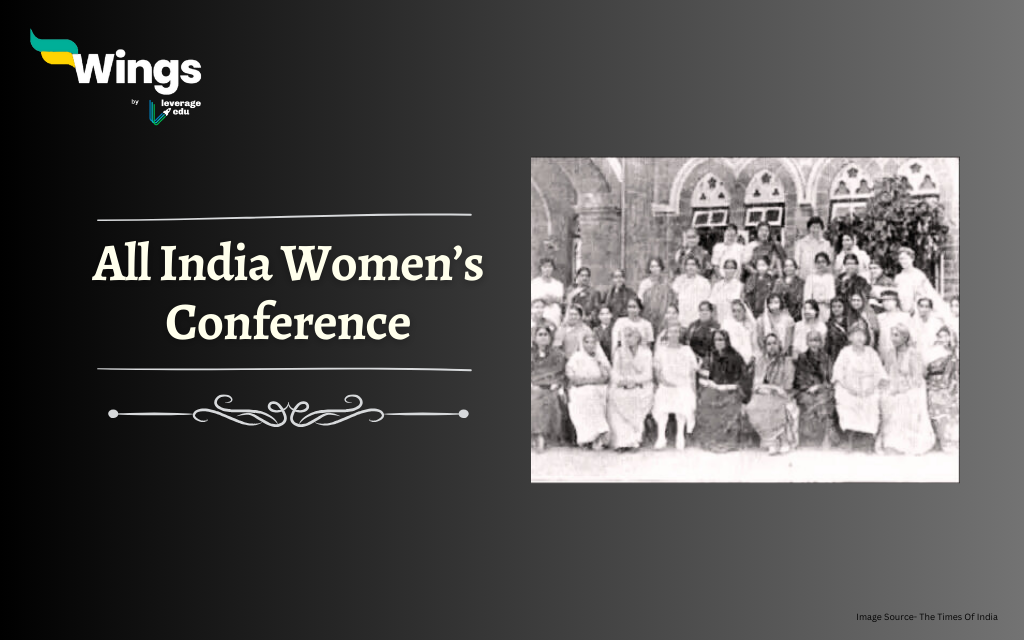
The All India Women’s Conference is an organisation primarily dedicated to improving women’s education and social development in India. It is one of the oldest women’s organisations, with over a hundred branches located across the country. The AIWC members are continuously striving to work on diverse issues such as education, economic independence, development, and so on. Over the years, the AIWC has gained Observer Status with UNFCCC and Consultative status with the United Nations (ECOSOC).
Contents
All India Women’s Conferences
The All India Women’s Conference (AIWC) is one of the oldest and most prominent women’s organisations in India. It was founded in 1927 with the aim of promoting women’s education and social reform.
Founded: 1927
Founder Members: Margaret Cousins (an Irish theosophist and suffragist) and other leading Indian reformers like Sarojini Naidu and Kamaladevi Chattopadhyay.
Headquarters: New Delhi, India
Type: Non-governmental, voluntary organisation
Below, we have mentioned key points of the first and second conferences held by the AIWC.
First Conference
Additionally, it also passed a resolution that extended support to Sir Hari Singh Gaur’s Age of Consent Bill.
The first All India Women’s Conference was held from 5 to 8 January 1927 at Ferguson College, Poona.
The conference was held under the presidency of Maharani Chimnabai Saheb Gaekwar of Baroda.
The key resolutions passed during this conference include different topics ranging from the abolition of child marriage to the promotion of education in primary schools as well as colleges.
Also Read: Indian National Movement
Second Conference
Apart from focusing on compulsory primary education for girls, the AIWC also prioritized differential treatment of Depressed Class Children during its second conference.
The second Conference was in the year 1928 in Delhi.
It was attended by over 200 delegates from 30 different constituencies around India.
The President for this session was Her Highness the Begum Mother of Bhopal.
According to the members of the Conference, the aim behind establishing the All India Women’s Fund was to “serve not only for propaganda but also for starting of institutions based on the ideals of the Conference”.
Also Read: Civil Disobedience Movement
History of AIWC
In January 1927, members of regional meetings gathered in Poona for the first official meeting of the AIWC.
The All India Women’s Conference was established in January 1927 in the Indian state of Poona, Maharashtra.
However, the idea emerged in 1926 after an Irish theosophist and feminist, Margaret Cousins, suggested the same.
A decade earlier, somewhere in 1917, Cousins had also helped establish the Women’s Indian Association in Madras (now Chennai), one of India’s first feminist groups. It was followed by the establishment of multiple such associations.
Concerned about the plethora of issues being faced by women, Cousins wrote an appeal to members of women’s associations located across the country.
Moreover, they also urged members to attend a specific conference in Poona.
Also Read: Lord William Bentinck
Objectives of All India Women’s Conference (AIWC)
The All India Women’s Conference (AIWC) was established with a clear mission: to uplift women through education, rights, and equal opportunities. Here are the main objectives that guide its work:
1. Promoting Women’s Education
AIWC strongly believes that education is the foundation of empowerment. From its inception, it has worked to improve access to quality education for girls and women at all levels — from primary schools to higher education.
2. Fighting for Legal Rights
The organization has campaigned for progressive laws that protect and promote women’s rights, including inheritance rights, divorce laws, and equal pay. It played a key role in supporting the Hindu Code Bill, which granted legal rights to Hindu women.
3. Empowering Women Economically
AIWC works to make women financially independent through:
- Vocational training
- Skill-building workshops
- Self-help groups
This helps women find employment or start their own businesses.
4. Promoting Health and Well-being
The organization also focuses on women’s health by raising awareness about:
- Reproductive health
- Maternal care
- Nutrition
It runs health camps and support programs in both rural and urban areas.
5. Raising a Voice Against Social Evils
AIWC actively campaigns against:
- Child marriage
- Dowry system
- Domestic violence
It provides legal and emotional support to victims and advocates for strict implementation of protective laws.
6. Encouraging Women’s Leadership
AIWC promotes women’s participation in politics and decision-making processes. It supports leadership training and motivates women to become community leaders and public representatives.
7. Environmental and Social Awareness
The organization also works on environmental issues and social development. It encourages sustainable practices and civic awareness among women and children.
Structure and Membership of AIWC
The All India Women’s Conference (AIWC) has a vast and democratic structure that allows women from different walks of life to participate in social reform and community development. Whether you’re a student, a professional, or a homemaker, there’s room for everyone who wants to contribute to women’s empowerment.
How Is AIWC Organised?
Each branch elects its own office bearers—including President, Secretary, and Treasurer—ensuring that leadership is democratic and community-driven. AIWC operates at three main levels:
| Level | Details |
|---|---|
| National Level | Headquarters in New Delhi. Oversees nationwide policies and major programs. |
| State Level | Regional branches that implement policies based on local needs. |
| Local Branches | Thousands of grassroots branches working on field-level initiatives. |
Membership of AIWC
Becoming a part of AIWC means joining a network of thousands of women who believe in change. AIWC offers different types of memberships:
| Membership Type | Who Can Join | Benefits |
|---|---|---|
| Ordinary Member | Any woman above 18 years old | Participate in local events and workshops |
| Life Member | One-time fee for lifelong association | Involvement in national conferences and policymaking |
| Institutional Member | Colleges, schools, and NGOs | Partner for outreach programs and campaigns |
| Youth Member | Young women under 25 (especially students) | Leadership development, internships, and volunteering options |
Initiatives for a Better Future
- During the 21st century, the All India Women’s Conference undertook a range of activities aimed at improving women’s access to education.
- It also came up with numerous strategies to increase active women’s participation in the workforce, raise public awareness, and provide leadership training.
- Other areas of prominence include eradicating trafficking of women and children, disaster relief, women’s labour, and the development of rural energy.
- In addition to this, the All India Women’s Conference took the initiative to provide women citizens with in-depth knowledge about basic computing, textile weaving, and other fields.
Institutions Founded by AIWC
The All India Women’s Conference also established a number of institutions, including:
- All India Women’s Education Fund Association (1929)
- Lady Irwin College (1932)
- Family Planning Centre (now Family Planning Association of India) (1937)
- Save the Children Committee (1943)
- Cancer Research Institute (1952)
Notable Women Linked to AIWC
The All India Women’s Conference has been shaped and supported by many inspiring women leaders. Their work laid the foundation for the women’s rights movement in India and beyond.
| Name | Contribution | Legacy |
|---|---|---|
| Margaret Cousins | Co-founder of AIWC and strong advocate for women’s education and suffrage | Played a crucial role in drafting India’s women’s rights framework |
| Kamaladevi Chattopadhyay | Promoted women’s social and economic independence through arts, crafts, and cooperative movements | First woman to run for a legislative seat in India; Padma Bhushan & Padma Vibhushan awardee |
| Rajkumari Amrit Kaur | First woman Cabinet Minister in India and AIWC president | Championed health reforms and established AIIMS |
| Annie Besant | Early supporter of AIWC and social reformer | Instrumental in the Indian independence and education movement |
| Sarojini Naidu | Worked with AIWC on women’s suffrage and legal rights | First woman President of Indian National Congress and Governor of Uttar Pradesh |
| Muthulakshmi Reddi | Supported AIWC’s efforts in child marriage abolition and healthcare | First woman legislator in British India |
| Hansa Mehta | Fought for gender equality through AIWC and helped draft the Universal Declaration of Human Rights | Represented India at the UN Commission on Human Rights |
| Begum Rokeya | Advocated Muslim women’s education and supported AIWC from Bengal | Pioneer of Muslim women’s rights in British India |
| Indira Gandhi | Associated with AIWC in the 1960s, supporting women’s welfare and leadership | India’s first woman Prime Minister |
| Dr. Rani Gaidinliu | Supported tribal women’s upliftment through AIWC programs | Freedom fighter and recipient of Padma Bhushan |
FAQs
Members of the All India Women’s Conference are actively involved in improving the quality of women’s working conditions. Additionally, they formulate strategies and take the necessary steps toward eradicating evil practices such as child marriage and advocating the rights of women.
The AIWC established Lady Irwin College, located in New Delhi, in the year 1932. It was India’s first College of Home Sciences for Women.
The All India Women’s Conference was established in 1927 as a non-governmental organization based in Delhi. Founded by Margaret Cousins, the organization aimed at advocating the rights of women, promoting compulsory education, and abolishing the common practice of child marriage in Indian society.
The All India Women’s Conference (AIWC) has been led by numerous prominent women over its history. Figures like Margaret Cousins, Sarojini Naidu, and Annie Besant were instrumental in its early days, while many other distinguished leaders have since contributed to its ongoing work.
The headquarters of the All India Women’s Conference (AIWC) is located in New Delhi, India. From this central base, the organization coordinates its numerous branches and activities across the country, focusing on women’s rights and social development.
Related Blogs
| Development of Railways in India | Development of Press in India |
| Indian Press Act of 1910 | Ahmedabad Mill Strike of 1918 |
| Salt Satyagraha | Cabinet Mission of 1946 |
That’s all about the All India Women’s Conference! If you want to read more articles like this, you can get Study notes on the Modern History of India here. Also, you can visit our general knowledge page on Indian History!

 60,000+ students trusted us with their dreams. Take the first step today!