

 One app for all your study abroad needs












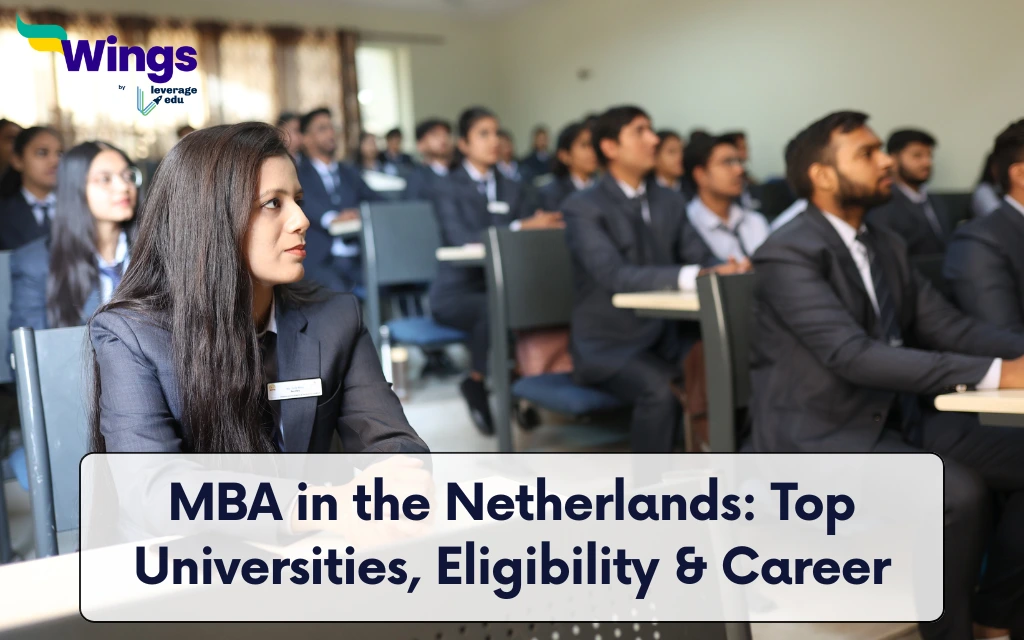
Did your heartbeat increase when you saw the costly MBA universities in the USA and UK? There is a country in Europe that can offer you the same globally recognized MBA experience at a much more affordable cost — the Netherlands. With top-ranked business schools, diverse English-taught programs, strong industry connections, and excellent post-study work opportunities, the Netherlands is becoming one of the best destinations for MBA aspirants who want quality education without breaking the bank.
In this blog, we have discussed why you should choose an MBA in the Netherlands, the top universities offering the course, the eligibility criteria, tuition fees, application process, career, and more.
This Blog Includes:
- Why Study an MBA in the Netherlands & Its Benefits for International Students?
- Top MBA Colleges in the Netherlands
- Popular MBA Specialisations to Pursue in the Netherlands
- Course Structure of MBA in the Netherlands: Syllabus & Modules
- 1. Core Business Foundations
- 2. Strategic Management
- 3. Finance & Accounting
- 4. Marketing Management
- 5. Operations & Supply Chain Management
- 6. Leadership & Organisational Behaviour
- 7. Entrepreneurship & Innovation
- 8. International Business
- 9. Business Analytics & Data-Driven Decision Making
- 10. Electives & Specialisation Courses
- 11. Capstone Project or Thesis
- 12. Internship/Industry Experience
- Eligibility Criteria to Apply for an MBA in the Netherlands
- List of Documents Required for MBA Applications
- How to Apply for an MBA Program in Netherlands?
- Career Opportunities and Salary Prospects After an MBA in the Netherlands
- FAQs
Why Study an MBA in the Netherlands & Its Benefits for International Students?
The following are the reasons why you should choose to study an MBA in the Netherlands.
Competitive tuition fees
MBA Tuition fees in the universities of the Netherlands are very competitive, and students can find a wide range of general and specialised courses at very affordable costs, as compared to the USA and the UK.
- Many full-time MBA programmes in the Netherlands range from EUR 15,000 to EUR 50,000+ (approx. INR 12-40 lakhs), depending on the institution, programme length, and specialisation.
- For example, the Rotterdam School of Management (RSM) MBA has a tuition fee of EUR 67,000 for the 2026 cohort.
- Another: the Maastricht School of Management full-time MBA lists tuition of EUR 29,000 for 2025.
Manageable cost of living
The living expenses in the Netherlands are also very affordable. Below, we have provided a general overview of the cost of living.
- Estimated monthly living expenses for MBA students: EUR 800 to EUR 1,200 ( INR 72,000-1,09,000) in the Netherlands.
- At RSM (in Rotterdam), they estimate around EUR 1,700/month for living costs (housing, insurance, living expenses) for a single student.
Strong post-study employment prospects
After completing an MBA from a university in the Netherlands, graduates can find a wide range of opportunities to build and prosper their careers..
- For the 2024 MBA class at RSM: 92% of graduates found employment in the Netherlands or Europe soon after graduation
- More broadly, in the Netherlands, higher-education graduates under 30 enjoyed employment or further education rates of about 95%, which is one of the highest among OECD countries.
Global accreditation and international exposure
The MBA programs in the Netherlands provide diverse specialisations, which are globally accredited and recognised by other institutions and employers.
- Dutch MBA programmes offer specialisations in fields such as Data Analytics, Digital Transformation, International Management, Sustainability, etc.
- Students benefit from a multicultural learning environment and strong networks with European companies (e.g., many RSM graduates join firms like Unilever, Philips, ASML), which enhances global employability.
Supportive environment and post-study work opportunities
International students in the Netherlands have access to programmes and visas that facilitate transition to work after graduation (e.g., “orientation year” arrangements). Scholarships are available: e.g., one MBA programme offers an Academic Excellence scholarship of EUR 8,000 for outstanding candidates.
Also Read: Statement of Purpose for Netherlands Universities: Format, Samples & Tips
Top MBA Colleges in the Netherlands
The Netherlands is home to some of Europe’s most reputable one-year MBA programs, offering a strong blend of global rankings, industry connections, and competitive tuition fees. Top institutions like Erasmus University Rotterdam (THE Rank: 23) and University of Amsterdam (Rank: 77) provide premium, internationally recognized MBAs, while universities such as Tilburg (Rank: 44), Twente (Rank: 126), and Radboud (Rank: 201) offer highly affordable alternatives ranging from EUR 18,200 to EUR 22,200, making them excellent high-ROI choices.
Across the board, the tuition range varies widely, from EUR 18,200 at University of Twente to EUR 67,000 at Erasmus, yet all programs are completed within 12 months, allowing students to quickly return to the workforce. Whether you’re looking for a top-ranked global brand, a budget-friendly MBA, or a balanced mid-range option like Maastricht or VU Amsterdam, the Netherlands offers strong value and diverse pathways for international students.
| University | THE Ranking 2026 (Business & Economics) | Average Tuition Fee Per Year | Duration |
| Erasmus University Rotterdam | 23 | EUR 67,000 | 12 Months |
| Tilburg University | 44 | EUR 18,900 | 12 Months |
| University of Groningen | 56 | EUR 22,200 | 12 Months |
| University of Amsterdam | 77 | EUR 52,000 | 12 Months |
| Maastricht University | 83 | EUR 34,000 | 12 Months |
| Vrije Universiteit Amsterdam | 101 | EUR 35,000 | 12 Months |
| University of Twente | 126 | EUR 18,200 | 12 Months |
| Radboud University Nijmegen | 201 | EUR 18,873 | 12 Months |
Popular MBA Specialisations to Pursue in the Netherlands
The following are some of the popular MBA specialisations to pursue in the universities in Netherlands.
International Business
Focuses on global markets, cross-cultural management, and international strategy.
Ideal for students aiming for multinational roles across Europe and beyond.
Finance & Banking
Offers strong exposure to Amsterdam’s financial district and fast-growing fintech sector.
Prepares you for careers in investment banking, corporate finance, and financial analysis.
Marketing & Digital Marketing
Emphasises data-driven branding, consumer insights, and digital campaign strategies.
Perfect for roles in digital agencies, e-commerce firms, and global marketing teams.
Business Analytics/Data Science
Builds expertise in analytics tools, machine learning, and data interpretation for business growth. Suited for high-demand roles like data analyst, BI specialist, or strategy analyst.
Supply Chain & Logistics
Leverages the Netherlands’ position as Europe’s logistics hub, powered by the Port of Rotterdam. Prepares students for careers in supply chain planning, operations, and global logistics management.
Sustainability & CSR
Focuses on green business models, ethical leadership, and circular economy practices. Ideal for those seeking roles in ESG consulting, sustainable business, and impact-driven organisations.
Entrepreneurship & Innovation
Encourages new venture creation with access to Dutch incubators and startup networks. Great for aspiring founders or professionals aiming for innovation-led leadership roles.
Human Resource Management
Covers talent development, organisation behaviour, and HR analytics in multicultural workplaces. Helps you build a career in HR leadership, recruitment strategy, or organisational development.
Technology Management/AI
Blends business leadership with technical understanding of AI, automation, and digital systems. Prepares students for roles in tech consulting, product management, and digital transformation.
Consulting & Strategy
Strengthens analytical thinking, problem-solving, and strategic decision-making abilities.
Ideal for careers in management consulting, corporate strategy, and business advisory.
Also Read: Study in the Netherlands Without GMAT: Complete 2026 Guide for Indians
Course Structure of MBA in the Netherlands: Syllabus & Modules
The MBA course structure in the Netherlands is designed to blend core business fundamentals with practical, industry-focused learning, typically completed within 12 months. Students begin with foundational modules such as Strategic Management, Financial Accounting, Marketing Management, Business Analytics, Operations Management, and Organisational Behaviour. These core subjects help build a strong understanding of global business functions and leadership principles.
As the program progresses, students choose from specialised electives aligned with their career goals, ranging from Digital Transformation, Supply Chain Management, and Entrepreneurship to Sustainability, Finance, HRM, and Technology Management.
Most Dutch MBAs also include real-world components such as consulting projects, case studies, leadership labs, internships, and a final thesis or capstone project, ensuring students graduate with hands-on experience and industry-ready skills.
1. Core Business Foundations
These modules build a strong base in management concepts like finance, marketing, HR and operations. Students learn how different business functions connect and support organisational goals.
2. Strategic Management
This area focuses on analysing business environments and making long-term, competitive decisions. It helps students understand strategy formulation, implementation, and organisational leadership.
3. Finance & Accounting
Students learn financial analysis, budgeting, investment planning, and corporate finance. These modules help develop skills to interpret financial statements and make data-driven decisions.
4. Marketing Management
These modules cover branding, consumer behaviour, digital marketing, and market research. Students learn how to create value for customers and design effective marketing strategies.
5. Operations & Supply Chain Management
Students explore production planning, logistics, quality control, and process optimisation. The goal is to understand how to make operations efficient and customer-focused.
6. Leadership & Organisational Behaviour
These modules teach leadership styles, team dynamics, motivation and change management. Students gain skills to manage people effectively and build high-performing teams.
7. Entrepreneurship & Innovation
Students learn how to identify business opportunities, create business models, and drive innovation. The modules encourage entrepreneurial thinking and creative problem-solving.
8. International Business
This area covers global markets, international trade, cross-cultural management and global strategy. Students develop the ability to operate and lead in multinational environments.
9. Business Analytics & Data-Driven Decision Making
Students learn data analysis, business intelligence, and analytical tools used in management. These modules help in making informed and strategic decisions using data.
10. Electives & Specialisation Courses
Electives allow students to customise their MBA with industry-specific or advanced subjects. This helps them build expertise aligned with their career goals.
11. Capstone Project or Thesis
Students work on a real-world business challenge or research project. It helps them apply theoretical knowledge to practical, professional situations.
12. Internship/Industry Experience
Most universities include hands-on internships or company projects. This exposure helps students gain practical skills and build professional connections.
Eligibility Criteria to Apply for an MBA in the Netherlands
Below, we have provided the detailed eligibility criteria for an MBA in the Netherlands. Depending on the university, it can vary.
Bachelor’s Degree
Applicants must hold a recognised bachelor’s degree from an accredited institution. Most Dutch MBA programmes accept degrees from any discipline, though some specialisations may prefer candidates with a business, finance, or technical background.
Academic Performance
A strong academic record is typically expected. Competitive programmes may require a minimum GPA or equivalent standard, and higher-ranked universities often look for consistent academic excellence.
Work Experience
Most full-time MBA programmes require 2–3 years of relevant professional experience, while Executive MBA (EMBA) programmes often require 5+ years of managerial or leadership experience. Experience in international or cross-functional roles is valued.
English Proficiency
Applicants must demonstrate a strong command of English, usually through prior education or standardized tests. Programmes are conducted entirely in English, so fluency in written and spoken English is essential.
GMAT/GRE Scores (If Applicable)
Some universities require competitive GMAT or GRE scores for admission. However, many schools consider work experience, academic performance, and professional achievements as partial or full waivers for standardized tests.
Career Progression and Leadership Potential
Candidates should show clear career growth, professional achievements, and leadership potential. Dutch MBA programmes look for individuals who can contribute meaningfully to classroom discussions and group projects.
Alignment with Specialisation
Certain MBA specialisations may prefer candidates with prior exposure to relevant industries or foundational knowledge. For example, Finance MBAs may value candidates with accounting or analytical experience.
Motivation and Goals
Applicants are expected to have a clear vision for their career, well-defined goals, and a reason for choosing an MBA in the Netherlands. Schools look for motivation, maturity, and clarity of purpose.
List of Documents Required for MBA Applications
Here’s the list of documents required for MBA applications in the Netherlands.
- Academic Transcripts
- Bachelor’s Degree Certificate
- Curriculum Vitae (CV)/Resume
- Statement of Purpose (SOP /Motivation Letter
- Letters of Recommendation (LORs)
- English Language Proficiency Test Scores (IELTS/TOEFL)
- GMAT/GRE Score (if applicable)
- Passport Copy
- Photographs
- Work Experience Certificates
- Additional Programme-Specific Documents
How to Apply for an MBA Program in Netherlands?
The following is the step-by-step process to apply for an MBA program in Netherlands.
Research Universities and Programs
- Start by shortlisting universities based on global rankings, MBA specialisations, tuition fees, campus location, and post-study opportunities.
- Popular Dutch business schools include Erasmus University Rotterdam, Tilburg University, University of Groningen, University of Amsterdam, Maastricht University, Vrije Universiteit Amsterdam, University of Twente, and Radboud University Nijmegen.
- Consider factors like curriculum structure, electives, internships, and alumni network before finalising your choice.
Check Eligibility Criteria
- Review the admission requirements of each program carefully.
- Most MBA programs require a recognised bachelor’s degree, 2–3 years of professional experience (5+ years for Executive MBA), proof of English proficiency (IELTS/TOEFL), and sometimes GMAT/GRE scores.
- Also, ensure you meet any programme-specific prerequisites or specialisation requirements.
Prepare Required Documents
- Collect all necessary documents in advance, including academic transcripts, bachelor’s degree certificate, CV/resume, statement of purpose (SOP), letters of recommendation, language test scores, standardized test scores (GMAT/GRE if required), passport copy, photographs, and work experience certificates.
- Make sure everything is translated into English if needed and meets the university’s formatting guidelines.
Take Required Tests
- If applicable, register and prepare for English language proficiency tests (IELTS or TOEFL) and GMAT/GRE.
- Aim to meet or exceed the minimum scores required by your selected universities to strengthen your application.
Submit Online Application
- Apply through the official online portals of the universities you have shortlisted.
- Fill in all personal, academic, and professional details accurately.
- Attach all required documents and ensure each section of the application is complete before submission.
- Double-check deadlines to avoid last-minute issues.
Pay Application Fees
- Most universities charge a non-refundable application fee ranging from EUR 50–EUR 150.
- Pay the fee as instructed during the online submission process to ensure your application is processed.
Attend Interview (if applicable)
- Some universities may conduct an interview as part of the selection process.
- This can be online or in-person. Prepare by reviewing your SOP, career goals, achievements, and motivation for pursuing an MBA.
- Demonstrate clear communication skills, leadership potential, and understanding of the program.
Receive Admission Decision
After evaluation, universities will send either an unconditional or conditional offer of admission. Conditional offers may require proof of final degree completion or minimum work experience verification.
Apply for Scholarship/Financial Aid (Optional)
- If applicable, submit separate applications for scholarships, grants, or financial aid.
- Many Dutch universities offer merit-based scholarships, diversity scholarships, and special funding for international students.
Confirm Admission & Apply for Student Visa
- Once you accept the offer, start your student visa application for the Netherlands.
- The university usually provides the necessary documents like the admission letter and proof of financial resources.
- Begin arranging accommodation and pre-departure preparations to ensure a smooth transition
Also Read: Top Public vs Private Universities in the Netherlands for International Students.
Career Opportunities and Salary Prospects After an MBA in the Netherlands
Below, we have provided the information on career opportunities and salary prospects after an MBA in the Netherlands.
Job Roles After MBA
An MBA from the Netherlands opens doors across multiple sectors due to the country’s international business environment and strong corporate presence. Popular roles for graduates include:
- Management Consultant – Advising companies on strategy, operations, and performance improvement.
- Financial Analyst/Manager – Handling financial planning, investment analysis, and corporate finance.
- Marketing Manager/Brand Manager – Developing marketing strategies, digital campaigns, and brand positioning.
- Business Analyst/Data Analyst – Analysing business data to drive strategic decisions.
- Project Manager/Operations Manager – Managing projects, teams, and operational processes.
- Supply Chain & Logistics Manager – Optimising supply chains, procurement, and logistics, especially in trade hubs like Rotterdam.
- Human Resource Manager – Managing talent acquisition, employee engagement, and organisational development.
- Entrepreneur/Start-up Founder – Launching and managing innovative business ventures.
- Technology/AI Manager – Leading technology-driven initiatives, AI implementations, and product development.
Average Salaries in the Netherlands After an MBA
Salary prospects vary based on experience, industry, and university reputation
| Role | Average Salary (per year) |
| Management Consultant | EUR 60,000 – EUR 95,000 |
| Financial Analyst | EUR 55,000 – EUR 85,000 |
| Marketing Manager | EUR 50,000 – EUR 80,000 |
| Business/Data Analyst | EUR 45,000 –EUR 70,000 |
| Project/Operations Manager | EUR 55,000 – EUR 80,000 |
| Supply Chain & Logistics Manager | EUR 50,000 – EUR 75,000 |
| Human Resource Manager | EUR 45,000 – EUR 70,000 |
| Entrepreneur/Start-up Founder | EUR 30,000 – EUR 100,000 |
| Technology/AI Manager | EUR 60,000 – EUR 90,000 |
FAQs
The Netherlands offers globally recognized MBA programs at a much more affordable cost, with tuition ranging from EUR 18,200 to EUR 67,000. Students also benefit from shorter 12-month programs, strong international exposure, and excellent post-study work opportunities.
Monthly living expenses typically range between EUR 800–1,200, depending on the city and lifestyle. Some universities, like RSM in Rotterdam, estimate around EUR 1,700/month for housing, insurance, and living costs.
Popular specialisations include International Business, Finance & Banking, Marketing & Digital Marketing, Business Analytics/Data Science, Supply Chain & Logistics, Sustainability & CSR, Entrepreneurship & Innovation, HR Management, Technology/AI, and Consulting & Strategy.
Graduates can work as Management Consultants, Financial Analysts, Marketing Managers, Business/Data Analysts, Project/Operations Managers, Supply Chain Managers, HR Managers, Technology/AI Managers, or even start their own ventures.
Salary ranges vary by role and experience: Management Consultants earn EUR 60,000–95,000, Financial Analysts EUR 55,000–85,000, Marketing Managers EUR 50,000–80,000, Business/Data Analysts EUR 45,000–70,000, and Technology/AI Managers EUR 60,000–90,000 annually. Entrepreneurs’ income can vary widely.
Related Reads
We hope that this blog was able to provide you with all the information regarding the “MBA in the Netherlands for Indian Students”. Lastly, for more such content on universities to study abroad, stay tuned to Leverage Edu. Thank you for reading!

 60,000+ students trusted us with their dreams. Take the first step today!