

 One app for all your study abroad needs

















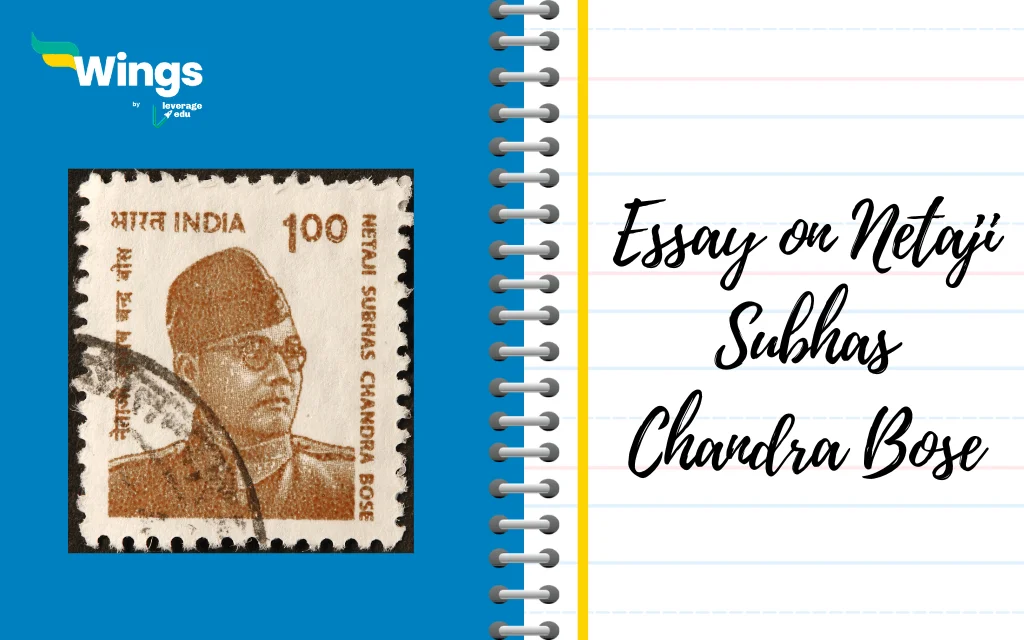
Subhas Chandra Bose, fondly remembered as Netaji, was one of the most dynamic and fearless leaders of India’s freedom movement. Born on 23 January 1897 in Cuttack, Odisha, he dedicated his entire life to the cause of India’s independence and believed that freedom must be achieved through courage, discipline, and sacrifice. Netaji’s leadership of the Indian National Army (Azad Hind Fauj) and his powerful slogan “Tum mujhe khoon do main tumhe azadi dunga” reflect his revolutionary spirit and deep patriotism.
Even today, his ideas, actions, and vision continue to inspire millions of Indians. His life story is not just a chapter of history but a lesson in determination, bravery, and love for the nation. In this blog essay on Netaji Subhas Chandra Bose, we explore his life, ideals, and contributions in detail, and also provide essay samples to help students understand and write effectively on this important national leader.
Contents
Essay on Netaji Subhas Chandra Bose in 100 Words
Subhas Chandra Bose was one of the bravest leaders of India’s freedom struggle. He was born on 23 January 1897 in Cuttack, Odisha. From a young age, he showed strong love for his country and dislike for injustice. He was an excellent student and later went to England to study for the Indian Civil Services exam.
Although he passed the exam in 1920, he resigned because he did not want to serve the British government. He believed that India should rule itself. Subhas Chandra Bose wanted freedom as soon as possible and felt that strong action was needed.
During the Second World War, he formed the Indian National Army to fight against British rule. Many Indians joined him with hope and courage. His famous words, “Tum mujhe khoon do main tumhe azadi dunga,” encouraged people to sacrifice for the nation.
Netaji is remembered for his bold ideas, discipline, and deep love for India. His life teaches students to be fearless and honest.
Must Check Out:
Essay on Netaji Subhas Chandra Bose in 200 Words
Netaji Subhas Chandra Bose was a powerful leader who gave a new direction to India’s freedom movement. He was born on 23 January 1897 in Cuttack and grew up in a disciplined and educated family. His father was a lawyer, and this helped Netaji understand justice and rights at an early age.
He studied in India and later went to England, where he cleared the Indian Civil Services examination. At that time, this job was very respected, but Netaji left it because he wanted to work for India’s freedom. This decision showed his courage and honesty.
Netaji believed that freedom should not be delayed. He felt that strong organisation and unity were necessary. During World War II, he travelled to different countries to seek support for India. In 1943, he formed the Provisional Government of Free India, also called Azad Hind.
He led the Indian National Army, which included thousands of Indian soldiers and volunteers. The army fought near India’s eastern borders and raised confidence among Indians. Even though the army did not win the war, it created fear in the British government.
Netaji reportedly died on 18 August 1945 in a plane crash in Taiwan. His life still inspires students to think about courage, leadership, and love for the nation.
Also Read: Essay on Freedom Fighters: 100, 200 & 300 Words
Essay on Netaji Subhas Chandra Bose in 300 Words
Subhas Chandra Bose, known as Subhas Chandra Bose, was one of the most determined leaders in Indian history. He was born on 23 January 1897 in Cuttack, Odisha. From childhood, he was serious, disciplined, and deeply interested in India’s future. His education helped him develop strong thinking, confidence, and leadership skills that later shaped his role in the freedom movement.
After completing his early studies in India, he travelled to England to prepare for the Indian Civil Services examination. In 1920, he passed this highly competitive exam, which was considered a great honour at that time. However, Netaji resigned from the service because he believed it was wrong to serve a foreign government that ruled India. This decision showed his strong character and love for the nation.
After returning to India, Netaji joined the freedom struggle and soon became a popular leader. He worked actively in national politics and was elected President of the Indian National Congress. He believed that independence should not be delayed and that strong organisation, discipline, and courage were necessary. His views often differed from leaders who supported only peaceful protest.
During the Second World War, Netaji left India secretly and travelled to Germany and later to Japan. In Southeast Asia, he united Indian soldiers and civilians living abroad. With their support, he formed the Indian National Army to fight against British rule. By 1944, the INA had grown to nearly 40,000 members. The soldiers faced severe hardships, including lack of food, medicines, and proper clothing, yet they remained committed.
In October 1943, Netaji announced the Provisional Government of Free India, also known as Azad Hind. This government had its own flag, currency, and army, proving that Indians could govern themselves.
Netaji is believed to have died in a plane crash on 18 August 1945 in Taiwan. His ashes are kept at a temple in Tokyo. His life continues to inspire students to value courage, discipline, sacrifice, and true patriotism.
Even today, schools, books, and museums across India remember his contributions with respect. His birthday is observed as Parakram Diwas to honour his bravery and leadership. Netaji’s ideas encourage young people to think independently and serve the country honestly. He showed that freedom requires responsibility and unity. His journey reminds students that strong values and determination can change history and build a proud nation for future generations through effort, honesty, courage, service, vision, action, discipline, and lifelong commitment.
Also Read: Essay on My Favourite Leader: 100, 200, 300, and 500 Words
10 Important Lines on Netaji Subhas Chandra Bose
Here are 10 important lines on Subhas Chandra Bose for students:
- Netaji Subhas Chandra Bose was one of the most courageous leaders of India’s freedom struggle who believed in strong action to achieve independence.
- He was born on 23 January 1897 in Cuttack, Odisha, and showed leadership qualities from a very young age.
- Netaji passed the Indian Civil Services examination in 1920 but resigned because he did not want to serve the British government.
- He believed that India should become free as soon as possible and that discipline and unity were necessary for freedom.
- Subhas Chandra Bose served as the President of the Indian National Congress and played an important role in national politics.
- During World War II, he travelled to Germany and Japan to seek international support for India’s independence.
- In 1943, he formed the Indian National Army (Azad Hind Fauj) to fight against British rule with Indian soldiers.
- The Indian National Army grew to nearly 40,000 members and fought near India’s eastern borders despite severe hardships.
- Netaji gave the powerful slogan “Tum mujhe khoon do main tumhe azadi dunga,” which inspired millions of Indians.
- He is believed to have died on 18 August 1945 in a plane crash in Taiwan, and his life continues to inspire students with lessons of courage, sacrifice, and patriotism.
Also Read: Essay on Nationalism in 1000 Words in English for Students
FAQs
To write an essay on Subhas Chandra Bose, begin with a brief introduction mentioning his birth, early life, and importance in India’s freedom struggle. Then include key points such as his education, decision to leave the Indian Civil Services, leadership in the Indian National Congress, formation of the Indian National Army, and his role during World War II. Add one or two famous slogans or achievements to make the essay engaging. Conclude by explaining his values, sacrifice, and why he is still remembered as a symbol of courage and patriotism.
Subhas Chandra Bose was a brave and determined leader of India’s freedom struggle who believed that independence required strong action and complete dedication. Born on 23 January 1897 in Cuttack, Odisha, he gave up a successful career after passing the Indian Civil Services exam to serve the nation. He later formed the Indian National Army to fight against British rule and inspired people with his famous slogan, “Tum mujhe khoon do main tumhe azadi dunga.” His leadership, courage, and patriotism made him one of the most respected figures in Indian history.
Subhas Chandra Bose played a bold and active role in India’s freedom struggle by believing that independence needed strong action along with unity and discipline. He resigned from the Indian Civil Services in 1920 to join the national movement, led the Indian National Congress as its president, and later organised the Indian National Army (Azad Hind Fauj) during World War II to fight British rule. He also formed the Provisional Government of Free India in 1943, which showed that Indians were capable of governing themselves. His fearless leadership and powerful slogan, “Tum mujhe khoon do main tumhe azadi dunga,” inspired millions and strengthened the spirit of resistance against British rule.
Related Reads
For more information on such interesting topics, visit our essay writing page and follow Leverage Edu.

 60,000+ students trusted us with their dreams. Take the first step today!