

 One app for all your study abroad needs













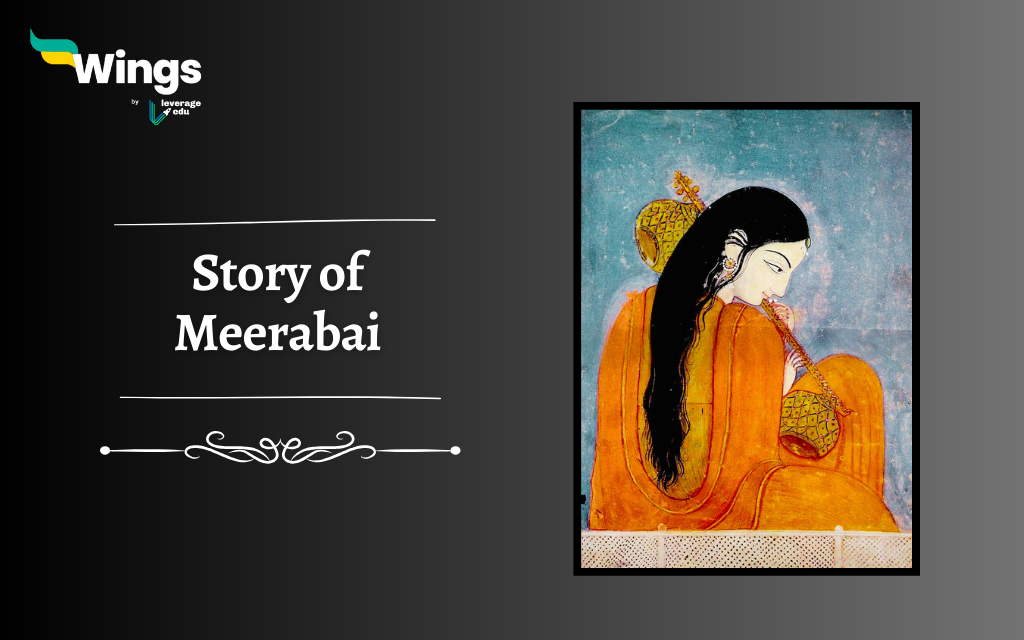
Meerabai was an important woman poetess, saint, and devotee in the Bhakti movement of India during the 16th century. Although not much is known about her, but her deep devotion to Lord Krishna and her literary contributions have made her a celebrated figure in Indian history and culture. In this blog post, we will explore the life, work, and contributions of this remarkable saint through a series of concise points.
Contents
Early Life of Meerabai: Roots in Royalty and Devotion
The story of Meerabai begins in the arid landscapes of Rajasthan, where her noble birth shaped her path toward spiritual awakening. Born around 1498 in Kudki village near Merta, she entered a world of Rajput warriors and kings, yet her heart beat to a divine rhythm from childhood.
- Birth and Family Heritage: Meerabai was born in the year 1498 and was the daughter of Ratan Singh Rathore, the ruler of Merta, and his wife Veer Kumari. Her grandfather, Rao Duda, a devoted Krishna bhakta, instilled early spiritual influences in the family palace.
- Childhood Fascination with Krishna: At just four years old, during a wedding procession, young Meerabai asked her mother who her groom would be. Pointing to a Krishna idol, her mother replied that it was the Lord himself, a moment that ignited lifelong devotion. This “spiritual marriage” defined her, setting her apart from royal norms.
- Marriage: At the age of 14, she was married to Prince Rana Kumbha, alias Bhoj Raj of Mewar, in the year 1516. However, she considered her marriage a worldly affair and herself to be the spouse of Lord Krishna. Unfortunately, her husband died in a battle in the year 1521, and thereafter she was the victim of various persecutions by her In-Laws.
These formative years highlight how environment and innate passion can forge a saint’s path, making Meerabai’s early story a beacon for those exploring personal faith journeys.
Also Read – Saint Surdas: Life, Works, Quotes and Contribution
Meerabai’s Work and Contribution
Her philosophy was to express devotion and love with God through worldly relations like a friend for a friend, a mother’s love for her children, or a woman for her beloved. Meerabai’s expertise lies in her ability to express the depths of her emotions and spiritual experiences through her poetry.
Bhajans (Devotional Songs):
- With a soul soaked in love for Krishna, Meerabai expressed her emotions through soul-stirring bhajans (devotional songs).
- Her compositions speak of divine love, longing for union with the beloved, and the bliss of surrender in poetic verses.
Compositions:
- Meerabai’s compositions have been collected in her magnum opus, “Meerabai Padavali,” a compilation of over 1,300 bhajans.
- Her verses are recorded in the Rajasthani language. Her poem is also mentioned in “Prem Ambodh Pothi”, which is a literature written by Guru Gobind Singh.
- In Sikhism, Meerabai is considered one of the 16th historic Bhakti saints.
Here are some of Meerabai’s Bhajans and Compositions:
“पायो जी म्हें तो राम रतन धन पायो “
“पग घूँघरू बाँध मीरा नाची रे “
“प्रभु कब रे मिलोगे “
“हरि तुम हरो जन की भीर “
“मेरो दरद न जाणै कोय “
Philosophy of Devotional Love
Meerbai’s core belief framed God as an intimate companion—friend, mother, or lover—making spirituality accessible. She practiced Bhakti yoga, surrendering ego for divine union, and critiqued caste and ritualism through her inclusive lens.
It is believed she had written letters to Tusidas to guide her in her path of devotion and was also a friend of the mystic saint Sant Raidas.
Also Read – Narsinh Mehta: Life, Work and Contribution
How did Meerabai Die?
After facing the treacherous attempts by her in-laws, Meerabai left the palace and wandered on various pilgrimages. She was amazed by the idol of Ranchordasji and eventually settled in Dwarka. There are many folklores present with various versions of how she merged with the idol.
One of the famous folklores is – Her in-laws came to ask her permission to come back, but she declined their request. On the day of Janmashtami, she stayed in the temple and, at night miraculously merged inside the idol of her beloved Lord. While some believe she slipped away in disguise. Since then, she was nowhere to be found.
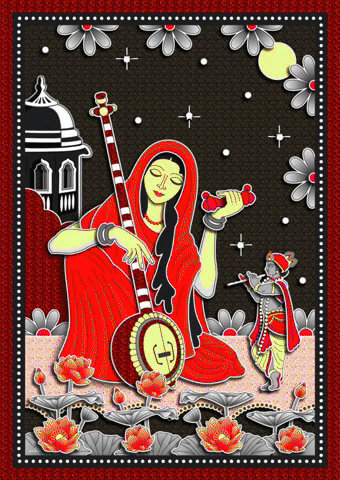
Meerabai’s Influence
As a devotee of Lord Krishna, she immersed herself in Bhakti yoga, the path of devotion, and sought union with the divine.
- Various films like “A Few Things I Know About Her” by Indian film director Anjali Panjabi, Meera by Gulzar, and Sadhvi Meerabai, etc, were dedicated to the poetess.
- A magnificent museum, “Meera Mahal” located in the heart of Merta, displays the life of Meerabai in paintings, sculptures and a garden that is also dedicated to her name.
- Meera was a symbol of passion, pain, suffering, and dedication.
Through her life and works, Meerabai continues to inspire generations of devotees to develop a deeper connection with the divine. Her devotion to Lord Krishna, expressed through her soulful poetry, can be referred to as a guiding light for individuals seeking a deeper connection with the divine. Meerabai’s contributions to the Bhakti movement and her role as a spiritual luminary make her a revered figure in Indian history.
FAQs
Meera Bai was a 16th-century Hindu mystic, poet, and devotee of Krishna. Born into a Rajput royal family in Merta, Rajasthan, she defied societal norms by dedicating her life to Krishna’s devotion. Despite facing opposition from her in-laws and society, she continued to sing bhajans, compose poetry, and spread the message of divine love, becoming one of the most prominent figures in the Bhakti Movement.
Krishna did not marry Meera in a literal sense. Meera considered Krishna her eternal husband and divine soulmate, symbolizing the union of the soul (Meera) with the Supreme (Krishna). This spiritual “marriage” represents her unwavering devotion and complete surrender to Krishna.
Yes, Meera Bai is believed to be a historical figure. However, over time, her life has been deeply intertwined with legends and folklore, making it challenging to separate fact from devotional myth.
The exact details of Meera Bai’s death remain unclear. According to legend, she merged with the idol of Krishna in Dwarka, achieving divine union, while some accounts suggest she simply passed away while singing Krishna’s praises.
Yes, Meera Bai was a significant figure in the Bhakti Movement, which emphasized personal devotion to God over ritualistic practices. Her devotional songs and poems remain a vital part of this tradition, highlighting her deep love for Krishna.
Relevant Blogs
| Saint Ramanujacharya | Adi Shankaracharya |
| Gautam Buddha | Sufi Movement |
| Vedanta Philosophy | Saints of Bhakti Movement |
That’s all about Meerabai! If you want to know more about topics like this, then visit our general knowledge page! Alternatively, you can also read our blog on general knowledge for competitive exams!

 60,000+ students trusted us with their dreams. Take the first step today!